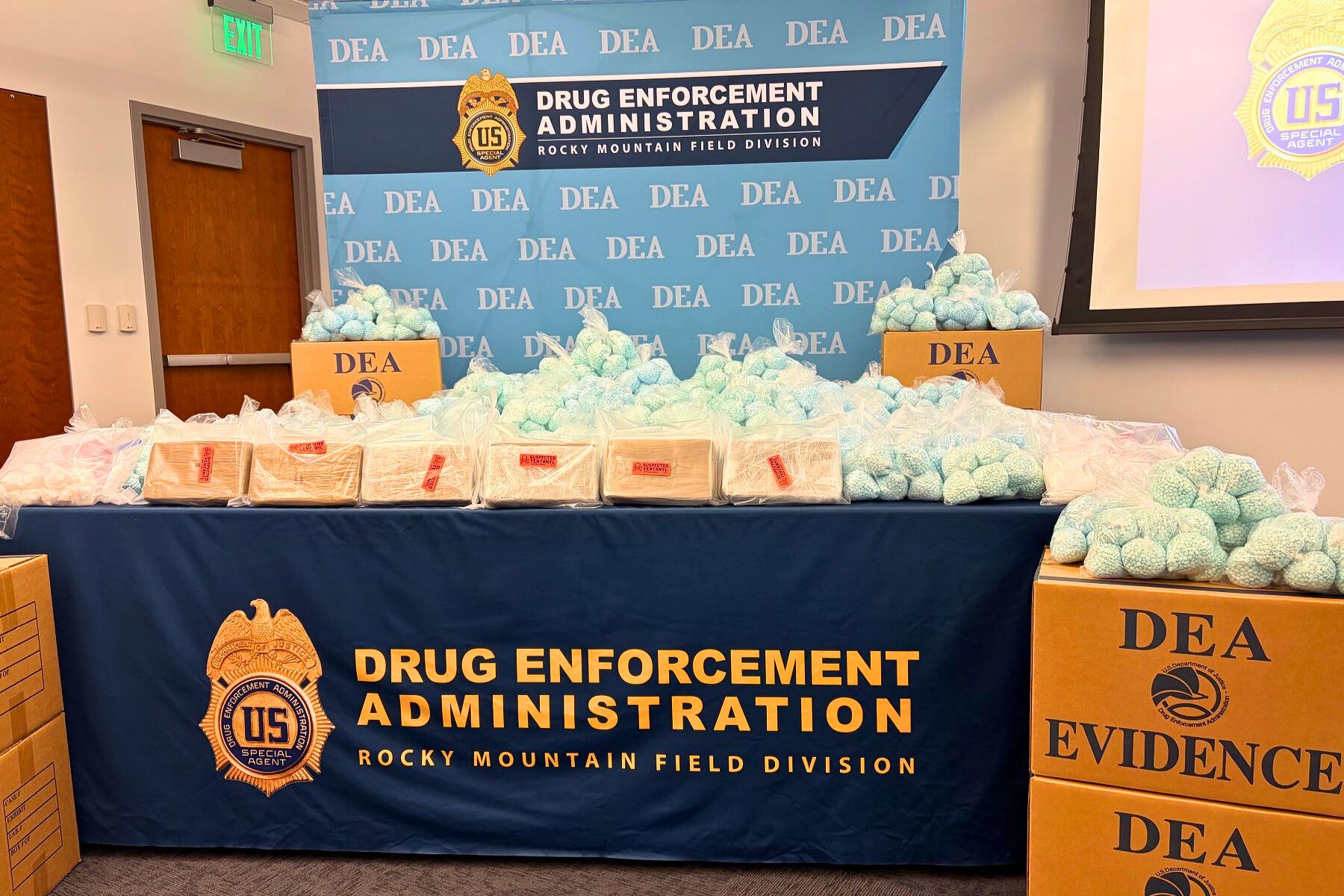
Colorado authorities have earned the spotlight in the last month, announcing a series of record-breaking drug busts after months of multiple investigations, pointing to tables full of the often deadly drugs or pictures of the giant hauls.
Officials stressed that these seizures are keeping deadly drugs off the streets — but the confiscations haven’t stopped the traffickers from using Colorado's highways, and the impact in Denver isn’t immediately apparent.
“When it comes to overdose deaths, at least, especially in the Denver area, we've not seen a dramatic decrease in that. I think other states have experienced better results, at least in the recent months or a year, when it comes to overdose deaths. They've had a better decrease than we have,” said Matthew Stoneberger, a supervisory special agent for the Colorado Bureau of Investigation. “Unfortunately for us, it's stayed relatively steady.”
Denver has recorded 312 fentanyl-related overdose deaths so far this year, compared to 277 in 2024. Deaths from substance overdoses overall have increased by 22 percent year over year, according to city data from mid-September.
“It’s definitely going to surpass last year,” said Lisa Raville, the executive director of the Harm Reduction Action Center, an organization focused on preventing overdose deaths for people who inject and smoke drugs. “We're losing a lot of people. We're on the front lines of the worst overdose crisis we've ever been in.”
What happens after a seizure?
In October, officials found and seized about 665,417 pills and 2.41 kilograms of fentanyl in Colorado under the national operation “Fentanyl Free America.”
Authorities told the media the recent seizures saved countless lives.
“Every seizure makes an impact. The less poison that we've got on the streets, the safer our citizens are,” Stoneberger said.
But Raville said that in her experience working with the Denver community, those seizures don’t result in fewer overdoses. She worries that reducing the supply results in people putting themselves in dangerous situations to get pills.
“That is incredibly concerning because when you arrest the supplier, then of course a new supplier comes in and continues to be unregulated,” she said.
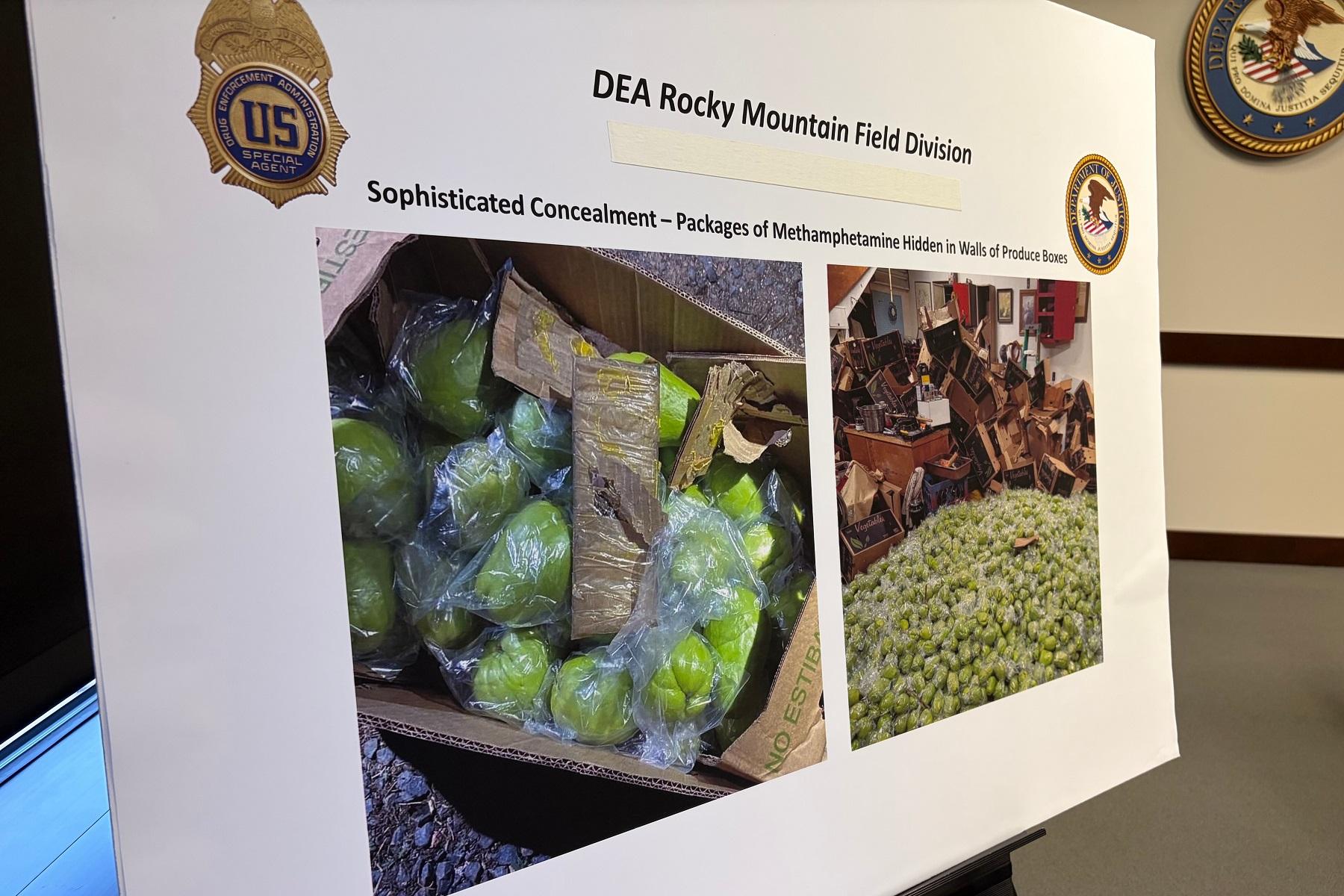
“None of this is measured. None of this is official in production, not like any of the medicine you have produced that you take with confidence from that you get at a store where it's a stabilized ingredient,” said special agent James Stroop with the DEA at a press conference in November. “Every one of these pills that comes out does not contain the same amount of substance within each one.”
Raville said fentanyl pills are often mixed with other substances, including xylazine — a sedative used for veterinary purposes — and nitazenes — a highly potent and addictive opioid.
David Olesky, the special agent in charge of the Drug Enforcement Administration’s Rocky Mountain Field Division, said he thinks taking the drugs off the streets will save lives — the agencies present seized drugs as evidence in court proceedings and then incinerate them.
Still, Olesky said, people will find other ways to bring them over.
“The cartels will always adapt, so as we take off these record quantities of fentanyl, they'll do different things, whether it's in their transportation routes or where they decide to house and store their drugs,” he said.
The CBI and DEA have identified two major cartels who are trafficking drugs into Colorado, and the interstate system brings them into the heart of Denver.
Why is Colorado an epicenter for these busts?
The traffickers heavily rely on two major interstates. Interstate 25, which runs north-south from Wyoming to New Mexico, and Interstate 70, which goes east-west from Maryland to Utah. Olesky said those routes are commonly used by the Mexican Jalisco and Sinaloa cartels.
“We definitely see it coming up from the Texas border, Arizona, Southern California. With having I-25 corridor and the I-70, those are the key trafficking routes into the state,” he said.

In early November, officials found 1.7 million fentanyl pills and additional powder in a Highlands Ranch storage unit. A couple of weeks later, the CBI and La Junta Police Department found roughly 2,730 fentanyl pills during a search warrant connected to a narcotics investigation. A record-breaking amount of methamphetamine was also seized in the state through a two-year investigation.
The pills are small and easy to conceal; for example, they can be packed into things like medication bottles.
“Fentanyl in particular is highly abundant. It is mass-produced, and it is easily concealable, especially because it's in pill form,” Stoneberger said. “Huge amounts of it that have been trafficked into Colorado in particular.”
There have been positive markers of success in the fentanyl crisis, though, Olesky said. Nationally, the lethal dose in fentanyl pills is going down; with 29 percent of fentanyl pills analyzed in 2025 containing a potentially lethal dose, compared to 76 percent in 2023, according to the DEA.
“It shows that we are having an impact globally on the supply chain of chemicals into Mexico,” he said. “The potency is going down.”
Pill prices have also increased, Olesky said.
But pills are fairly accessible. In metropolitan areas, pills may cost about 25 cents each, while in rural regions, the price can exceed $5, according to Stoneberger.
Raville doesn’t think the price reduction will prevent overdoses.
“Drugs sell themselves,” she said. “This is honestly barely a blip.”