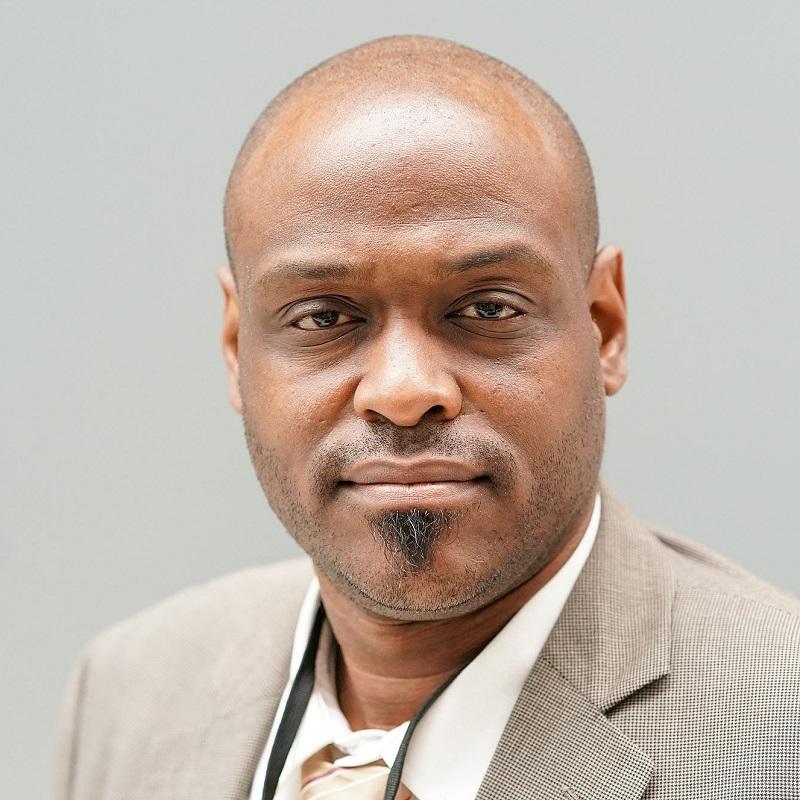
The Chair of the Regional Transportation District (RTD) Board of Directors believes FasTracks will never be built and should look to other alternatives for the future.
FasTracks is RTD's multibillion-dollar transit expansion program for the metro area first approved by voters in 2004.
The statement was made during the RTD Board’s annual retreat last Saturday. RTD is required by the state’s open records law to record it and make it available to the public.
“I've said these a hundred times; the decision on whether or not joint service is an acceptable pathway is not the point. It's what happens to the FasTracks promises,” O’Keefe said in the video now available on YouTube. “Joint service is just one of them… I'd be shocked if we don't all know that there is not enough money to finish FasTracks. And I think we need to stop even indicating that that's a possibility. We'll never build FasTracks. Shocker, right?”
O’Keefe clarified those comments in an interview with CPR News Wednesday afternoon. He said the metro area has changed over the quarter-century, and RTD should look at building a system that works for the next 25 years — not the last 25 years.
“Fast Tracks was planned about a quarter century ago and was planned around Denver. That was very different,” O’Keefe said. “Since that time, 25 years have gone by, and a million people have moved into the Front Range. Our new towns are sprouting up all over the Front Range. And what we planned for that period of time just doesn't exist anymore.”
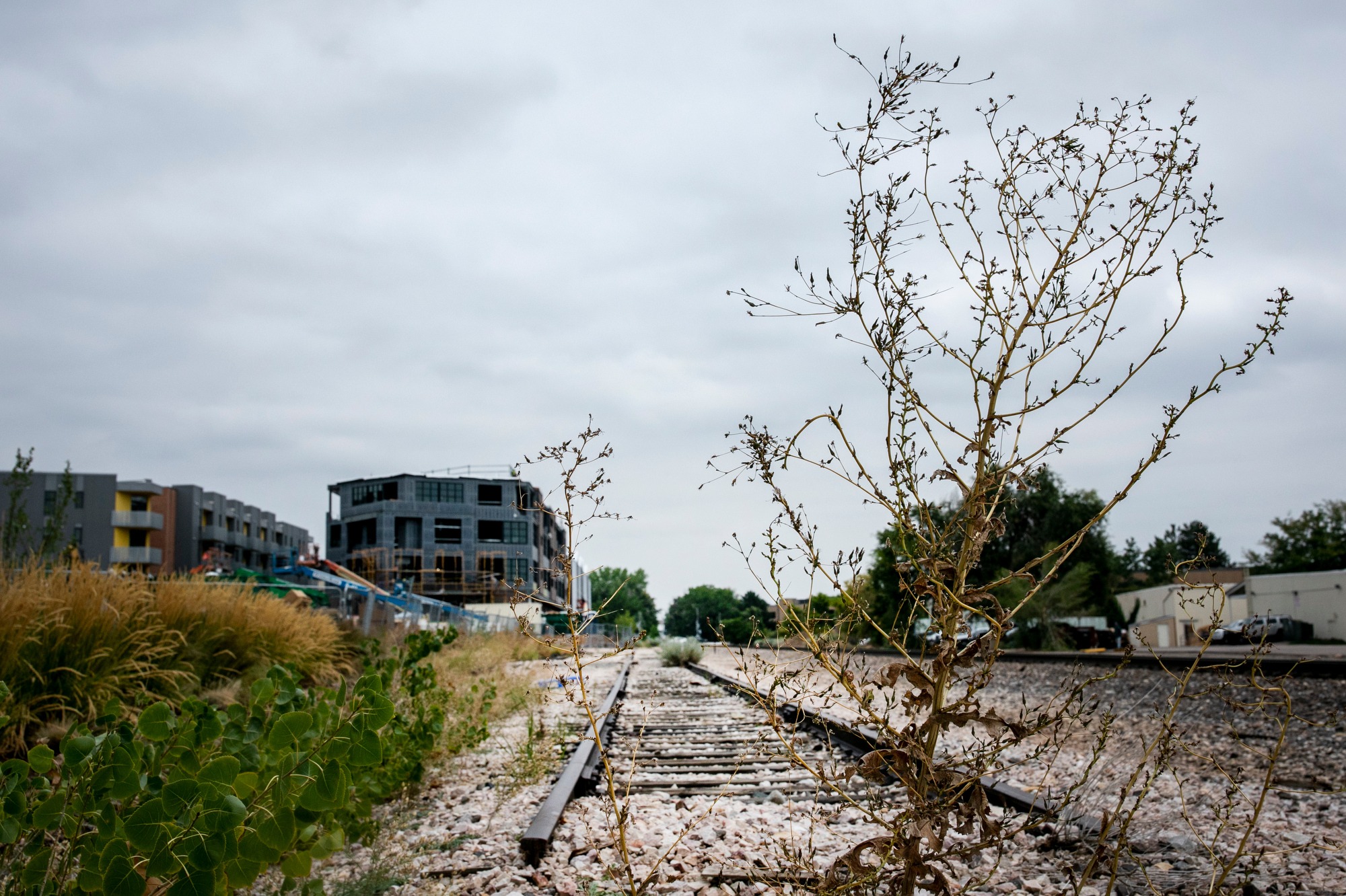
According to RTD’s website, 25.1 miles of light rail track and 53 miles of commuter rail track have been completed as part of the FasTracks expansion. But the N, L, D, and B lines have not been completed. The W line, which goes into O’Keefe’s district and includes Highlands Ranch, has received no FasTracks money.
O’Keefe said RTD needs to take a step back and look at planning a transportation system that would be successful for the people in the Denver metro area. He said one solution could be a joint service where RTD partners with the State and BNSF Railway, one of the largest freight railway networks in North America, to create the Front Range Passenger Rail District.
“We're not building and owning all the tracks. We're not operating and owning all the carriages. We have a partner in the Front Range Passenger Rail District, and it would be cheaper than if we built it on our own,” O’Keefe said. “I'm very hopeful that our discussions with the governor and the state's discussions with BNSF for track rights will enable that promise to occur. But even that is still an open question.”
O’Keefe said the budget has been the most frustrating issue for him. The original FasTracks budget was $4.7 billion when the 2004 FasTrack Ballot Initiative was approved. To date, RTD has spent more than $5.5 billion on the program. And the $1.6 billion construction cost estimated in 2024 does not account for potential future inflation.
State lawmakers whose constituents are served by RTD were not pleased upon hearing those comments. District 28 Rep. Sheila Lieder believes cutting FasTracks would be a huge mistake for her community and would affect workers.
“People in my district have to commute on average 27-plus minutes every morning. What are their priorities here actually? What are their priorities here?” said Lieder, who represents Littleton, Lakewood, and Morrison. “We need to deliver on public transit, and FasTracks cuts make a bad decision worse.”
District 20 Senator Lisa Cutter, who is the Chair of the Senate Transportation & Energy Committee, said she was shocked by O’Keefe’s words.
“This is a promise that we made to the voters. So I think that's not something we take lightly,” Little said. “I was part of a bill a few years ago to provide funding for FasTracks, and I'm very proud of that. So, I reject the idea and would like to dig in a little bit more about where he's coming from and why he actually said that.”
A major challenge facing FasTracks is the inability to issue debt under the Taxpayer Bill of Rights (TABOR).
RTD’s remaining voter-authorized debt issuance authority is limited to about $3 million. In the past, RTD would use corridor certificates of participation, where it’s borrowing against assets like buses or trains as collateral. But RTD is unable to do that.
“RTD needs to deliver on its promises to our state,” said Rep. Meg Froelich, who represents Englewood. “We’ve done all we can at the legislature and generated additional revenue to support transit across the state, with RTD getting the bulk of those dollars.”
“They asked the voters to allow them to keep their revenue above the TABOR limit with 7A last year and made more promises with that endeavor,” she said. “For the workers, the riders, and the planet, RTD needs to fulfill their compact and truly deliver a world-class transit system.”
O’Keefe said RTD will have to re-earn taxpayers’ trust before it can take on debt again. He knows they have a ways to go before that happens and will need to have a plan voters will believe in. But he says he is just as upset as lawmakers and constituents about the situation.
“It was promised. It was promised to me. I voted for it. I voted for it in 2004. I'm as mad as they are,” he said. “But it doesn't change the fact that we don't have enough money to build it. That's just a fact. And so, what we need to stop doing as an agency or a transit community is pretending like somehow there's a magic point when all these assets are built. We have a budget problem at RTD right now that exists even without FasTrack.”
Last December, RTD passed a $1.5 billion budget for 2026 but faces a $250 million shortfall. Lieder thinks RTD should make cuts to its top-heavy management instead of FasTracks. She also referenced RTD CEO and General Manager Debra Johnson’s 18-month contract extension that was approved in December 2024.
“My guess is that (Johnson’s contract) is half a million dollars a year. And they're in such a deficit that they hired an assistant deputy CEO for what I can only assume is more money than most families have seen since 2020,” Lieder said. “Perhaps they should start cuts there and not the occupational employees or FasTracks. Is that how they keep their promises to the people of Colorado?”
The RTD Board of Directors voted in 2024 to extend Johnson’s contract until May 2027 with an annual salary of $421,878. Documents presented to the board that year show that, including benefits and other payments, her total compensation in 2025 was around $500,000.
The governor’s office said he was encouraged that current RTD leadership had “demonstrated a willingness to think differently and fulfill the promise made to voters together through passage of the joint service interagency agreement and conversations to convene around completion of the N line,” a spokesperson told CPR News. “We can solve problems when we work together.”
“The voters who voted and have been paying for Fastracks for 21 years deserve their elected officials to try to solve problems and honor the commitment made to voters,” the governor’s office said. “What is unique about Fastracks is not the revenue shortfall but RTD’s past unwillingness to think creatively and collaboratively to solve the problem. Now they are showing renewed interest in joint services and fulfilling the promise made to voters.”
O’Keefe said RTD management is looking at reducing overhead and non-customer-facing expenses and not just staff reduction.
“I know that management is looking at all of our spending and trying to figure out where we can change that spending trajectory and try to push that problem where our revenues are no longer able to keep up with the expenses even farther out,” he said. “So if we can move it from 2030 to 2032, I think that's a success. It gives people two more years to plan for what RTD can be and what people are willing to pay for.”
The RTD Board of Directors’ next meeting will be Feb. 24.