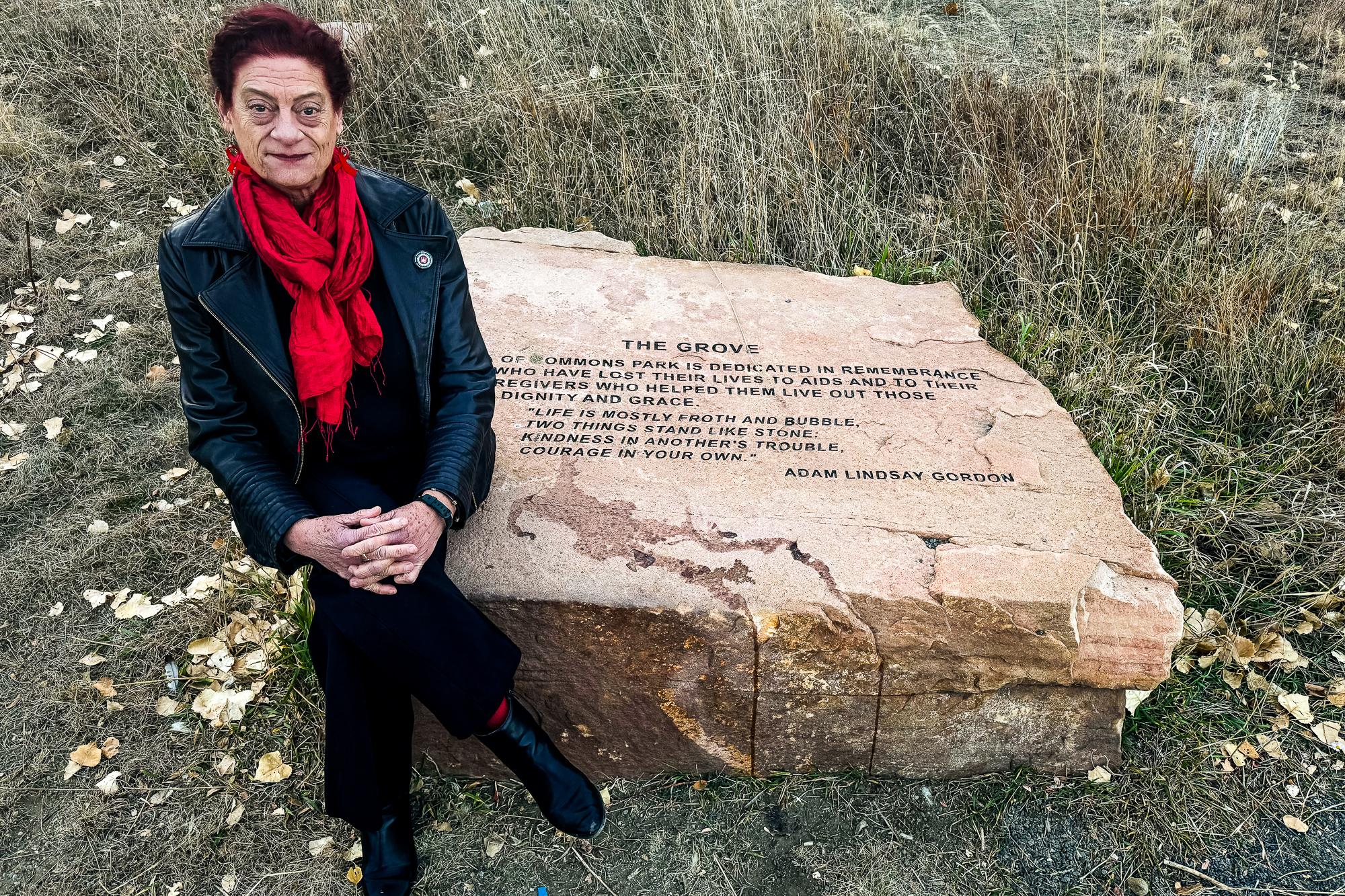
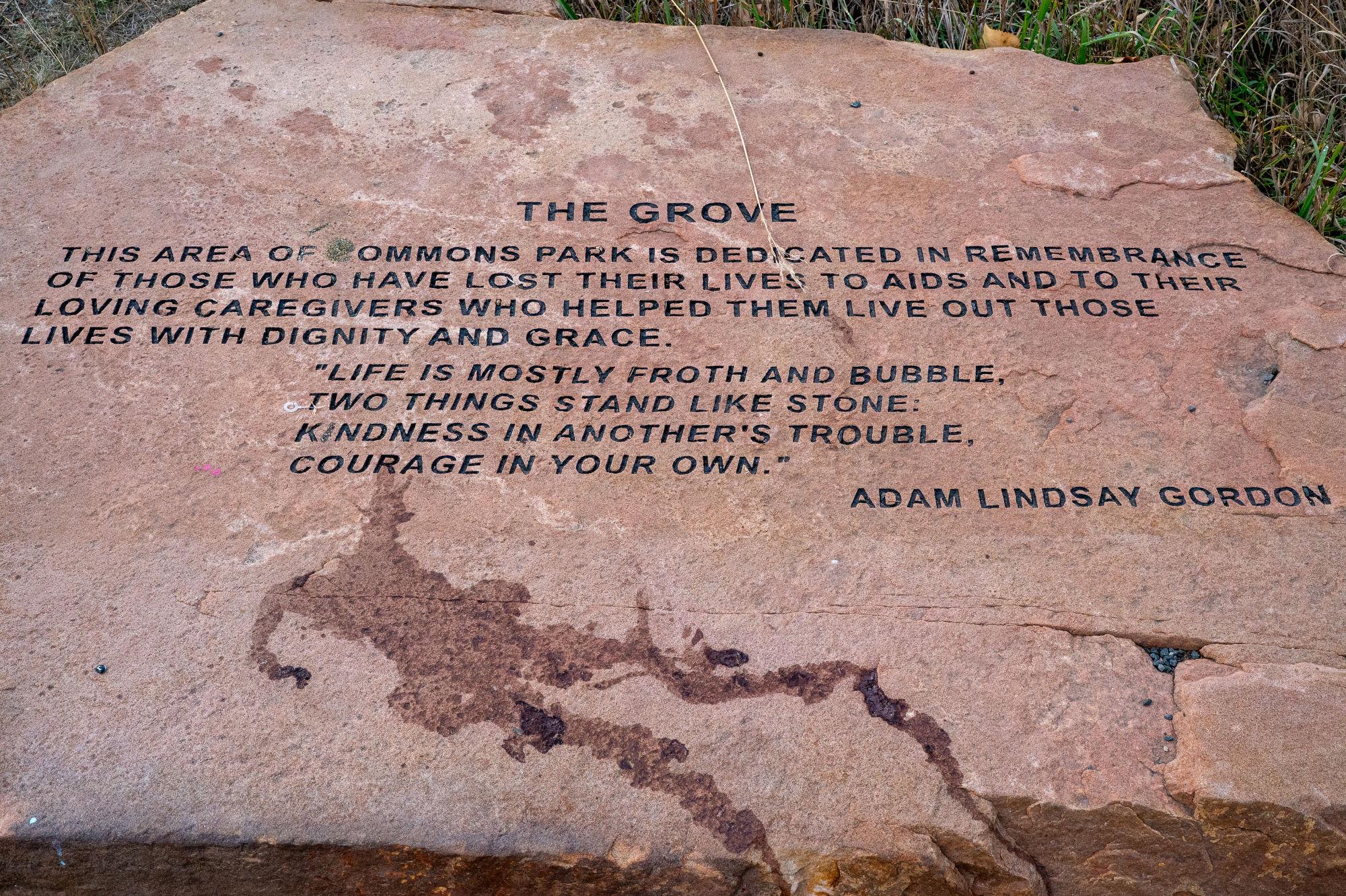
Near the confluence of the South Platte River and Cherry Creek sits an engraved boulder.
It reads, in part, “This area of Commons Park is dedicated in remembrance of those who have lost their lives to AIDS and to their loving caregivers who help them live out those lives with dignity and grace.”
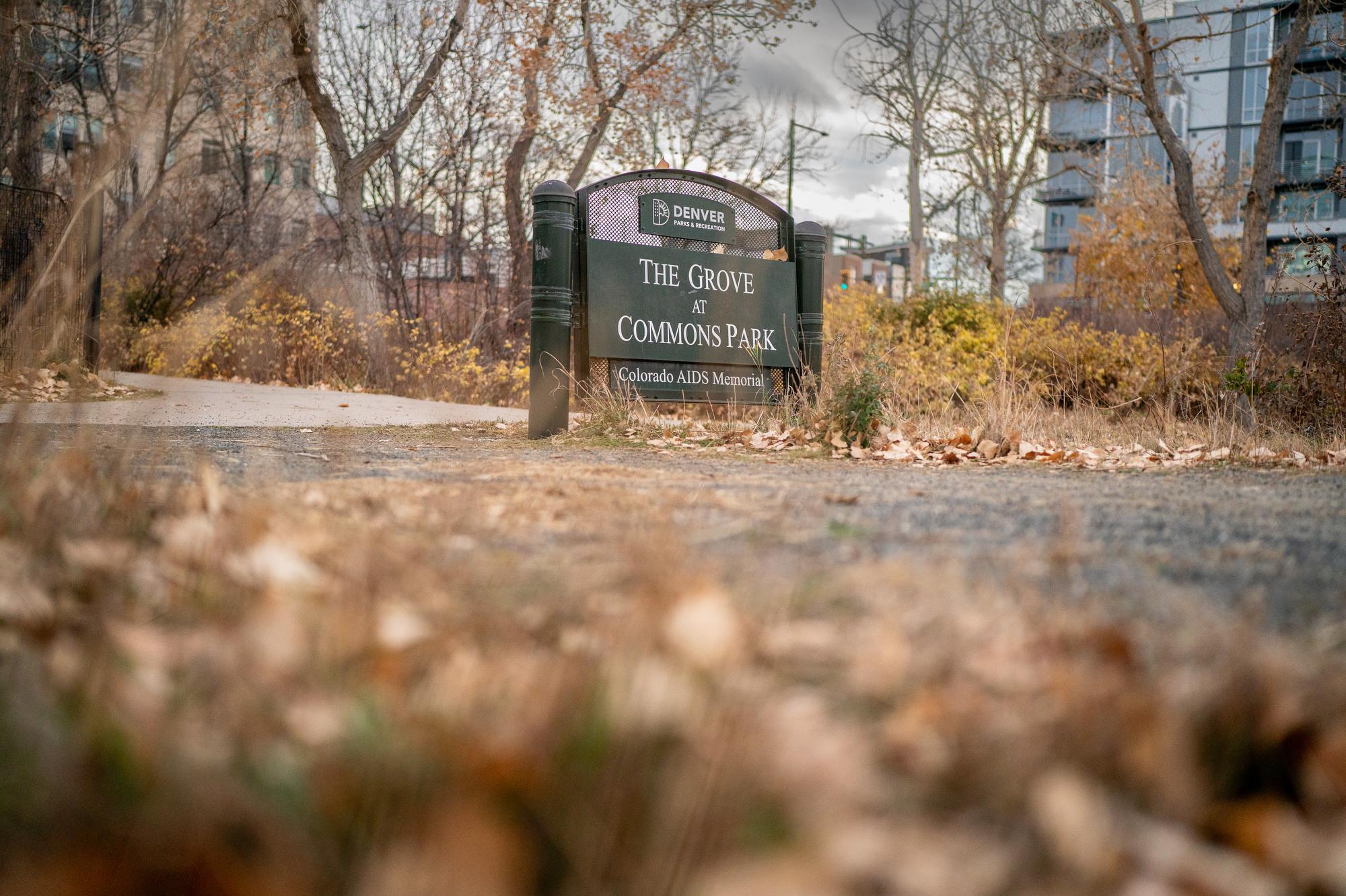
The Grove, Colorado’s AIDS Memorial, was dedicated in 2000. A clear path winds through the park, but the area has rewilded to some extent— making it easier to miss.
For World AIDS Day, longtime activist Barb Cardell, of Boulder, met Colorado Matters Senior Host Ryan Warner at the memorial to discuss science, stigma, and social action. Cardell is program director at Positive Women’s Network — USA and is the governor’s appointee to the Colorado Alliance for HIV Care, Prevention, and Treatment.
Below are five takeaways from their conversation:
The Grove is a special place, but often overlooked
I usually come here on special remembrance days. It's a little bit of travel for me, but when I come — every single time — I am really touched by the space that we have in Denver to remember people. I see parallels, with this really overrun park, between how we treat people who are living with HIV and how we remember those we've lost. It's a very private disease. It's a very stigmatized disease even in 2025.
Cardell believes it is time to mobilize and protest
The current administration is pulling away a lot of funding and banning talking about diversity, equity, and inclusion, as well as LGBTQ folks, especially trans folks. We find that stigma is rearing its ugly head. Again. HIV is an everyone disease, but we're talking about groups that, in particular, are really being ignored and marginalized.
The administration is challenging our access to medication, our access to healthcare, our access to HIV services. So where we're back to is that we need to be activists. We need to be in the resistance because our lives are at stake again.
Aging with HIV can be uncharted territory
I acquired HIV in 1991. And so I've been living with HIV for 35 years now, which is a dang long time. I am 61, I'm going to be 62 in January. I was supposed to be dead before I turned 40.
Unlike other diseases, like tuberculosis or cancer, for which we have decades and even centuries of research and understanding, on HIV and how we age with HIV, nobody knows. The daily wear and tear on my body of living with HIV and taking medications that save my life but also are nearly toxic, has an impact on my body. So when you go and you say, ‘well, I've got this weird thing that happened,’ and the doctor's like, ‘oh, that's so interesting. I've never heard of that before,’ that happens more often than you would imagine. We also say that for people aging with HIV, our bodies are about 10 years older than we physically are.
Colorado is better positioned than most states in terms of HIV care & support
Things are significantly better In Colorado. We've always worked really hard as advocates with our allies at the state health department, the AIDS service organizations, and clinicians. The University of Colorado Anschutz is spectacular in their HIV care and services, especially talking to people who are aging with HIV.
Colorado really can seem like a bubble. I advocate federally and I brag about Colorado all of the time because we work so hard to make sure that people not only have the biomedical, that they have the medications, that they have access to the doctors, but we also talk about quality of life. Do people have a place to stay that feels safe? Do they have food? If they're interested in working, are they able to work?
Coming out as HIV-positive is a personal decision
We estimate that there's about 1.2 million people living with HIV in the United States. About 13% of people who have HIV aren't aware of it. If you're living with HIV and you're on effective medication and your viral load is undetectable, you cannot pass it along.
We need to be very, very careful saying, ‘just be open about your status because then we're fighting stigma!’ Even in Colorado, we have examples recently of people who have been excommunicated from their church, who have lost their housing because they were open about their status, who have had their family step away from them, who have lost their children when they were in a divorce proceeding, and were seen as unfit parents because they're living with HIV. When we're talking about disclosure, we have to be very careful because if people are in a relationship that has some violence in it, that is most often when somebody will be hurt, often very badly hurt. People who have been murdered by their partners when they disclose their status.