On a recent Sunday, Our Lady of Peace Catholic Church in Greeley is packed with hundreds of parishioners. Most wear jackets on this windy day. Photos of Pope Leo XIV, Pope John Paul II and Mother Theresa hang on the walls. A Christmas tree stands in the corner, and purple candles light the room, as a priest speaks.
Outside in the parking lot, there's a health fair, with free food, a raffle and mobile health clinics, including one from Stride Community Health Center.
“When I heard about this, that they're gonna have it for free, I told my mom, I was like, ‘We have to go since we don't have to pay anything,’” said a 21-year-old man, who CPR is not naming due to safety concerns. “We could see how our health was doing.”
He came to the health fair to check his A1C levels for signs of diabetes. It runs in his family. He also got a physical.
The man said he works as a medical assistant, and his family immigrated from Guatemala. He’s a permanent resident, but his mom, who is here for her physical too, has been afraid to leave the house, afraid to seek out health care elsewhere.
“She's afraid that they're gonna send her information to immigration and contact them and stuff like that,” he said. “So I would say there's a lot of fear right now in the community.” He said she’s afraid of getting deported.
Recent state and national surveys spotlight strains felt by immigrant families. Detention fears and economic uncertainty are impacting their health and reshaping their daily lives.
It also changed plans for this event, which was originally set for another nearby location, said organizer Julissa Soto.
“We got the word that immigration was gonna be waiting for us,” said Soto, a health equity consultant. “So the community came and talked to me and talked to the priest and said, ‘We feel safer at church.’”
In the end, she said more than 400 people, families and ordinary folks attended the health fair.
“I'm trusting that they know that at 8 a.m. in the morning in a health fair, they will not find the criminals here,” Soto said.
Amid fears, providing care where people are
Nationally, ICE has conducted operations, or raids, near clinics and hospitals as well as churches, but the agency has said they’re “extremely rare.” The precise number of total detentions in Colorado is unclear, though CPR reported this month 115 deportation flights left Denver this year
Greeley is an important center of Latino life in Weld County, with a population of about 110,000. Forty percent of it is Hispanic.
The community is a mix of people whose official status varies; some are U.S. citizens, others are naturalized, others are undocumented. And a typical family might have members in more than one category. Many work in nearby farms, construction, health care and the JBS USA meatpacking plant, the city’s largest employer.
The health fair, or Bazar de la Salud, also drew people from further afield.
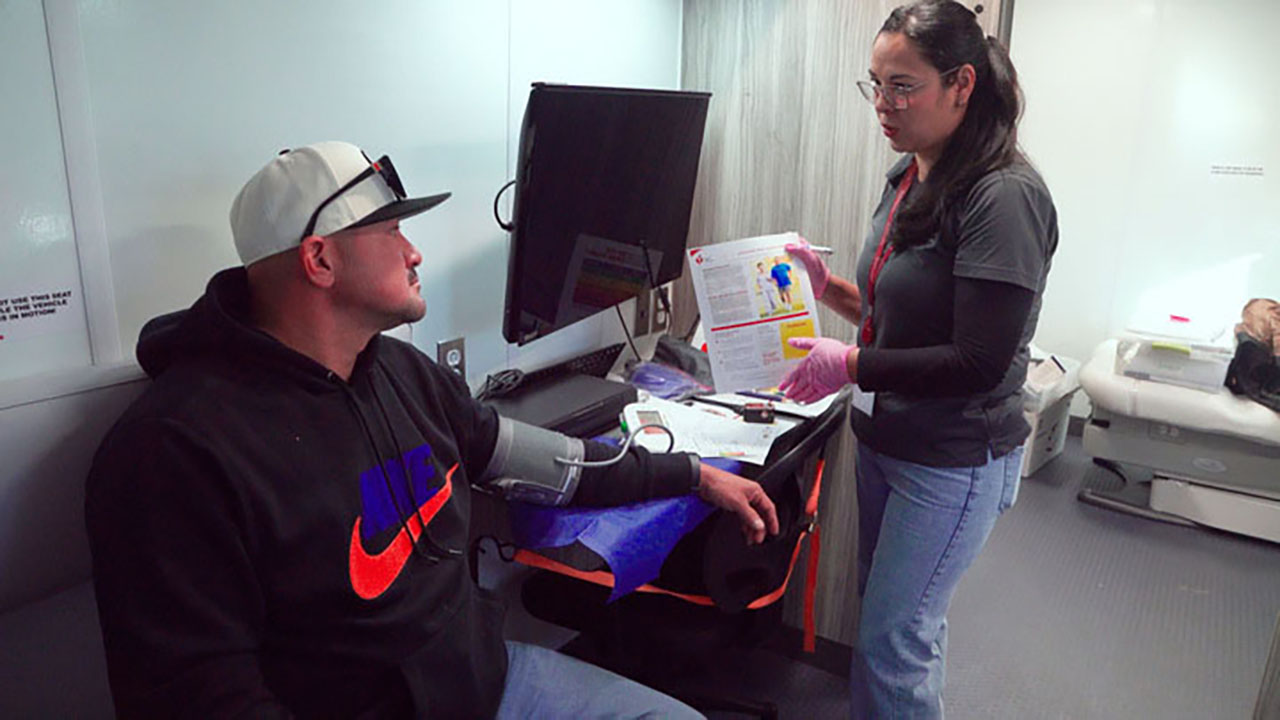
One of those who showed up was a man named David, who sat with his wife inside a trailer.
Speaking Spanish, David said they drove up from Denver, an hour away, where he’s a house painter. He came for a tetanus shot.
“Being here at the church is the best place,” to get health care, he said, because of “a collective fear that everybody's feeling.”
Without the health fair, David said he’d just skip the shot “until things calm down. Because right now it's very scary to get out.”
Providers at the event did a variety of screenings, like eye and musculoskeletal exams and offered mental health support.
“We make sure we tell people like, ‘You don't need documents to be here, we don't care about that.’ We're not checking that,” said Isabella Contolini, a fourth-year medical student at Rocky Vista University in Parker, who volunteered through the Catholic Medical Association. “We're here to give you resources of places you can go that will help you. No questions asked.”
Shawn Marzan, a program manager for street medicine and community outreach with Stride Community Health Center, said being able to hold the fair at places like a church is key.
“When you go to places where people feel comfortable with it, you can provide care for them. They're more apt to go to those places. So that's what we plan on doing,” he said.

A flyer promoting the event spotlighted the team effort involved. Dozens of groups were listed as sponsors, including the Colorado Department of Public Health and Environment and Vuela for Health, a Denver-based group of community health promoters.
Back inside the church after mass wrapped up, Soto encouraged the congregation to stop by the parking lot for health care and vaccinations.
“What I said to them is that we were offering free vaccines, that we have free access to health care and that we need to all unite because hard times are coming our way and we need to educate ourselves about health care,” Soto said as people shuffled out of the service. “It's important for all of us to know where to seek help instead of running to the emergency room.”
Many people who delay preventative and routine healthcare end up getting sicker than they would otherwise and often seek care in hospital emergency departments. That results in much more expensive care and worse health outcomes, according to hospitals, providers and numerous studies.
Health care seen as salvation, key to serving others
One potential impact of the health worries: lower vaccination rates, just as a potentially bad flu season is unfolding in Colorado and across the nation.
Just 7% of Hispanic Coloradans have gotten a flu vaccine this season, compared with about a quarter of the state’s population. That’s according to the state’s viral respiratory dashboard. Just 2% had gotten a COVID-19 shot compared with 11% of the general population.
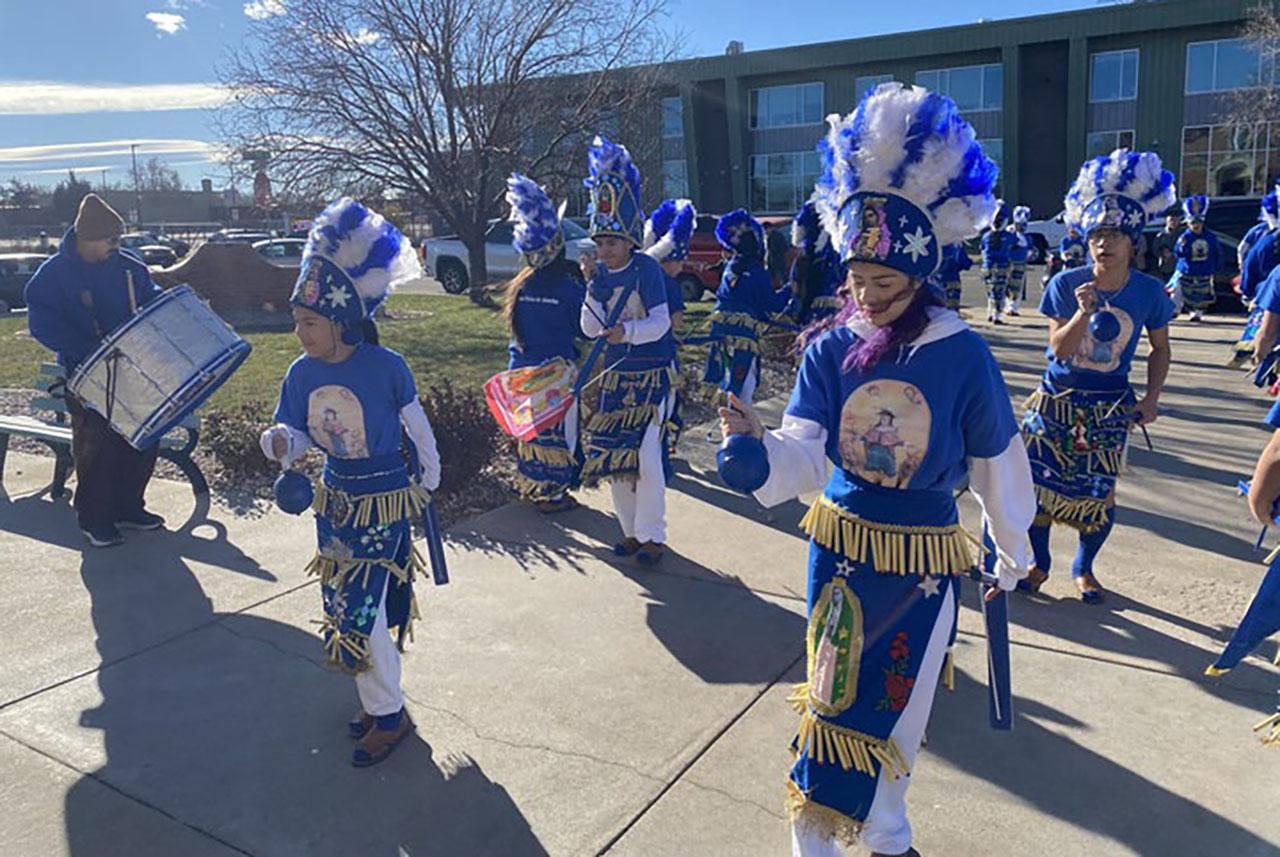
As parishioners gathered in front of the church entrance, drummers pounded away for a group marching in blue shirts and tall hats in a traditional dance.
Congregant Maira Gomez said the combined service and health fair event provided both spiritual and practical benefits. Her mom was grateful to get a free shot.
“She got her shingles vaccine. I know when she went to (another) clinic, it was very, very expensive, and so she wasn't able to get her second dose,” Gomez said. “And so she said she was able to get it here.”
Parish priest Father Alex Pichardo said in Spanish that having the health fair here tied in with salvation.
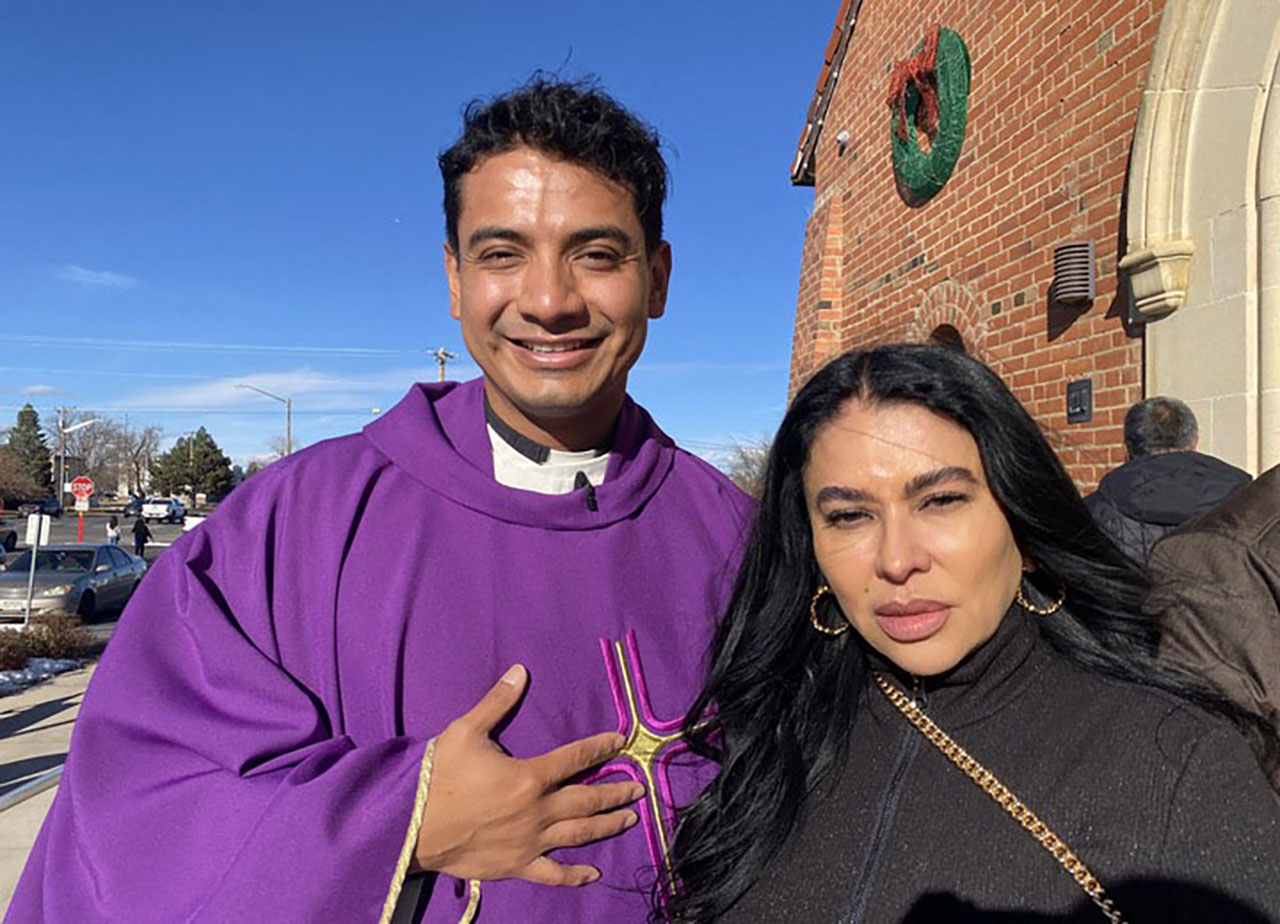
“Well, we worry about the health of others. We're worrying about the salvation of others, and that's what the Bible teaches,” he said, as Soto translated.
He said it’s a must for the church to help the communities it serves.
Immigrants report negative health impacts due to fears
National surveys, like one conducted this fall by independent health group KFF and the New York Times, have documented a variety of health barriers for immigrants.
Since the start of the second Trump administration in January, four in 10 immigrant adults overall and nearly eight in 10 likely undocumented immigrants said they experienced negative health impacts due to “immigration-related worries.” Those included increased stress, anxiety, or sadness, problems sleeping or eating, and/or worsening health conditions like diabetes or high blood pressure.
Those worries extended to others whose official status might be regarded as more solid.
Nearly half of lawfully present immigrants and about three in 10 naturalized citizens reported at least one of those impacts, according to the survey. Among parents who are immigrants, about one in five said that their child’s well-being has been impacted since January. Those included problems sleeping or eating, changes in school performance or attendance, or behavior problems.