A delayed purchase of drones in Colorado Springs. Scrapped training and equipment purchases for a nuclear weapons detection program in Denver. Shifting funding to save a program to prevent political assassinations.
Colorado is still waiting on around $34.7 million in Federal Emergency Management Agency funds, months after it was supposed to be in state and local coffers.
Now, the effects of that delay are starting to ripple through the state.
And it could get worse: state officials fear that without additional money next year, they won’t be able to staff an emergency operations center 24/7, and will have to lay off dozens of staff. They will also run out of money to help pay for county emergency managers, who are currently responding to Xcel Energy’s power shut-offs across the Front Range.
For now, Colorado is using stopgap funding to keep some of these programs afloat. The state has also sued the Trump administration several times to restore FEMA dollars … and won — though the administration intends to appeal some decisions.
FEMA has long been a partner to clean up after disasters, coordinating resources like search and rescue and debris removal. But in the past two decades, it’s shifted to provide disaster preparedness grants, to shore up communities before tragedy strikes.
Now, state officials believe they can no longer count on consistent FEMA funding to prepare for disasters.
That’s a massive change, said Kevin Klein, director of the state’s Division of Homeland Security and Emergency Management (DHSEM), which administers FEMA dollars.
“We’ll see where the federal dollars shake out,” he said. “But bottom line is that we have a duty to protect Colorado.”
As a result, Colorado is considering a Plan B: a future where the federal government is not a reliable partner for emergency preparedness.
FEMA did not provide a statement on the record. White House spokeswoman Abigail Jackson said in a statement that the administration is committed to working with state and local governments to become more resilient.
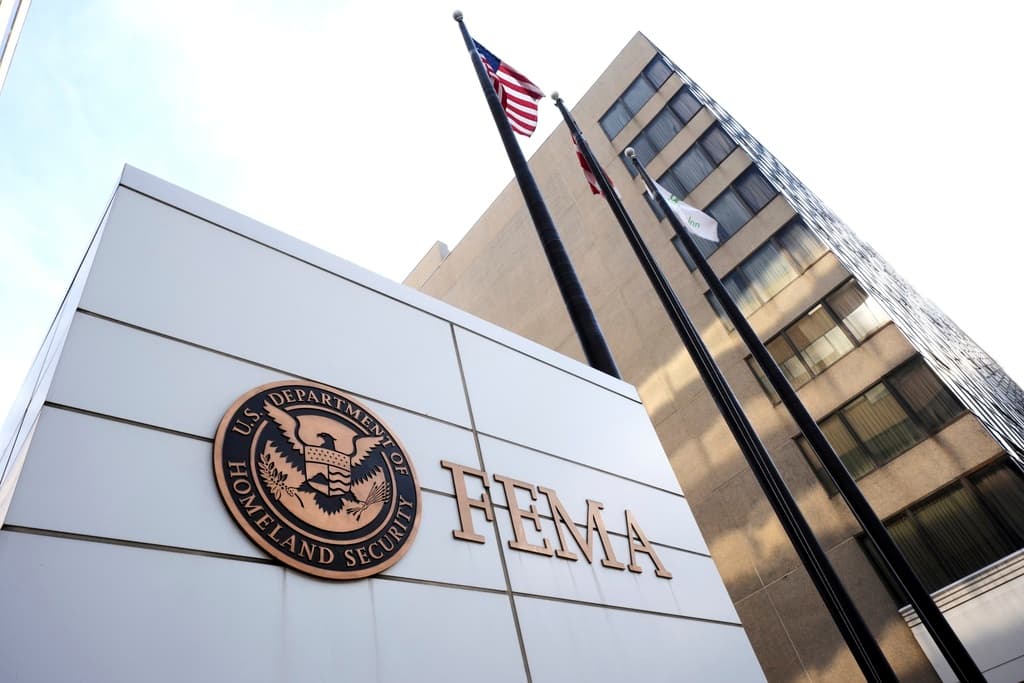
Immigration-related terms holding up grants
The delay in grant funding is political, and linked to lawsuits around the federal government’s attempt to tie emergency management funds to its “mass deportation” campaign.
Earlier this year, the Department of Homeland Security (DHS), which oversees FEMA, added new terms to billions of dollars in federal grants. Those include a requirement to share immigration data with federal officials and assist in deportations.
The terms violate Colorado law, which means the state cannot sign every grant it receives.
Colorado has joined a coalition of blue states and sued the federal government to remove those terms. Even as judges have ruled in the state’s favor, Colorado hasn’t received all its funding, and the administration intends to appeal certain decisions.
“We have had to file motions to enforce court orders in other cases, and we will continue fighting for critical emergency management and disaster relief funds,” said Attorney General Phil Weiser in a statement.
The back and forth has caused ample uncertainty, leaving the state and local communities unsure about whether they’ll get certain funding.
“What’s been going on is very chaotic,” said Klein. “And it’s hard to plan around that.”
As a result, Gov. Polis has asked the legislature to shift millions of state dollars to Klein’s division over the next few years.
The move, part of the Governor’s 2026 budget request, acts as a contingency plan if Colorado loses out on future emergency preparedness funds.
But it comes as the state faces a budget hole of nearly $850 million, and other departments are jockeying for their priorities. Ultimately, it will be up to lawmakers to figure out which programs will survive.
The consequences of not funding emergency management programs, according to the budget request, seem dire.
“Elimination of the FEMA federal funds will have immediate and long-term consequences across the State’s emergency services,” reads the request.
Emergency managers may come under strain
FEMA’s primary function is providing support and money to states to rebuild after disasters. That money, known as public assistance funds, has sent billions of dollars to Colorado.
But the agency also provides around $24 million to Colorado in “non-disaster” aid every year. That money helps prepare for disasters, by funding counter-terrorism programs, a 24/7 emergency center, dozens of state-level staffers, and more.
One of those smaller programs is the Emergency Management Performance Grant (EMPG). It directs around $3 million in federal funds to help pay the salaries of 55 county-level emergency managers in the state.
Those are crucial positions — they help coordinate the response to wildfires, floods and other disasters — and counties are required under state law to have them. The funds mostly go to rural counties, according to DHSEM.
But Colorado can’t accept its EMPG funding for 2025. That’s because FEMA added new population requirements to the grant, and changed when the money can be used.
The grant now requires the state to verify its population, excluding people who have been deported by federal authorities. But Klein said that’s impossible, because Colorado doesn’t have deportation data and only the Census Bureau can verify a state’s population.
“ICE won’t tell us how many people they’ve deported, so I’m not sure how we actually do that,” Klein said.
Practically speaking, the funding delay means that counties are shifting funds, applying for state dollars, and considering sharing responsibility.
In August, Gov. Polis allocated $15 million from a COVID-era relief bill to help pay for some programs, including emergency manager salaries. But that funding only lasts until this coming June.
David Frees, director of Saguache County’s Emergency Management office, whose salary is partly paid for by federal funds, said he decided not to hire a deputy director earlier this year because of the uncertainty. He said the added staffing helps coordinate in the aftermath of wildfires and floods in the rural county in the San Luis Valley.
But, he said the county has dipped into an additional fund to help pay for his and his deputy’s salary next year.
“We’re taking the…response to disasters seriously, so we’ve made it work,” he said.
The bigger problem, though, is that Colorado officials are not confident the state can use EMPG funds in the future. That means that some counties may have to lay off their managers — but it’s unclear how many.
“There’ll be counties that I think will kind of weather the storm,” Klein said. “And there are counties that are gonna struggle to do that.”
In November, Colorado and other states sued DHS secretary Kristi Noem to remove the population requirement and other terms from the grant.
Using state funding to make up for less FEMA support
In November, Gov. Polis asked the legislature for a roughly $7 million increase to DHSEM’s budget next year, to cover some of the FEMA funds.
If approved by the legislature, the request would keep services at the “minimum level of emergency preparedness,” according to the state’s Department of Public Safety.
Without extra funding, the state would have to lay off key field personnel, completely restructure Klein’s division, and be unable to staff the state’s emergency center 24/7.
On Tuesday, Klein told a group of emergency managers that the governor’s budget request was not perfect — the division had originally requested more money. But the request would keep the department afloat and prepare it for future changes under President Trump.
“Hope is not a plan,” Klein told the group on Zoom. “We have to be prepared to make sure Colorado’s taken care of going forward, with an eye towards possibly losing these funds.”
The proposal does not fund county-level emergency managers, though. It instead calls for more than a dozen new state-level positions, which would help fill in the gaps.
“You are going to either see a complete elimination of the local emergency management program, or a massive reduction,” said Nathan Whittington, president of the Colorado Emergency Management Association, an industry group who pressed for more local funding.
But funding local staff is more expensive, Klein said.
“The bottom line is that we’re in a really tough budget year, and we can’t fund everything,” he said.
FEMA itself is in turmoil
As FEMA pulls back state support, the Trump administration has pulled back support for the agency itself, throwing it into chaos.
It has lost thousands of staff members, who administer programs like the ones Colorado relies on. It shut down a popular program to fortify communities from disasters, and has been criticized for its slow response to the deadly 2025 Texas floods.
Noem, the DHS director, has repeatedly said she wants to shutter the agency.
While the changes at FEMA are drastic, they may not be unprecedented. After its formation under President Jimmy Carter, the agency historically focused on “natural hazards” — hurricanes, floods, etc.
But after 9/11, FEMA was absorbed by DHS, and had to quickly become a counter-terrorism agency as well.
Lori Peek, director of CU-Boulder’s Natural Hazards Center, said the scale of changes today, from layoffs to a focus on immigration enforcement, seem different from the 9/11 counter-terrorism shift.
“There has been a wall between what is considered more traditional law enforcement activity, and then more traditional emergency management activity,” she said of FEMA’s place inside DHS.
“We’re sort of at this critical juncture where it is like, what is the future of FEMA?”
Colorado and other blue states are litigating that future in court. But they are still counting on the agency’s support, since only the federal government has enough money to pay for the escalating toll of disasters.
This fall, Gov. Polis asked President Trump to declare the massive Elk and Lee fires, and severe flooding in Western Colorado, a “major disaster.” That declaration would unlock FEMA funds to pay the state and counties back for cleaning up after those events — which caused at least $40 million in damages.
The state is still waiting.
In a statement, the White House said it was still evaluating the request and denied it was politicizing disaster aid.