The artificial intelligence boom has kicked off one of the biggest construction bonanzas in world history.
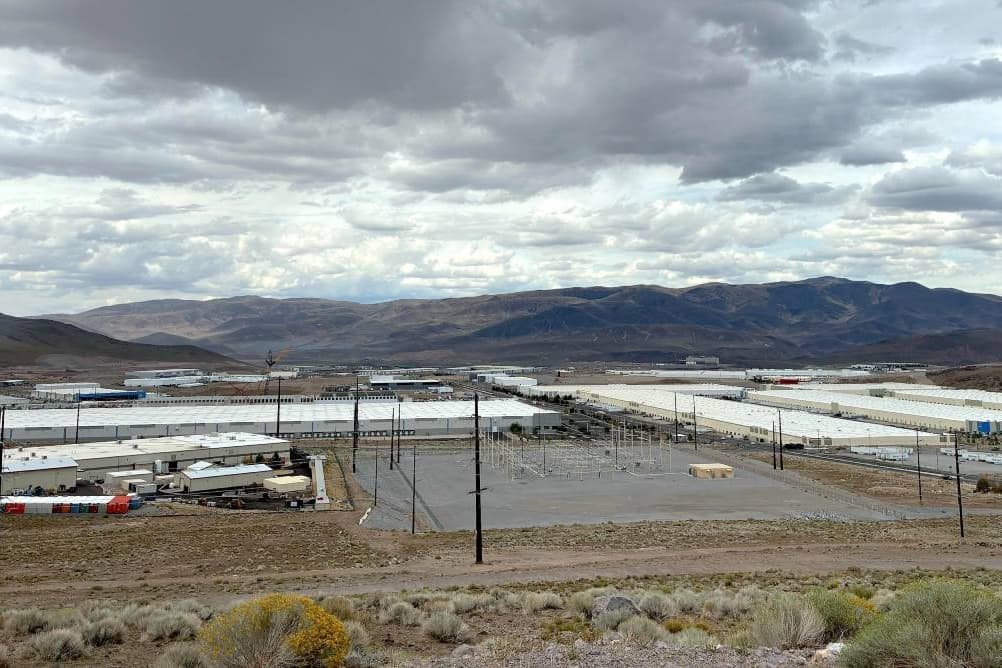
Across the U.S., tech companies have committed billions to build data centers, the hulking facilities behind cloud-based software and newer AI tools. Most of the projects have concentrated in states like Virginia and Georgia, which offer generous tax breaks and other benefits to lure tech companies to develop the facilities within their borders.
Colorado lawmakers have repeatedly shut down legislation to establish similar incentives over the last few years. The fight officially returned to the state capital last week when pro-business Democrats introduced a bill backed by data center industry groups. If approved, it would give data center developers a 20-year exemption from paying state sales and use taxes — if they meet a series of economic and environmental requirements.
“Data centers are drivers of local tax revenue,” Dan Diorio, the vice president of state policy for the Data Center Coalition, said in a virtual press conference announcing the legislation on Tuesday. “They support local jobs in those communities, and they allow those communities to reinvest in priorities that are important to them.”
It’s a plan already running into opposition from a broad coalition of environmentalists and fiscal groups. Without stricter regulations, opponents warn the energy-hungry facilities could inflate electricity bills and push Colorado’s climate targets further out of reach. Those groups are now putting the finishing touches on competing legislation aimed at protecting communities from the risks of data center development.
“Regardless of whether or not there are tax breaks, we need a strong framework in place to protect Coloradans from these adverse impacts,” said Alana Miller, a state policy director for the Natural Resources Defense Council.
How the tax incentive bill works
Colorado ranks among a minority of states without tax breaks to encourage data center development.
A recent survey conducted by the law firm Husch Blackwell found that at least 37 states offer benefits ranging from sales tax exemptions to discounted property taxes, often linked to minimum investment requirements and other standards
The legislation offers data center developers a 100 percent exemption from state sales and use taxes for up to 20 years, with a possibility of a 10-year extension. To qualify, a data center operator must commit to a minimum investment of at least $250 million and promise to create new full-time jobs paying more than the county average.

Other requirements aim to guard against environmental impacts and rising energy bills linked to increased power demand. Under the bill, data center operators must have a strategy to conserve water with closed-loop cooling systems or other technologies. Those developers also must work with utilities to ensure their plans don’t leave ratepayers with “unreasonable cost impacts.”
It would also set standards for backup systems used to maintain 24-hour operations at future data centers. Most current facilities contain massive diesel generators ready to flip on during blackouts. In north Denver, community activists have criticized CoreSite, a Denver-based data center developer, for planning to install diesel generators in an already polluted area near affordable housing complexes and a low-income health clinic.
The incentive bill would impose certain requirements regarding backup systems. Under the proposed legislation, operators would have to install backup generators cleaner than required under current EPA rules, or install alternatives such as batteries, hydrogen fuel cells or natural gas generators.
A nine-member data center development board would decide whether projects meet the requirements. The proposed legislation reserves spots for two gubernatorial appointees and two representatives of the data center industry.
State Rep. Alex Valdez, D-Denver, is co-sponsoring the legislation along with House Majority Leader Monica Duran. Valdez said the approach is designed to ensure data centers produce jobs and local tax revenue while avoiding pitfalls like higher energy bills, air pollution or water shortages.
“What I think we’ve created is not only a model environmental bill … but also a bill other states that are water-constrained and energy-constrained can look at,” Valdez said.
Why environmental groups are bracing to fight the legislation
Those protections in the pro-industry bill, however, don’t go nearly far enough for environmental groups and consumer advocates.
On Tuesday, a coalition of advocacy organizations — including the Colorado Fiscal Institute, EarthJustice and the Natural Resource Defense Council — published a press release calling the proposal a “data center handout bill.”
“If there aren’t sufficient guardrails and you’re encouraging unconstrained data center development, we could lock in greenhouse gas emissions for decades,” said Alana Miller with the NRDC. “It could also threaten our grid reliability and raise energy prices.”
Colorado lawmakers are also set to spend a second year managing a massive budget shortfall. At a moment of widespread program cuts, Miller hopes lawmakers consider whether now is the best time to give tax breaks to tech giants.
Data centers have also come under scrutiny as a key force behind rising electricity bills. An analysis published last year by Carnegie Mellon University and North Carolina State University found the energy-hungry facilities could increase power bills by an average of eight percent nationwide by 2030 and by as much as 25 percent in places like Virginia, a leading hotbed of data center development.
It’s a trend complicated by the odd economics of monopoly utility companies. In theory, the addition of a new major power user could help cut costs for households and other energy customers. That’s because a data center or energy-hungry factory would contribute to the cost of operating the grid by paying for massive amounts of power, minimizing costs for everyone else. Energy prices only rise if utilities must invest in new power plants and transmission systems to meet ballooning demand.
Xcel Energy, Colorado's largest utility, is already investing more than $20 billion in projects, in part to meet state climate goals. By luring more data centers, backers of the pro-industry bill say utilities would have extra revenue to cover the cost of those upgrades while continuing to deliver reliable electricity.
Environmental groups, however, contend there is a simple approach that’d guarantee data centers don’t increase energy bills: force developers to “pay their own way” for grid upgrades.
An alternative bill backed by environmental groups would require data center developers to match their energy demand with clean electricity sources, like wind and solar. The proposal is meant to ensure that tech giants cover the full cost of their facilities, rather than leaving ratepayers to foot the bill, said State Sen. Cathy Kipp, D-Fort Collins.
“We want to make sure ratepayers aren’t left holding the bag,” Kipp said.
Kipp hopes to introduce the competing bill in February. In an interview, she said the legislation would require data center developers to invest in renewable energy and publicly report their energy and water usage.
The sponsors of the dueling approaches also wasted no time taking shots at each other. During the press conference announcing the industry-backed legislation, Rep. Valdez said Kipp’s upcoming proposal simply isn’t “tenable” for developers.
“The other bill — it seeks to ban this sort of industry from coming to Colorado,” Valdez said. “We believe we’ve struck the exact right balance between what is doable and what is best in terms of stewardship.”
- Can an AI data center be 'green'?
- As AI data centers multiply across the Mountain West, so do fears over water use
- AI data centers need a lot of power. That creates challenges for electric companies in the West
- Does the AI boom threaten local air quality? A north Denver neighborhood is about to find out