It’s been more than a month since the White House revealed its plans to break up the National Center for Atmospheric Research (NCAR), a Colorado-based research hub dedicated to studying the Earth’s atmosphere to improve weather predictions.
Daniel Swain, a climate scientist at the University of California, was taking a short break from the internet when the news broke. Sitting on his couch in Boulder, his phone started ringing with a cascade of calls from reporters, interrupting his Tuesday evening to ask if he’d seen the announcement from Russell Vought, the director of the White House Office of Management and Budget.
In a post on X, Vought promised to dismantle NCAR, a collaborative institution he referred to as one of the country’s “largest sources of climate alarmism.” The move was quickly met with local protests and pushback from scientists nationwide. Swain quickly logged back in to defend the center, where he holds a desk as a part of a research group focused on weather modeling. Other scientists raised the alarm by warning that the move would shatter “the global mothership” supporting humanity’s understanding of the planet.
“There was some hope that this would all blow over,” Swain said. “A lot has happened since then, but it seems the focus on NCAR has not really been lost, unfortunately.”
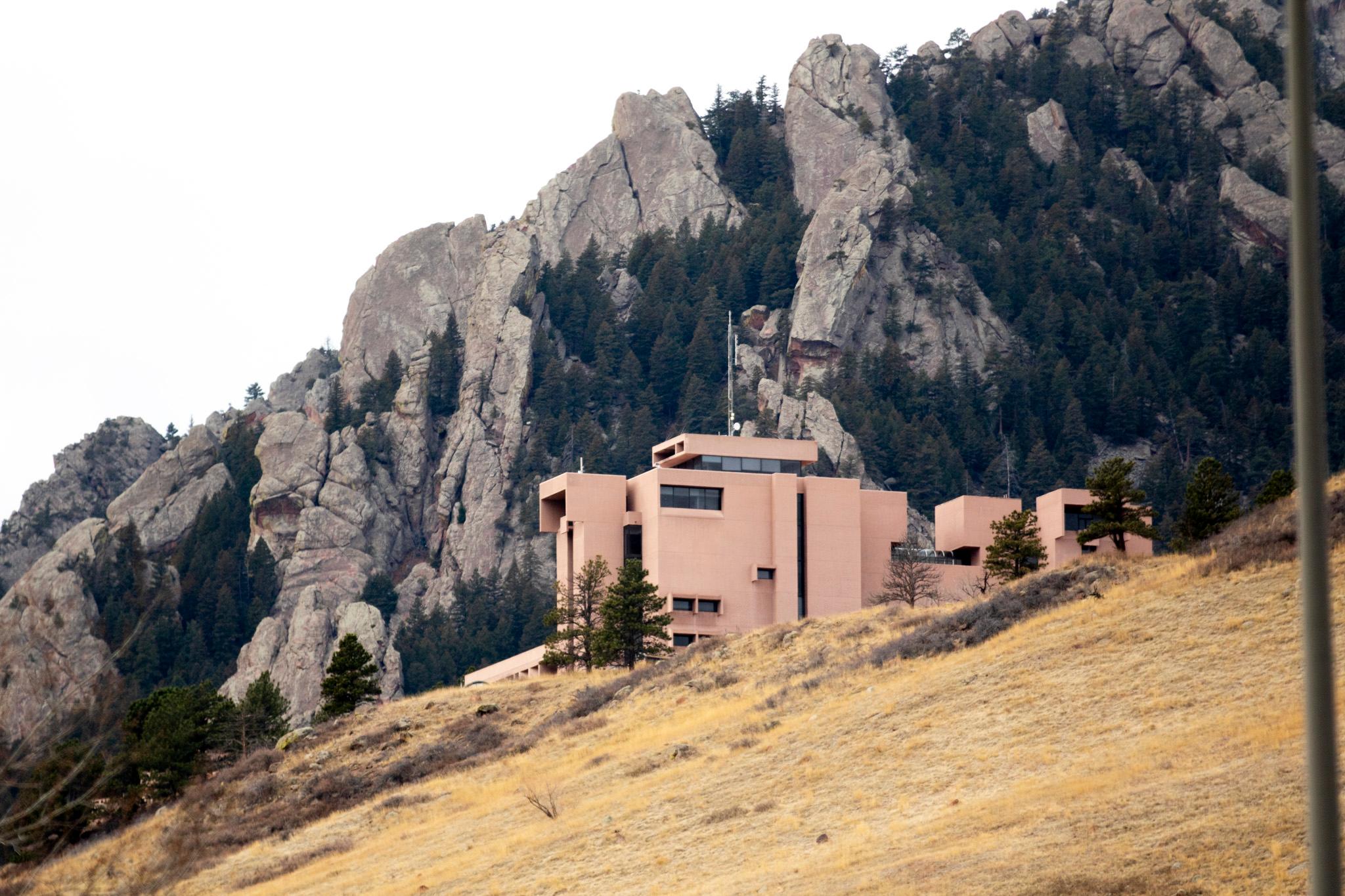
A recent request confirms the federal threat hasn’t disappeared. In a letter published Jan. 23, the National Science Foundation asks for ideas to redistribute NCAR’s core functions — such as weather modeling and predicting electromagnetic solar storms — into different institutions. It also asks for concepts for the “private use” of the NCAR Mesa Lab, an iconic brutalist lab perched on a hill below the Boulder Flatirons.
That solicitation, however, also gives researchers a chance to voice their support for NCAR, an institute designed to integrate observational data of the planet into tools to sharpen weather predictions and benefit the public. It’s an approach many scientists insist is more critical than ever as climate change amplifies hazards around the world.
A center built on collaboration
NCAR was born out of a desire for improved weather prediction following World War II.
In 1956, the National Academy of Sciences formed a committee to investigate how to better align the field of meteorology to accomplish the objective. A report published two years later concluded the task required a better understanding of Earth’s atmosphere and recommended a national institute to study fundamental patterns like the movement of water and energy.
The federal government chose Boulder as a location due to its distance from foreign adversaries and growing concentration of research hubs in the state. In 1960, NCAR began operations under the management of the University Corporation for Atmospheric Research, a consortium of universities operating the institute on behalf of the National Science Foundation.
Walter Orr Roberts, an astronomer and physicist, was appointed as the center’s founding director. Known for building a device to observe the sun’s corona near Leadville, Roberts imagined NCAR as a “village” of linked research groups, each focused on particular atmospheric projects, according to an oral history published in 1985.
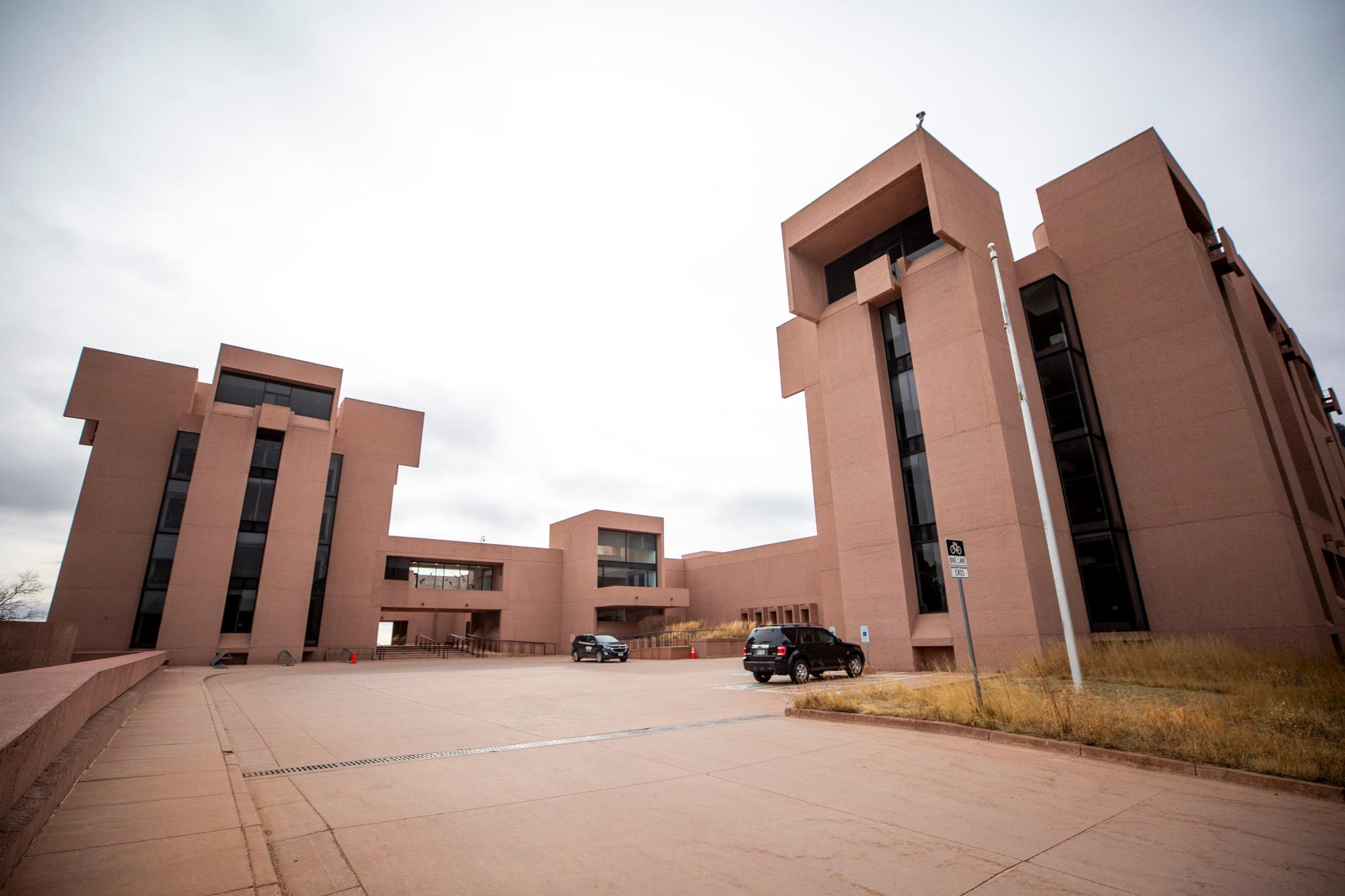
It’s a vision reflected in the NCAR’s Mesa Lab above Boulder, designed by architect I. M. Pei. Opened in 1966, the blocky modernist design consists of a set of rose-colored concrete towers connected by horizontal corridors. The arrangement was meant to create quiet workplaces without completely isolating researchers from peers in other disciplines.
Swain credits integration across atmospheric sciences for improvements in weather models. It’s one reason he’s so frustrated by the NSF’s recent Dear Colleague letter, which he said implies predicting storms or wildfires can somehow be separated from climate science.
“One of NCAR’s major advancements and recognitions over the years has been that weather and climate exist along the same spectrum of atmospheric science,” Swain said. “The more we artificially separate them, the less we're able to predict.”
An organized defense effort
It’s unclear exactly how the Trump administration might try to dismantle NCAR or repurpose the Mesa Lab.
The center currently employs more than 830 people nationwide. A press release published in December indicated the NSF is already working to transfer ownership of two research aircraft and a supercomputer jointly operated with the University of Wyoming in Cheyenne, Wyoming.
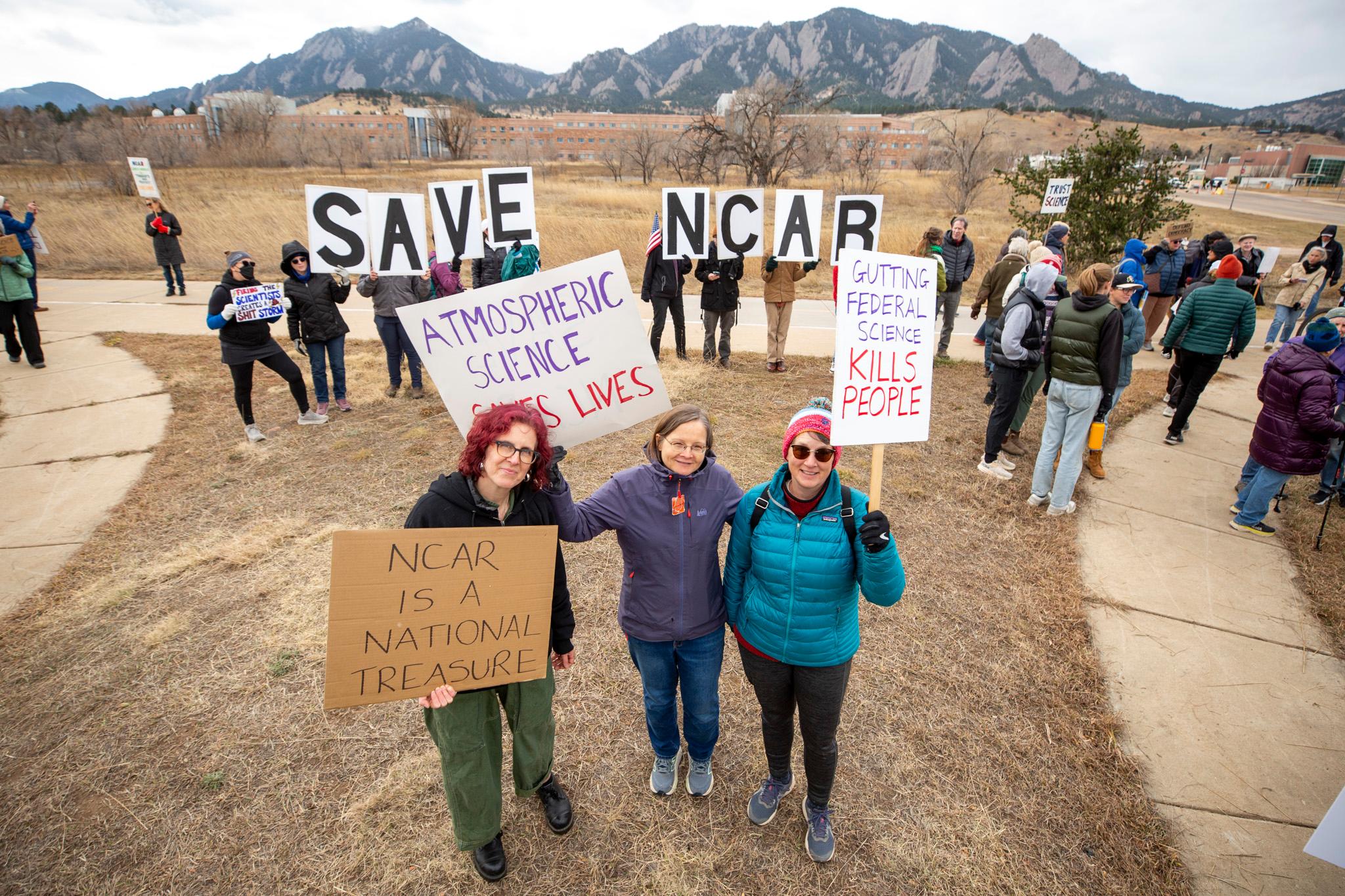
The letter asks for ideas to reshape, reassign or possibly cancel other NCAR operations, but doesn’t list specific projects or programs. When asked what kinds of plans it hopes to consider, Mike England, an NSF spokesperson, said the letter “speaks for itself” and his colleagues “are looking forward to the responses.” David Hosansky, a spokesperson for NCAR, didn’t have any additional insight.
"We are continuing to do our work as always, and we’re in touch with NSF to better understand how this process will unfold,” Hosansky said.
The letter was also published a day after Congress approved an appropriations package without protections for NCAR. Colorado Sen. John Hickenlooper and Sen. Michael Bennet proposed an amendment to safeguard the center from funding cuts, but it failed to win enough votes even after Hickenlooper held up the funding package for weeks.
Many Colorado Democrats have suggested the White House is targeting NCAR because Colorado refuses to release Tina Peters, a former Mesa County Clerk currently serving a nine-year prison sentence for her role in allowing unauthorized access to county voting systems following the 2020 election.
Meanwhile, NCAR supporters are organizing to flood the NSF with responses in defense of the research center, according to Carlos Martinez, a senior climate scientist at the Union of Concerned Scientists. He recently published an op-ed noting that the research center has provided the public with lifesaving technologies, like tools to help aircraft avoid dangerous thunderstorms. He’s encouraging scientists and anyone else to reply to the letter by a March 13 deadline.
“The most important thing I can say about NCAR is it's not a collection of things. It really is a whole entity, and it is greater than the sum of its parts,” Martinez said.
Part of the goal is to marshal public support for NCAR ahead of debate over the 2027 federal budget. Last year, the Trump administration proposed a 50 percent reduction to the NSF’s $9 billion budget, but Congress ultimately decided to preserve almost all of the funding.
“Congress holds the power of the purse. They can include guardrails in language for this institution to ensure that it will continue to be fully intact, fully funded and fully staffed to benefit all of us,” Martinez said.
| This story is part of a collection tracking the impacts of President Donald Trump’s second administration on the lives of everyday Coloradans. Since taking office, Trump has overhauled nearly every aspect of the federal government; journalists from CPR News, KRCC and Denverite are staying on top of what that means for you. Read more here. |