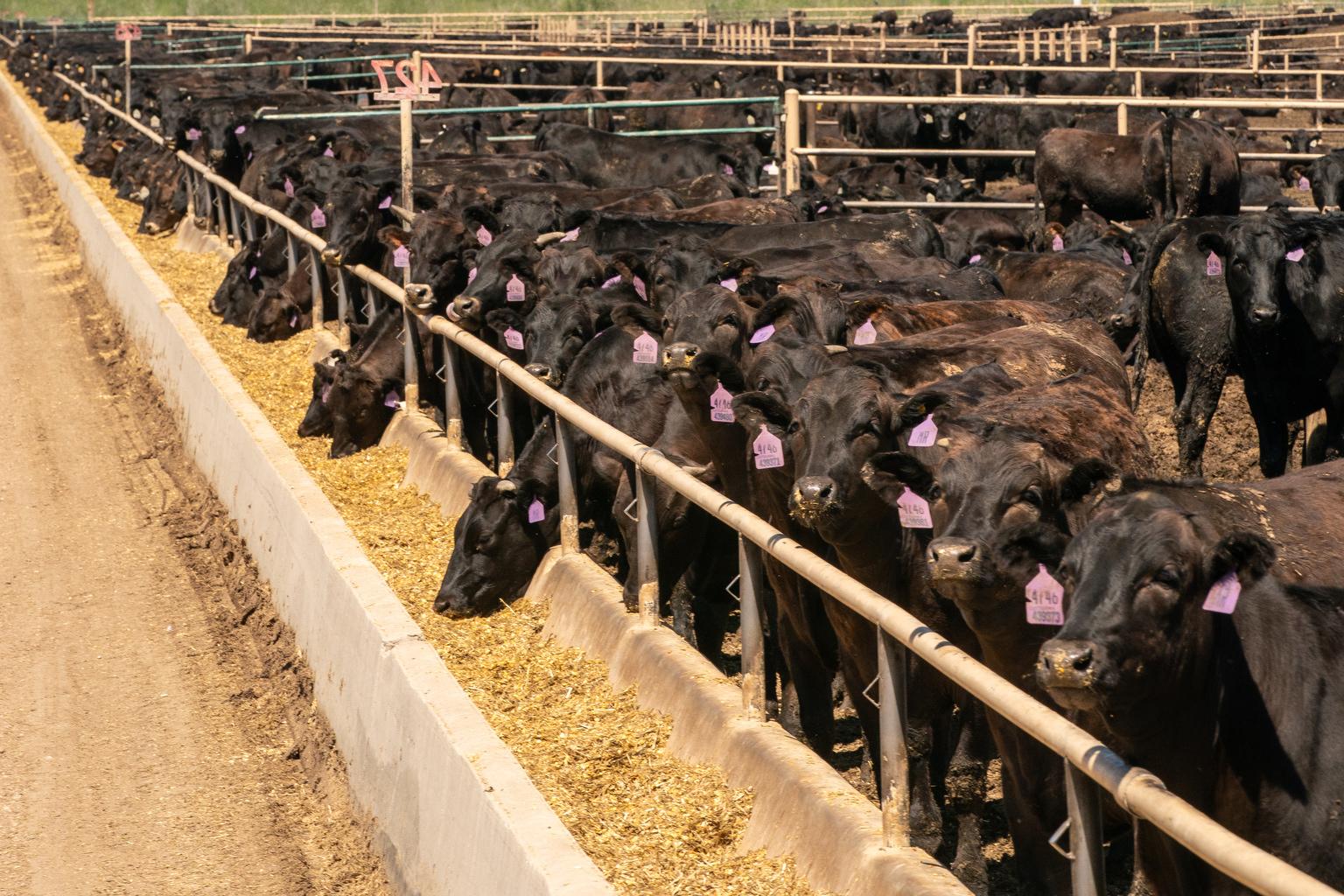
Five Rivers Cattle Feeding, headquartered out of Johnstown, touts itself as the largest feedlot company in the U.S., and one of the biggest in the world. Its locations, spread across six states, have capacity for 865,000 head of cattle.
Filling those lots has been challenging of late, said the company’s head market analyst, Billy Schmitz. The U.S. cattle population is at its lowest level in three-quarters of a century. Ongoing droughts are playing a part. Ranchers are also selling cattle to take advantage of historic beef prices, instead of using those cows to rebuild their herds.
But, Schmitz said, the biggest problem in filling the pens of Five Rivers feedlots is the closure of the U.S. southern border to livestock trade with Mexico. Cattle imported from Mexico typically make up about five percent of the company’s supply.
In place since last July, that closure has nothing to do with the Trump administration’s trade negotiations disrupting international markets. It is due solely to the federal government’s all-out effort to prevent a parasitic fly from crossing the border for the first time since the 1960s.
The New World screwworm
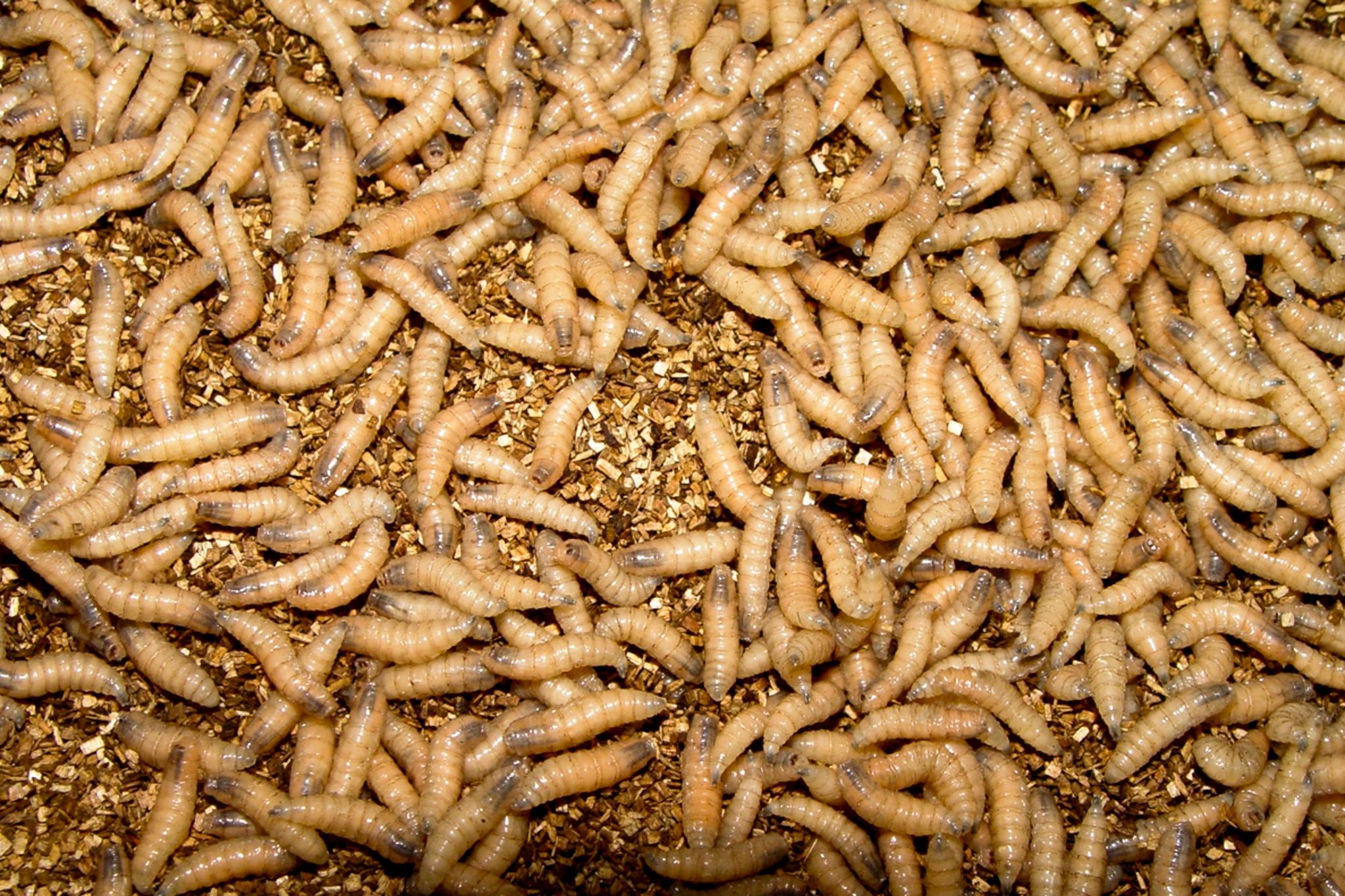
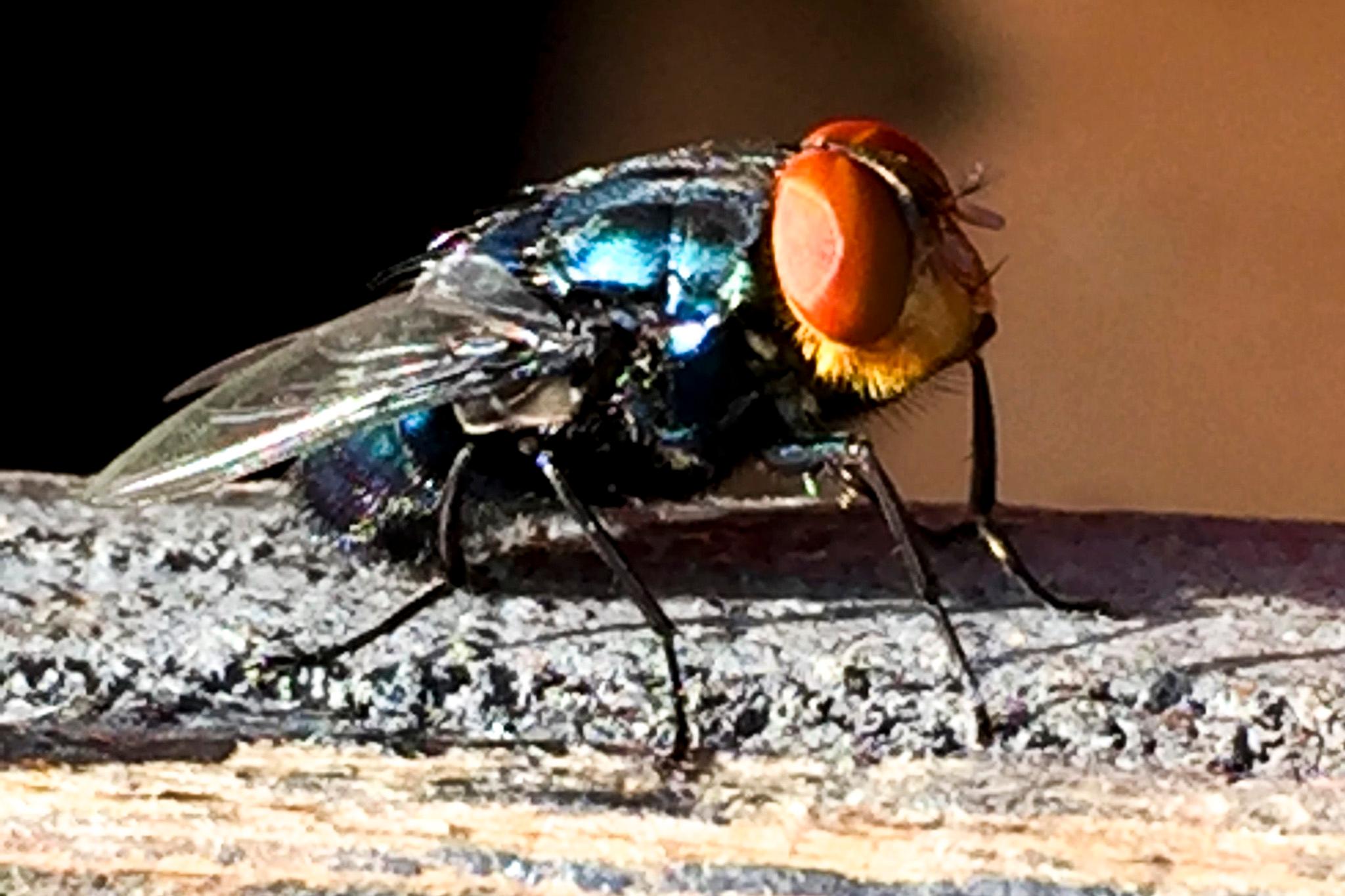
This fly is named for its burrowing larval stage. Maggots of the New World screwworm hatch from eggs deposited by adult flies in the open wounds of any warm-blooded animal. Vulnerable wounds can be as small as a tick bite, and a single fly can lay 200-300 eggs at a time. Once hatched, the maggots burrow and feed on the animal’s living flesh.
New World screwworm was considered eradicated from the U.S. in 1966, after a major outbreak led to widespread devastation of livestock in southern states over the course of decades. Eradication came from what was then a novel technique, mass-producing millions upon millions of male flies sterilized by radiation.
“It is the one technology that we know we can stand by,” said U.S. Department of Agriculture Undersecretary Dudley Hoskins in an interview with CPR News.
Hoskins oversees the USDA’s Animal and Plant Health Inspection Service, a central player in the nation’s response to foreign animal pests or diseases, including the screwworm.
As a new outbreak moved farther up the Mexican countryside last year, Agriculture Secretary Brooke Rollins ordered the closure of southern U.S. ports of entry to livestock. The flies have continued their northern spread, detected as close as 70 miles from the border.
The USDA is finishing up an $8.5 million facility at Moore Air Base near Mission, Texas. It’s set to release 100 million sterile flies per week. While proven successful in the past, it’s still an immense undertaking not guaranteed to stop the spread.
“Candidly, any warm-blooded creature is a potential host to this parasite,” Hoskins said. That includes pigs, dogs, birds and in rare cases, even humans.
As far north from the border as Colorado is, the state is already preparing its own response.
Colorado’s risk
“New World screwworm is now right up there with (my list of) concerns,” said Maggie Baldwin, State Veterinarian and Director of the Animal Health Division at the Colorado Department of Agriculture.
Baldwin said Colorado does have several factors working in its favor. The tropical-born screwworm is highly susceptible to freezing temperatures and altitude, making the state’s mountain region an effective barrier. However, other parts of the state still face considerable risk, such as the Western Slope and the foothills, especially during warm summer months.
“Right now we're looking at the Eastern Plains,” Baldwin said, concerned that the region may be susceptible. “There's no concern with elevation there. There's enough bodies of water there that there's enough humidity for the screwworm.”
Baldwin convened a workshop on the screwworm threat in December that included representatives from a dozen state and federal agencies. Robert Sakata, Acting Commissioner of Colorado Dept of Agriculture, talked about it during a January Colorado Water Conservation Board meeting. “If we indeed see this, we’re all gonna have to work together,” he said. A draft of the state’s full response plan is in the works.
Baldwin said if the screwworm spreads to neighboring states, the Colorado State Patrol will set up livestock inspection stations at ports of entry. If infections are found within Colorado, that would trigger a series of response events, beginning with quarantining the area surrounding any infected animal, similar to the current avian flu response.
Existing treatments for screwworm infection are reliable as long as animals are treated early on, otherwise mortality is likely. On Feb. 5, the U.S. Food and Drug Administration issued an emergency use order for ivermectin injectables to prevent infection.
“The challenge is if we don't catch those cases early enough, and if we allow for that maggot to then fall off and then we establish a fly population,” Baldwin said, “that's where it gets really, really tricky.”
Nevertheless, Baldwin said she is confident in the plan.
“This is not something I'm panicked about,” she said. “This is just something I think is important that we all understand.”
She is asking livestock owners to monitor updates on the screwworm’s spread and to prepare for inspections of their herd.
A lot can still happen. Even if the New World Screwworm never reaches Colorado, Baldwin said it can still impact the state’s livestock markets.
That’s something Billy Schmitz at Five Rivers Cattle Feeding can already attest to.