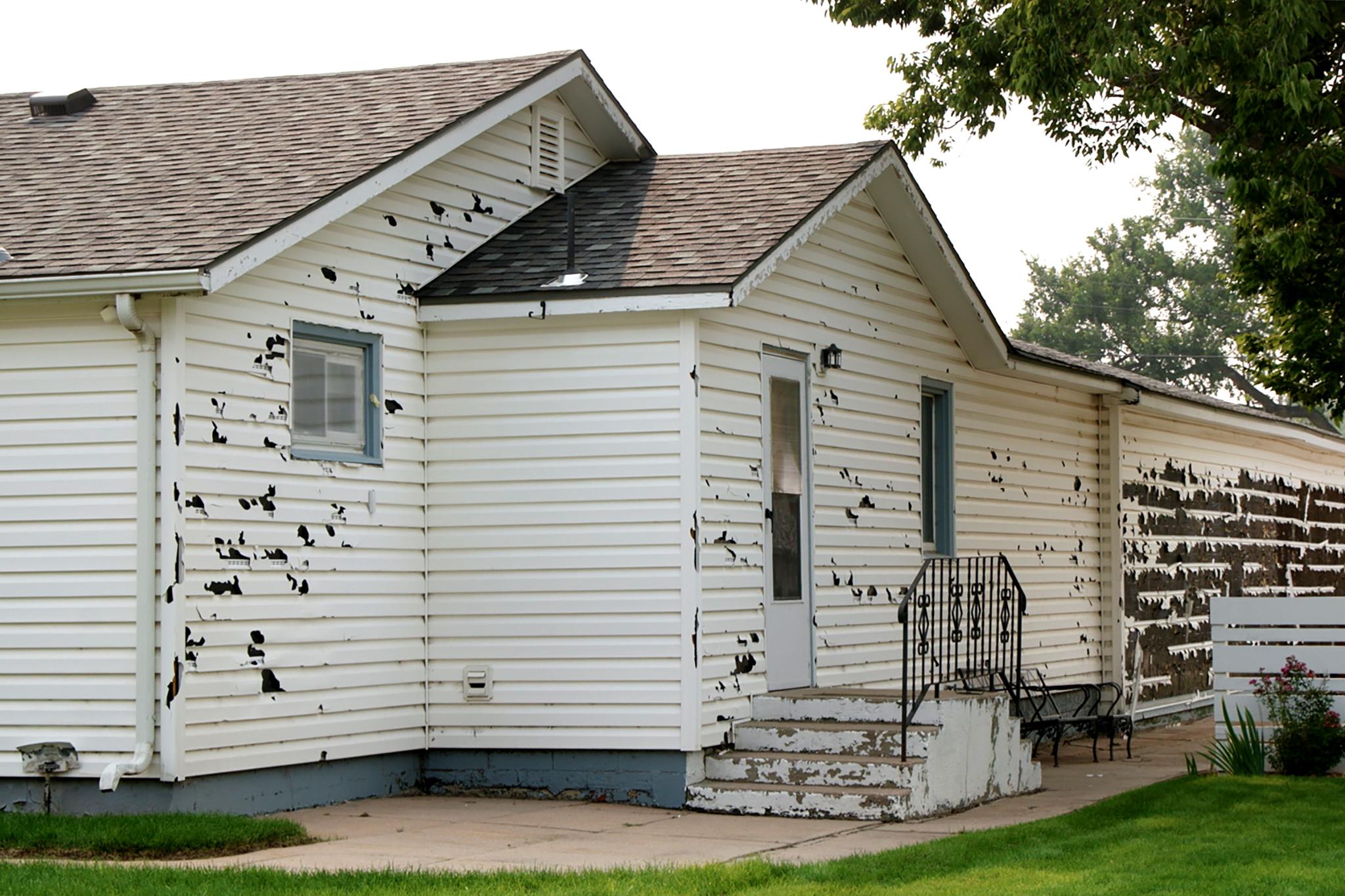
Hail is the number one factor driving up homeowners insurance rates in Colorado, according to a new analysis released by the state’s Division of Insurance and the Governor’s office.
Wildfire risk accounts for a much lower percentage of premiums on average, according to the data, though wildfire-prone homes in Colorado are often dropped by insurers altogether.
Insurance premiums in the state are rising faster than the national average and far outpacing inflation, with no clear end in sight. That’s partly because Colorado regularly faces multiple catastrophes, like hail storms and infernos.
But the data show that hail is clearly spooking insurers. Companies are spreading the enormous costs of storms out to homeowners and driving up prices across the state, even for those who rarely experience hail.
Colorado’s Front Range and Eastern Plains average several hail storms a year, and even a single storm can wreak havoc. In May 2024, a Denver-area storm that pelted baseball-sized hail caused more than $2 billion in damages in a few hours.
Because hail is the main culprit of rising costs, the analysis shows that protecting homes could significantly lower insurance costs. Hail mitigation often involves installing fortified roofs that can better withstand a barrage of icy artillery.
In El Paso County, for instance, the state calculated that installing a fortified roof could potentially save homeowners $388 per year, on average, on premiums.
But the savings are much more muted for wildfire mitigation, which involves cutting down trees, using flame-resistant materials and creating a non-combustible zone around homes.
Those measures will save homes from burning down, and help high-risk homeowners hold onto their policies. But, according to the report, they won’t necessarily save homeowners much money on insurance.
The state calculated that wildfire mitigation would save homeowners in Summit County just $25 per year on average on their policies. In Yuma County, it was just $2. Of course, having your house not burn down also saves money.
“We can’t change the weather in Colorado, but we can and should help consumers in high risk areas fortify their roofs because that will help lower everyone's premiums,” said Colorado Insurance Commissioner Michael Conway in a statement.
“And we have to find innovative solutions to help address affordability in our high wildfire areas of the state,” he added.
Climate change is increasing both the frequency and intensity of severe weather, especially for wildfires.
New data supports a known conclusion: hail hurts premiums
The Division and research groups have known for years that hail is making policies more unaffordable in Colorado. Wildfire, on the other hand, typically affects the availability of policies.
That means that homeowners in high-risk areas, like Nederland or Evergreen, could be dropped by insurers and lose policies they need for mortgages.
It’s part of a broader trend: in regions facing a high risk of natural disasters, insurers are dropping homeowners or ratcheting up their premiums.
The state’s analysis calculated the average percentage of wildfire and hail risk priced into homeowners premiums.
The division collected data from 20 insurance carriers across 11 counties, which collectively represent 80 percent of all insurance premiums in the state. Notably, the analysis did not include Boulder County, which has persistent insurance issues.
The state then calculated average premiums in those counties, and estimated how much of those costs are attributed to hail or wildfire risk.
The results show that hail risk is seeping into policy pricing statewide. Hail accounts for nearly 36 percent of premium costs on average in Summit County, even though the county does not often experience storms. Yuma County, on the other hand, sees about 54 percent of its premium costs attributed to hail risk, and only a small sliver to wildfire.
In general, wildfire risk is only a small contributor to insurance premiums, and is concentrated in areas that are likely to face a blaze.
On average, only one percent of premium costs in Denver go towards wildfire risk. But in La Plata County, wildfires account for nearly a quarter of premium costs.
Some solutions exist, but rates are still likely to increase
There are proven programs that drive down insurance costs. In Alabama, a roof replacement program has been wildly successful at lowering insurance premiums.
No similar program exists yet in Colorado. Governor Jared Polis tried and failed last year to set up a fund — paid for by a fee on insurance policies — which would dole out grants for hail-resistant roofs. It would also help insurers cover their own losses in wildfire-areas, in exchange for continuing to provide coverage.
The proposal is likely to be reintroduced this year, but with different funding sources.
A new law will also go into effect in July, when Colorado insurance companies will be required to be more transparent about rates in wildfire hotspots, and provide options for how homeowners can reduce their risk.
The state also launched its insurer of last resort, known as the FAIR plan, last year. Those policies are often more expensive and limited than traditional ones, but can be a lifeline for homeowners who’ve been dropped by insurance companies.
As of December, the plan had sold around 140 policies, and has customers in 34 Colorado counties, according to Kelly Campbell, the plan’s executive director.
Campbell told CPR News in December that the plan has helped the state understand how people were struggling with insurance, or have gone years without coverage. She said the plan was flexible enough to adapt if the insurance market continues to change.
“The FAIR plan was really created to be able to be whatever Colorado needs it to be at any given time,” she said.