
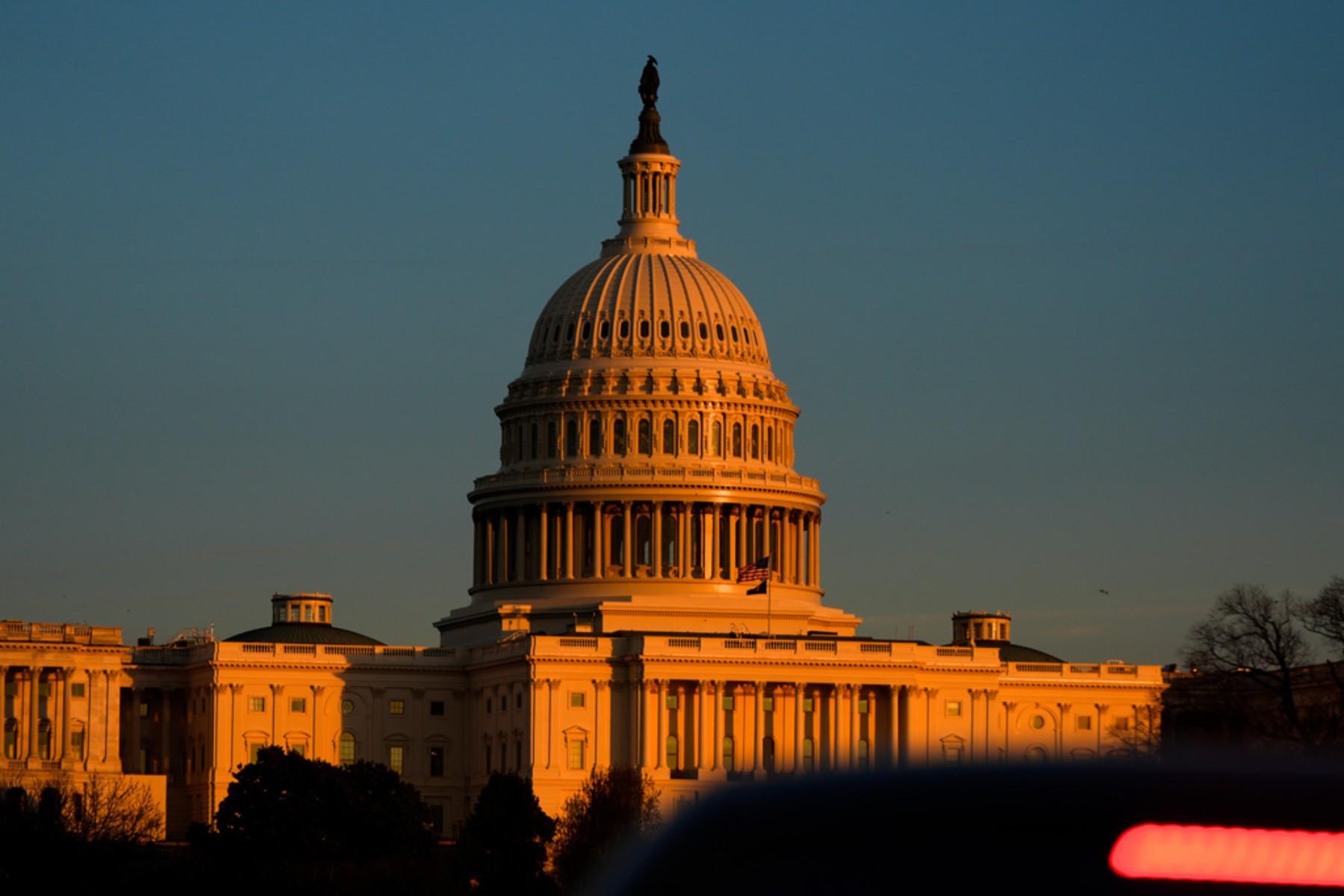
The U.S. House delivered a rebuke to President Donald Trump’s tariffs on Canada on Wednesday evening.
The chamber passed a resolution disapproving of the emergency that underlies Trump’s 25 percent tariff the administration placed on Canada, 219-211, with six Republicans voting with almost all Democrats for the measure.
Colorado GOP Rep. Jeff Hurd was one of the Republicans who voted to end the tariff. He said tariff authority resides with Congress, but more importantly, he said he was listening to his constituents.
“I've heard a lot from our farmers, agricultural producers, manufacturers of all sizes across the district that these tariffs are not good for Colorado's 3rd District. And the Constitution is clear and it's in the best interest of my district. And for me, that made the vote the right vote, and I stand by it,” Hurd told CPR News.
Right before the vote, Trump issued a threat via Truth Social writing that any Republican that “votes against TARIFFS will seriously suffer the consequences come Election time, and that includes Primaries!”
Colorado’s other Republicans Reps. Lauren Boebert, Jeff Crank and Gabe Evans voted to keep tariffs on Canada in place, while all of Colorado’s Democratic House members voted to rescind the tariffs.
“I think President Trump is doing just fine on the tariffs issue, and I’m voting with the White House on this one,” Boebert told CPR News.
House Speaker Mike Johnson and the White House tried to stave off the vote by inserting language into a rule Tuesday that would prevent resolutions like this from coming to the House floor through the end of July. Leaders argued the chamber should wait until the U.S. Supreme Court rules on whether the International Emergency Economic Powers Act authorizes the president to impose tariffs.
But three Republicans, Reps. Don Bacon of Nebraska, Kevin Kiley of California and Tom Massie of Kentucky, voted with all Democrats to prevent that, allowing Wednesday’s resolution of disapproval to come to the floor. All three also voted to end the tariffs on Canada.
Bacon said on social media that Congress “needs to be able to debate on tariffs,” which he called a “net negative” for the economy.
Democratic Rep. Jason Crow agreed, saying the Constitution gives Congress the power to set tariffs.“I'm going to do everything possible to claw back that power and authority. And this is the first step in that when it comes to trade.”
Canada is one of Colorado’s largest international trading partners. In 2024, Colorado exported $1.6 billion in goods to our neighbor to the north, according to the Office of the U.S. Trade Representative.
Democratic Rep. Brittany Pettersen said one outdoor recreation company in her district got hit with an unexpected $20,000 tariff bill.
“It’s heartbreaking when you talk to small businesses who don't know what their costs are going to be over the next year, let alone next week,” she said. “They are told with anything that they're importing that they won't actually know the cost until it hits the shore because they don't know what might be tweeted out that day.”
She added it’s the small businesses that are being hit the most by tariffs and that U.S. consumers are paying the increased costs.
Hurd also said he heard from many of his small businesses that tariffs were bringing cost concerns, uncertainty and unpredictability.
The resolution heads to the Senate, which has already voted a handful of times against some of Trump’s tariffs on Canada, Brazil and global tariffs. If this resolution makes it to the President’s desk, it is likely to be vetoed.Hurd, who has voiced concerns about tariffs in the past, said the vote was a tough one, but at the end of the day for his district, “it’s the right one.”