
Colorado’s attorney general’s office has launched a new complaint filing system designed to allow residents to report alleged misconduct by federal agents — including those from Immigration and Customs Enforcement (ICE).
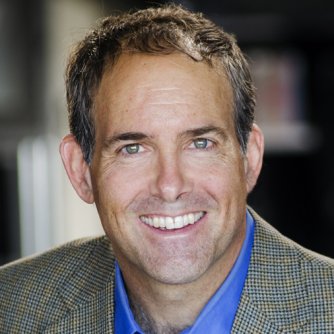
The program officially launched at the end of January. And although the rollout of this reporting tool coincided with weeks of controversial and violent federal enforcement activity in Minneapolis — during which two people, Renée Good and Alex Pretti, were killed by federal agents — Colorado Attorney General Phil Weiser says its development has been in the works for months.
“Obviously what's happening in Minnesota highlights the importance of such a complaint system, but this has been, for us, a months-long project,” Weiser told CPR News. “But for us in Colorado, there was actually an earlier incident in Durango where someone was allegedly assaulted by an ICE agent that's now being investigated by the Colorado Bureau of Investigation. So this issue is not new to Colorado; it's been on our radar.”
The attorney general was referring to a moment last year when dozens of Durango residents gathered outside an ICE field office to protest after agents had detained a father and his two children while they were on their way to school. On the second day of the demonstration, video circulated showing a federal agent grabbing a protester’s phone and throwing her to the ground. That prompted the Durango Police Chief to ask the Colorado Bureau of Investigation to look into whether the agent’s use of force violated state law.
The Colorado Bureau of Investigation says the Durango incident remains under investigation, months after the agency was asked to take over the case in late October. Officials have not said whether evidence collection is complete and declined to comment further.
While incidents like the one in Durango have made headlines, Weiser says his office has received upwards of 180 complaints relating to alleged misconduct by federal agents over the past six months. Despite this, the office has initiated no prosecutions from those complaints. Many have received little media attention, though Colorado Immigrant Rights Coalition (CIRC), a statewide immigrant rights advocacy organization, says it has been documenting these cases for months.
“One of the first conversations I remember having with the AG’s office was around this specifically,” Gladis Ibarra, the Co-Executive director of CIRC — the organization largely responsible for those 180 complaints, told CPR News. “‘How do we report this? You all need to be tracking, this is unacceptable.”
“CIRC has been doing this for decades, and it shouldn't just be on the nonprofits and community members to hold people accountable,” she said. “I need [the AG’s office] to know what is happening. If I'm hearing about it, they're going to hear about it. This is what they were elected to do. We have been seeing things ramp up. I know those videos have gone viral. And they're really hard to watch, but it's much harder to be on the phone with people that you know personally and hear the pain and the fear in their voices.”
Ibarra says many of those complaints come through CIRC’s hotline, where staff document encounters with federal agents and help connect callers with legal and community resources. But often, Ibarra says people are calling not just to report what happened, but because they are afraid. They are unsure whether what they experienced was lawful or whether speaking up could put them or their families at further risk.
Under the Attorney General’s new system, once a complaint is submitted to the office it will be reviewed and, when appropriate, referred to relevant state or federal oversight bodies. While Weiser — who has sued the federal government 51 times in the last year — acknowledged that the state does not have direct authority over federal agents, he says documenting patterns of alleged misconduct is a critical first step toward accountability.
“One of the big issues, and we see this in Minnesota, is the gathering of evidence,” Weiser said. “The Attorney General of Minnesota, Keith Ellison, went to court to preserve evidence that local law enforcement needed access to be able to investigate the alleged criminal activity that happened there. And that's the sort of action that I'd be prepared to work with and on behalf of local law enforcement to make sure such investigations could happen.”
But Weiser says his office has no plans on sharing or publishing any of the data collected from the complaints. Which raises more questions than answers for advocatespeople on the frontlines, like Ibarra. She says she worries the system may give false hope to already discouraged community members who are already hesitant to file complaints.
“My personal take is that this is a campaign stunt,” Ibarra said of Weiser, who has launched a campaign for Colorado governor. “But I do want to give them the benefit of the doubt. This is the first time that I have seen Colorado launch any type of tool that the community can access directly. And I think when we are working in policy, when we are working in creating change, we need to hear from the people that are directly being impacted by that.”
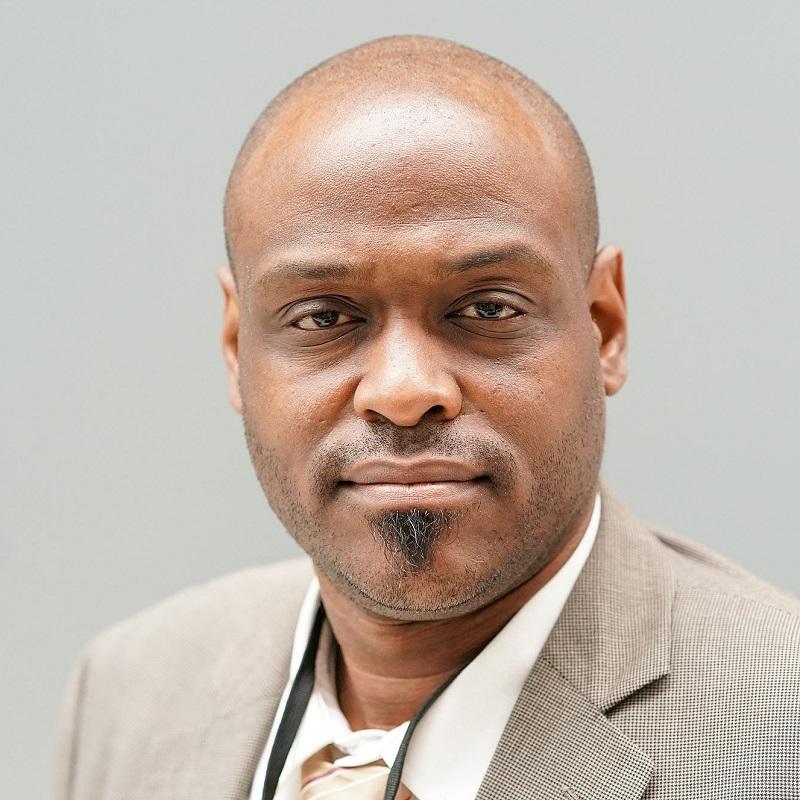
While CIRC has been tracking complaints and advocating for accountability, other statewide immigrant advocacy groups see the new reporting system as one step in keeping tabs on what they see as a much larger and often hidden system of federal enforcement. Mekela Goehring, executive director of the Rocky Mountain Immigrant Advocacy Network (RMIAN), said that although Colorado has not experienced the large-scale influx of ICE agents seen in some other states, arrests and detentions are increasing — often out of public view.
“There really has been a change in the number of folks who have been arrested and detained, it's quadrupled in the last year,” Goehring told CPR News. “What our team is seeing is a number of instances of violent arrests of families. We have seen and heard of instances where ICE has shattered car windows when there are babies in the backseat, community members have been violently pulled out of cars and thrown to the ground.”
Still, Goehring says that misconduct during arrests is only one part of the problem. According to her, a reporting portal addresses one piece of a much broader system that she argues lacks meaningful oversight. She says the challenges continue long after detention, in an immigration system she describes as fast-changing, complex, and stacked against those navigating it.
“I’m so proud that we are in a state where our attorney general has stood up a system like this to report abuse and misconduct by ICE agents. So much of what happens in the context of immigration and enforcement happens in a very hidden world that most people don’t know anything about.”
According to Goehring, the lack of oversight and fundamental due process makes the reporting system particularly significant, even if it feels small at first.
“The deck is so stacked against folks,” she said. “Even these beginning steps, like setting up this reporting mechanism to report abuses, may feel small, but it’s pretty big in a system that has operated in the shadows for so many decades.”
- Colorado forced to share personal Medicaid data with federal government, including ICE
- Sand Creek Massacre Foundation alleges ICE actions echo the federal government’s treatment of Native Americans
- ICE agents leave Ace of Spades ‘death cards’ on detained immigrants’ cars
- ICE is violating court order against warrantless arrests in Colorado, lawyers say
- More ‘No Kings’ protests planned for March 28 as outrage spreads over Minneapolis deaths