December 5, 2025
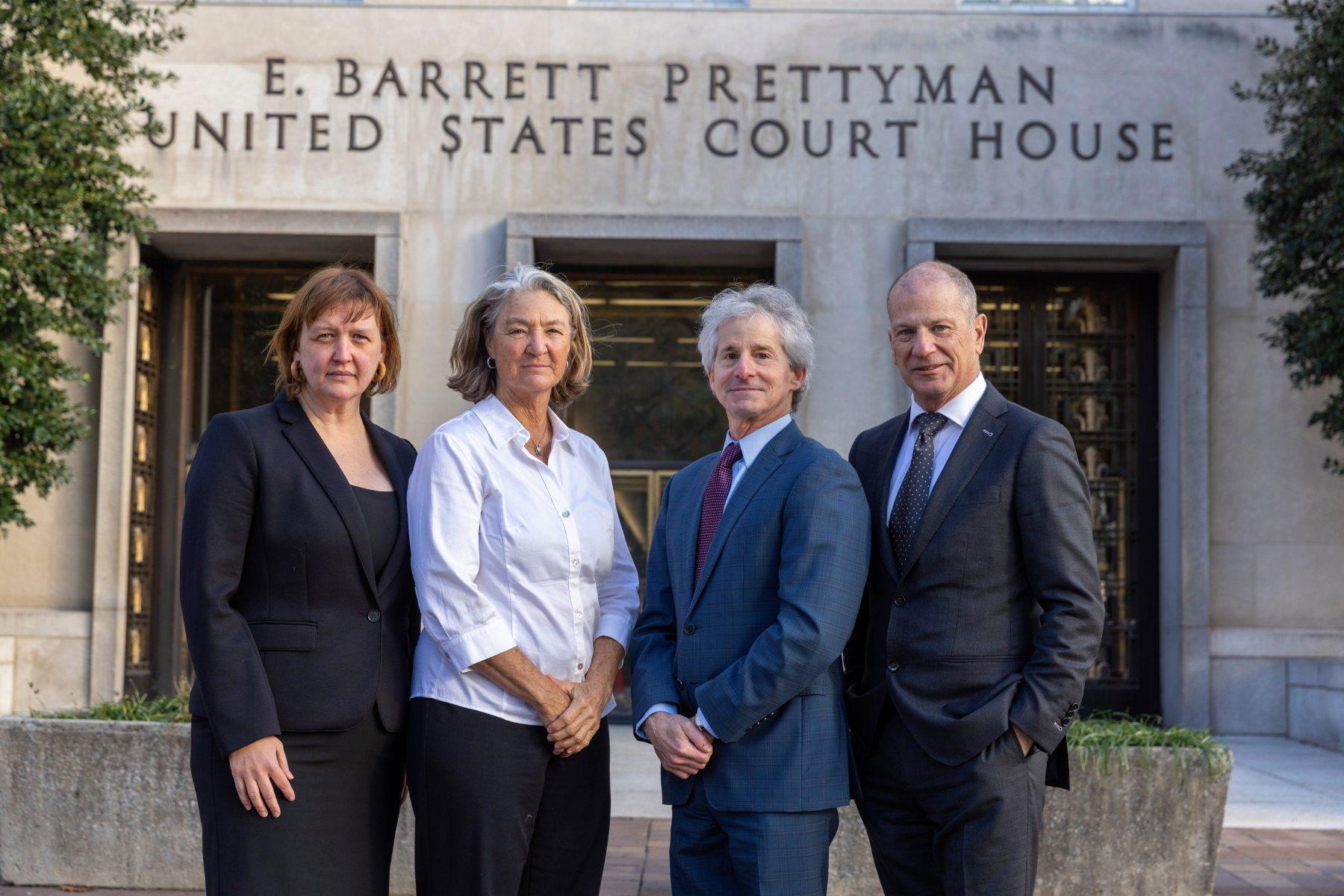
In May, Colorado Public Radio (CPR), along with NPR, Aspen Public Radio and KSUT Public Radio, filed suit to challenge President Trump’s unlawful executive order. On December 4, 2025, leaders from all three Colorado stations appeared in the United States District Court in the District of Columbia for the hearing on their lawsuit.
The executive order directs federal entities to withhold funds from NPR due to what the administration described as “biased” reporting. It also prohibits CPR and other stations from using federal funds for NPR content, effectively inserting government influence into editorial decisions, plus decisions on purchasing, acquiring, producing and broadcasting information.
“It was clear from the start this executive order was unconstitutional,” said CPR’s President and CEO Stewart Vanderwilt. “As we presented to the court, we strongly believe the executive order infringes on our editorial discretion and punishes free speech.”
CPR and its partners in the lawsuit argued in court that the entire public media system has a First Amendment right to be free from government attempts to control private speech as well as from retaliation aimed at punishing protected speech. First Amendment rights are the foundation of CPR’s work and essential to defend.
“The judge asked all the right questions of the government lawyers. Accordingly, we are hopeful that he will find the Executive Order unconstitutional and therefore unenforceable,” said Steve Zansberg, legal counsel representing CPR, Aspen Public Radio and KSUT Public Radio.
The court did not issue a ruling, and it is unclear when a decision will be made.
“This lawsuit is not simply about preserving our funding, it’s about preserving First Amendment rights,” Vanderwilt said. “Public radio belongs to the public, not the government. Today was a step toward protecting independent journalism for our own state and across the country, and no matter the ruling, we’re committed to standing strong.”
Statements from our Colorado public media partners:
“Stations like KSUT exist to serve our communities, not to serve any political interests. For rural and tribal communities especially, letting this kind of order shape the news we can air would harm the people we’re trying to serve. We will not let that happen.” - Tami Graham, Executive Director of KSUT Public Radio
“When the government tries to decide what news can or can’t be broadcast, every American should be concerned. We showed up today to defend the independent press that our communities count on, and we’ll keep showing up in every way possible.” - Breeze Richardson, Executive Director of Aspen Public Radio