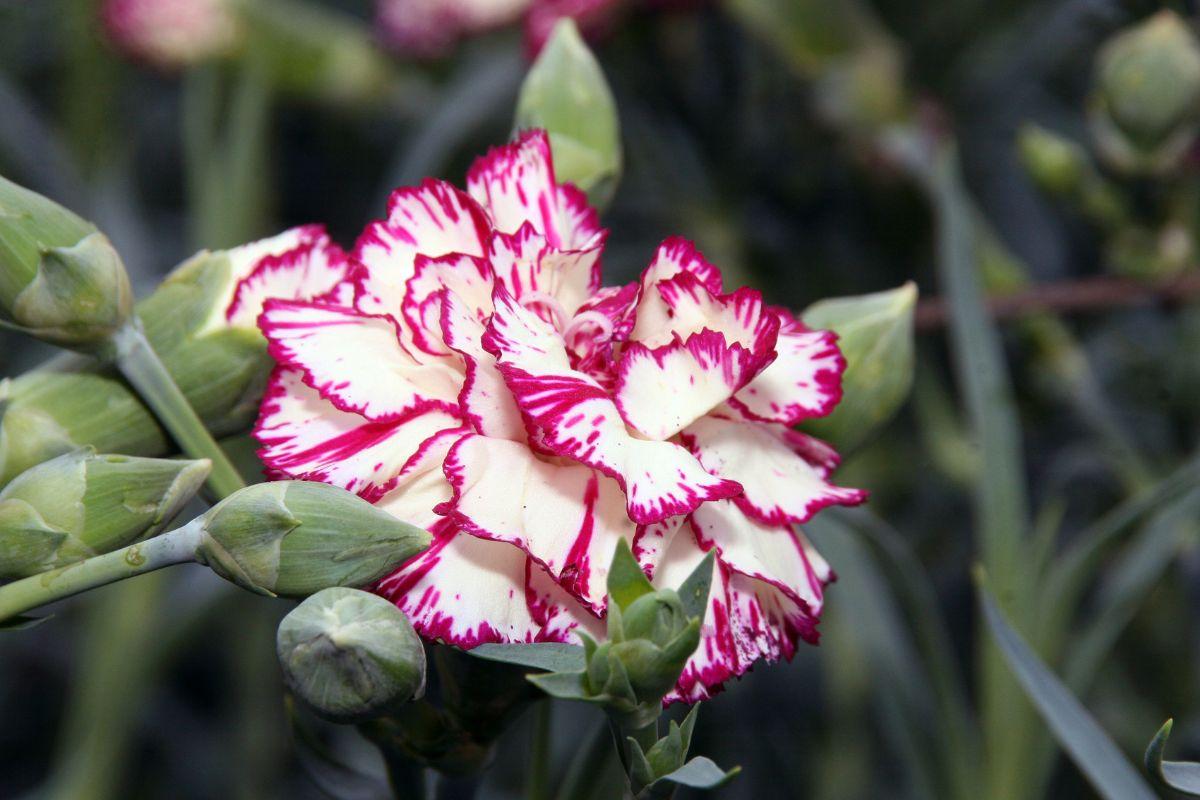
Carnations

The carnation grows quite well in Colorado’s plentiful sunshine and cool nights. When an irrigation ditch brought Platte River water into Denver in the 1920s, the city’s budding floral industry blossomed. Greenhouses extended the growing season, and Colorado quickly gained a reputation for producing year-round blooms of "brilliant color, unusual size and lasting quality.” The Carnation Gold Rush was on! In 1927, the flowers generated more money than gold. And by the 1960s, Colorado carnation growers sent a bouquet to the White House – every week. But the oil embargo of the 70s cooled the region’s greenhouses. And an effort to curb cocaine pruned Colorado’s flower industry further, as farmers in Columbia were encouraged to quit growing coca and start growing carnations and other flowers. Cheaper South American blooms now dominate the market. But here in Colorado, every year the Wheatridge Carnation Festival celebrates the state’s floral history.
About Colorado Postcards
Colorado Postcards are snapshots of our colorful state in sound. They give brief insights into our people and places, our flora and fauna, and our past and present, from every corner of Colorado. See more postcards.