Native Bees

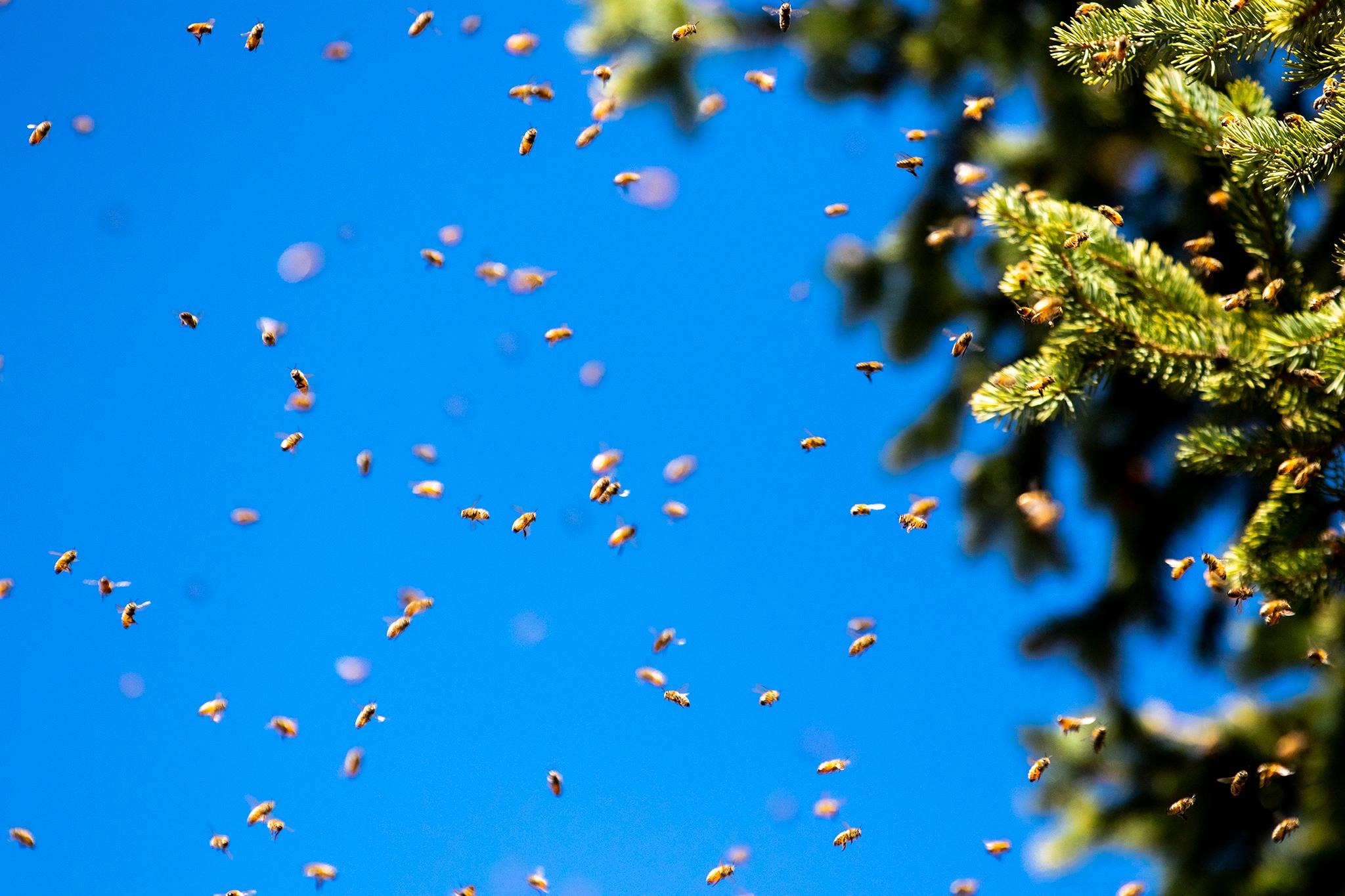
Bees mean honey and hives, queens and colonies. Honeybees came to North America from Europe in the 17th century and are important to agriculture as pollinators, especially for non-native crops. But when it comes to native flowering plants, the job is best done by native bees – and Colorado is home to nearly a thousand species. Most are solitary. Each female builds her own nest in a tunnel, and works alone to gather pollen and nectar for her young. She lives for just four to six weeks during warm weather, then dies. But the larvae she leaves behind will go through the winter encased in cocoons, and emerge when it warms up, ready to repeat the cycle. With native bees losing more and more habitat to human development, I-76 was designated a "pollinator highway" a few years ago. Gardeners can help too. As native bees live underground, leave some areas without mulch to help them and other beneficial insects.
About Colorado Postcards
Colorado Postcards are snapshots of our colorful state in sound. They give brief insights into our people and places, our flora and fauna, and our past and present, from every corner of Colorado. See more postcards.