
A new report finds that Colorado’s approach to preparing its workforce isn’t sustainable and calls for a structural overhaul of the state’s postsecondary and workforce system to address a growing talent gap in a fast-changing economy.
The 125-page report released by Gov. Jared Polis’ office proposes a unified department called the Colorado Department of Higher Education and Workforce Development. According to the report, the current system is too fragmented, uncoordinated and difficult to navigate as the state faces technology disruption and an aging population.
The report drew from surveys of more than 800 Coloradans and working groups. It describes a system overwhelmed by options: 10,000-degree programs, 4,500 workforce trainings, and 300 apprenticeships across scattered agencies.
The new department, which would require legislative action, would merge specific functions from a number of state agencies: higher education oversight, federal workforce funds, apprenticeships, labor market data and adult education.
“We really have a 20th-century structure that hasn't kept up with today's work environment or the new and different ways that people can access skills, through short-term academies, through innovative programs at community colleges and colleges, through apprenticeships,” said Gov. Jared Polis on Wednesday.
By 2031, 73 percent of 2.2 million jobs will demand postsecondary training, but current pipelines graduate just 23 of every 100 ninth-graders with degrees on time.
The report is a response to Polis’ executive order in May directing agencies to identify gaps and propose new models.
What’s the problem?
Over the past decade, Colorado has had numerous initiatives and laws to address issues in the postsecondary and workforce system — from apprenticeship tax credits to health-care career supports and disability employment services.
But the report argues they need to be streamlined and accelerated.
“It's not about creating anything new,” said Polis. “It's about driving efficiency and better outcomes with this great constellation of innovation that's really been created in the last decade.”
Despite Colorado having one of the country’s most educated populations, the report argues the current system is failing many workers. Half a million Coloradans started college but did not complete a credential (one-, two-, or four-year program). Nearly a million Coloradans (35 percent of all workers) earn less than $25 an hour.
Businesses say a shortage of skilled talent is their biggest hurdle. The report says artificial intelligence is reshaping necessary skills for jobs so quickly that technical skills in some jobs are obsolete in less than five years.
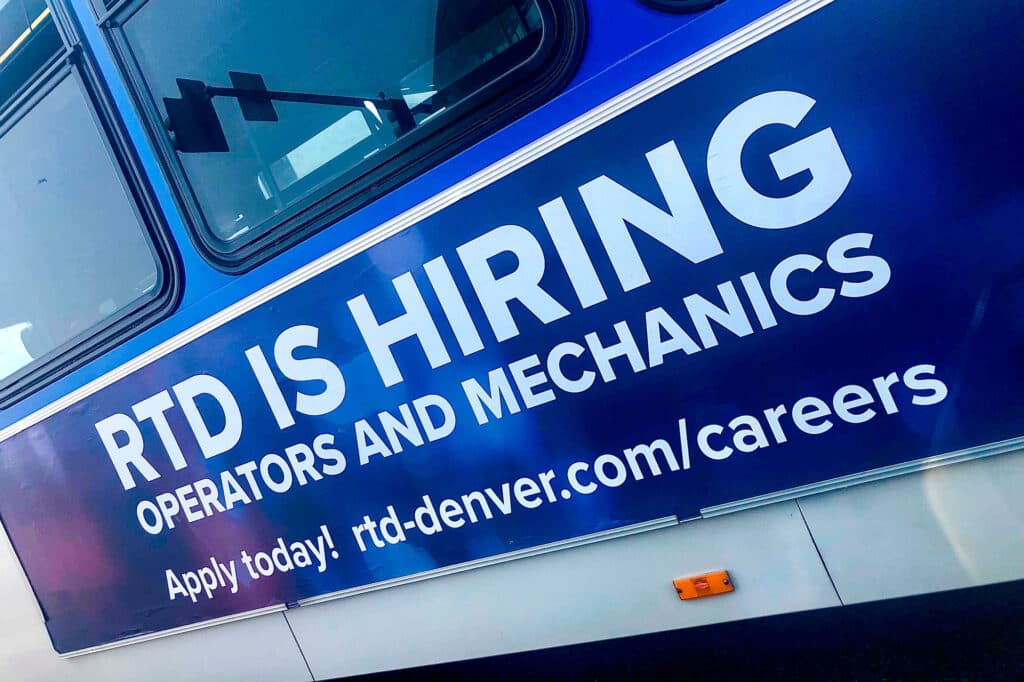
Colorado's workforce is aging, and in-migration is declining, with the ratio of working-age to retirement-age Coloradans expected to plummet from 5:1 to 2:1 by 2050.
“We can no longer rely on importing talent,” the report states. “Changing demographics suggest business as usual will not meet Colorado's future talent needs.”
The report concludes the current system cannot connect Coloradans to the jobs of the new economy.
A key problem is no one entity owns the system, making it hard to drive accountability. It says employers and local organizations are over-tapped or disengaged when it comes to creating training programs.
How would it work
The unified department aims to change the way job-seekers, trainers and employers interact by creating “one front door.” Job-seekers who want to upskill, gaining new skills for their current careers, would see clear information about time, cost and expected outcomes.
“It's important people know that they have the opportunity with the right skills to get ahead,” said Polis. “If you start off as a dishwasher or a busboy, you might want to become a chef. You might want to become a manager. And how do you get skills to be able to do that … and are you aware of all the opportunities you have to achieve those?”
The report urged "no wrong doors" or dead ends with clear pathways that would blend apprenticeships, credentials, and degrees with prior learning credit for military or work experience. The new system envisions concrete ways employers can engage, including advising on curriculum, offering work-based learning opportunities and hiring from publicly supported apprenticeship programs.
A common complaint is there’s no accountability in the current system. The new system envisions shifting from counting credentials to focusing on how many are hired, in what jobs, paying how much.
“It's about making sure we have the accountability so people don't go through programs only to find out there's not a job for them, at the same time, be able to be presented in one way through one portal, the ability to access the training that makes sense for them,” said Polis.
As for four-year institutions, Polis doesn’t see the goals of a more workforce-intensive approach as inconsistent with their broader goals of research, innovation or civic engagement. He noted graduates from the state’s four-year institutions have excellent job placement, but not all majors provide that, and “people should be aware of that and the trade-offs for them in their lives.”
The report calls for more input from unions, higher education institutions and others. If legislation passes, initial steps could take place starting July 1.