The National Weather Service has issued a Red Flag Warning for much of the Front Range and northeastern Colorado until 5 p.m. Thursday, citing strong winds and very dry conditions that could lead to rapid fire spread.
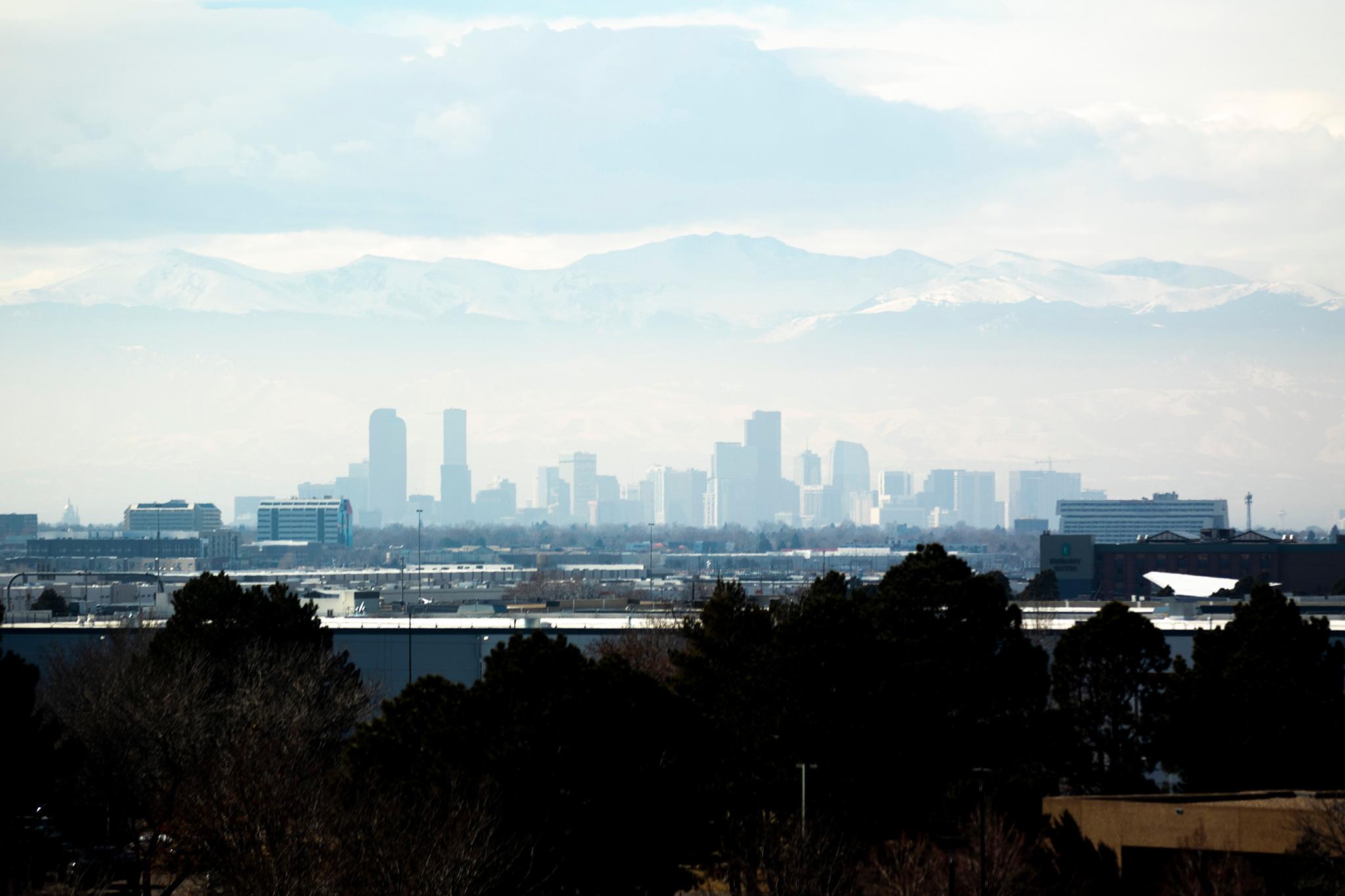
The alert includes the lower foothills, the I-25 corridor and adjacent plains. It also covers portions of Jefferson, Douglas, Boulder, Adams, Arapahoe, Weld, Larimer, Elbert and Lincoln counties.
Meteorologist Kenley Bonner with the National Weather Service in Boulder said the size of the warning area isn’t unusual for our region. “Anytime there's a mountain wave, these winds are going to extend out of the Front Range mountains,” she said. A mountain wave is a type of atmospheric turbulence created when strong winds aloft hit the Rockies at a perpendicular angle. She compared it to watching water flow over a rock in a river.
“If you have a rock and the water flows over that rock, on the downward side you get turbulence. It's kind of the same thing in the atmosphere. Our atmosphere is like a fluid, and it’s going over those mountains and is forced down and so it creates this wave,” she explained.
As the air descends, it accelerates down the foothills and warms significantly, a process known as compressional warming, which has led to an above average temperatures for much of the state today.
Warmer temperatures in the 60s also mean lower humidity values. Today for example, the relative humidity is just 15 percent and Bonner warns that coupled with winds between 15 and 25 miles per hour and gusts up to 45 miles per hour, mean any spark could lead to fast-moving wildfires.
Residents are asked to avoid outdoor burning and activities that may produce sparks including using power tools on dry grasses, parking on tall vegetation, allowing vehicle chains to drag or discarding cigarettes on roadways.
“We are going to be experiencing like 15 to 20 degree above normal temperatures for the week,” Bonner said. That warmth is expected to linger as a weak La Niña pattern and a ridge of high pressure over the western U.S. continue steering storms and moisture north of Colorado.
The good news, Bonner added, is that winds should ease later this evening. Until then, the whole I-25 corridor remains vulnerable to fast-moving fire.
“Just be aware of what you're doing and don't do anything reckless that could lead to a really bad day for your neighbors and friends,” she said.