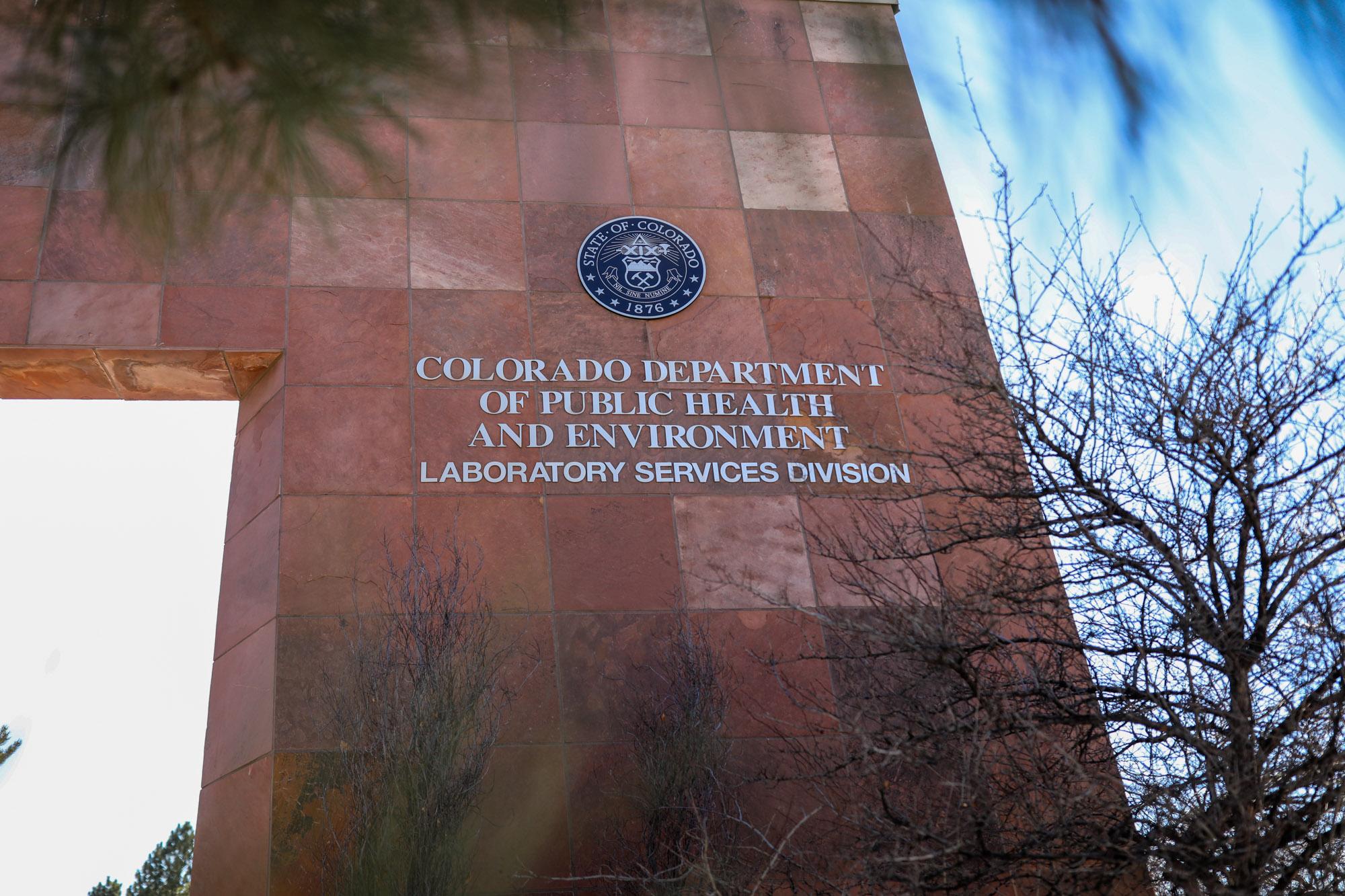
Just after Christmas 2023, a chemist at the state public health laboratory admitted to her bosses that she had manipulated test results.
In the coming weeks her supervisors at the Colorado Department of Public Health and Environment would learn it was not an isolated incident.
The discovery led to a two year unraveling of the state health lab that tests drinking water and food for harmful substances like heavy metals. The chemist associated with the problems is no longer at the lab, and the lab director, Emily Travanty, was placed on paid administrative leave in September and fired in November, with no accompanying announcements from the state. The Environmental Protection Agency has stripped the state lab of certifications, essentially shutting down most of the chemistry lab.
CPR News obtained a root cause analysis and a heavily-redacted investigative report commissioned by CDPHE that illustrate for the first time the conditions at the state lab. The reports show that the lab was beset by equipment malfunctions on aging instruments, a lack of stable management, and pressure to shorten test turnaround times — all while the lab struggled with severely limited resources.
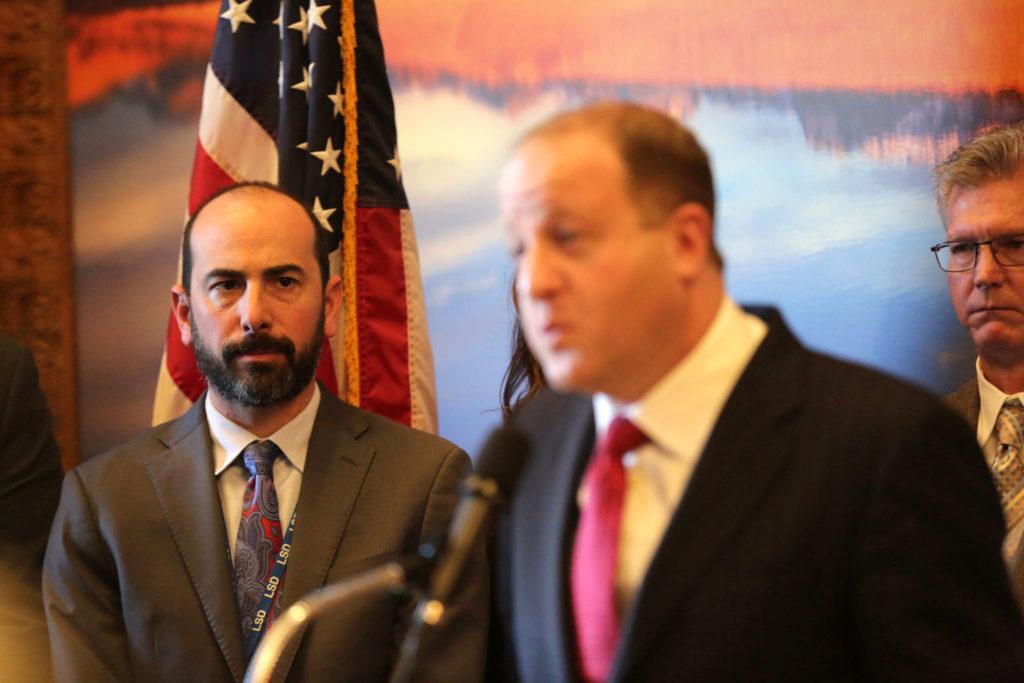
CDPHE’s executive director, Jill Hunsaker Ryan, declined an interview request, but sent a statement saying the agency launched a comprehensive review after the manipulation was discovered, paused testing, and contracted with outside labs and experts.
“These actions protected public health and ensured that every result we stand behind meets the highest scientific standards,” said Hunsaker Ryan in the statement.
Hunsaker Ryan also noted that earlier this month money was finally appropriated to modernize the lab.
“The investigation and root cause analysis made clear what must be addressed: modern equipment, updated processes, stronger oversight, and sustained expert staffing. Colorado is now equipped to close these gaps decisively and transparently,” reads the statement.
But the lab’s former director, Emily Travanty, told CPR News in an interview that she had warned for years that underfunding of the lab needed to be addressed, because of the critical public health role of analyzing water and food for safety.
“The lab has been chronically understaffed and underfunded,” said Travanty, who emphasized that the lab is staffed with good chemists. “They're doing the best that they can with the resources they have available, and an infusion of additional resources would allow that laboratory to really better support the state. It really would be a strong return on investment.”
Travanty said she was fired in November, and CDPHE leadership told her that she had not alerted them to budget issues before.
“And I shared back with them probably 50 documents of here's issues that I was raising, here's requests for funding,” said Travanty. “And I was told that it was not, the urgency didn't come through.”
Travanty, according to the investigations, immediately moved to put the chemist on leave when she learned of the data manipulation, but two months would pass before CDPHE alerted the EPA of the issue, which the federal agency said should have been reported within 30 days.
Travanty said she followed the strict chain of command required by the state agency.
“I know what I communicated to my supervisor, but I don't know how those communications were carried up the chain,” said Travanty. The Denver Post reported that her supervisor, Scott Bookman, resigned earlier this year following what the publication called an “apparent sexual harassment complaint.” Bookman didn’t respond to a request for comment.
Travanty said she had not been made aware that the chemist who manipulated data had documented accuracy issues in the past. The investigations found that the chemist had a history of data problems that should have been escalated to leadership.
“Some interviewees described a culture of fear and reluctance to report issues, particularly concerning the supervisor of the chemist who manipulated the data,” reads the root cause analysis. “This created an environment where problems could fester and go unaddressed.”
The investigative report, produced by an attorney at Employment Compliance Solutions, found confusion at CDPHE about how exactly to respond, as the scope of the problem became evident.
“The evidence suggests that there was a lack of clear leadership and decision-making,” reads the report. “The evidence also showed that there was not a specific protocol in place for managing such a crisis…”
The investigation found that CDPHE had indications as early as 2021 that there were issues with the chemist who manipulated data. And a 2022 “coaching document” for the chemist read: “Your work needs vast improvement so that it can be easily understood by any reviewer and traceable.”
Investigators later concluded that had officials at the CDPHE lab acted sooner, upon first learning of the chemist’s data issues, they could have limited some of the problems. “In hindsight, this may have been a missed opportunity to investigate further and possibly mitigate issues in the lab.”
The state said earlier this year that it conducted extensive retesting of manipulated results in water and food tests, and they’ve so far not found evidence of public health risk. CDPHE has contracted with outside labs to do the required water tests and referred customers, like water providers in the state, to private labs — all while trying to repair its relationship with EPA officials who say the state agency withheld information about the lab’s problems.
While CDPHE insists that there was never a threat to public health, the lack of public accountability, along with the redactions CDPHE claims were necessary in the investigative report and root cause analysis, makes it impossible to get a full picture of the problems at the lab.
It’s the latest example of taxpayer-funded lab failures in the state. The Colorado Bureau of Investigation’s lab has been placed under intense scrutiny by the courts and defense attorneys after a data manipulation scandal authorities charge was perpetrated by a chemist, Missy Woods. Like chemists at the health lab, Woods was under pressure to churn through tests, cutting corners to clear backlogs, and allegedly altering data along the way. Woods faces felony charges related to the data manipulation. Millions in tax dollars have been appropriated by the legislature to retest CBI case files.

It’s unknown if any criminal investigation was conducted or is underway in the case of the state health lab. The Denver District Attorney’s office referred CPR News to the Colorado Attorney General’s office, where the spokesman said he could not confirm an investigation.
While the Woods criminal lab case played out in headlines, the state public health lab was beginning to discover its own problem.
On the Monday after Thanksgiving 2023, a chemist, referred to as “Chemist A” in the documents, started a month-long vacation. In her absence, a supervisor took over her testing duties.
The supervisor realized that something was wrong.
Chemist A used an aging piece of lab equipment, a Perkin Elmer Optima 7300, to perform the metals test. The supervisor immediately noticed a high rate of errors with quality control on the instrument, requiring extensive retesting.
But when Chemist A returned from vacation her results showed no such errors or retesting. When confronted by this, according to the root cause analysis, she admitted to manipulating data.
“Chemist A explained she had copied and pasted a passing sodium value that occurred later in the batch and deleted the failed sodium value,” reads the report. “This is a clear violation of laboratory policies which Chemist A has received documented training on and acknowledged understanding of. The Chemistry Supervisor stated this was unacceptable.”
A few days later, in early January 2024, lab supervisors met with Chemist A, and emphasized to her proper testing procedures. She continued working through the month. A CDPHE investigation later found dozens of problems with her data during that last month.
On February 1, 2024 the lab director, Travanty, was notified by two lab supervisors “that there was evidence of data manipulation by Chemist A.” Travanty immediately reached out to human resources to put the chemist on administrative leave, according to the reports.
Then, lab staff later told investigators, CDPHE leadership compounded the problem by keeping quiet.
It wasn’t until two months later, on April 3, 2024, when EPA visited the lab for a pre-scheduled audit, that Travanty said she personally informed them of the data manipulation.
“So that was always my plan,” said Travanty in an interview with CPR News. “That if I didn't get the go ahead to have a formal meeting, that I was not going to allow them to come on site without having a conversation with them. And as soon as they came on site, I asked them to come to my office and had a conversation with them.”
Travanty said EPA was “very surprised,” because they were familiar with the lab and “interacted with the chemists, it was a long-term employee.”
In the investigative report, the delayed notification is blamed on a communication breakdown within CDPHE leadership. Investigators found that there was reluctance to report the issues to EPA because the head of CDPHE, Jill Hunsaker Ryan, had not yet been briefed.
Lab leadership “was under the impression” that they “could not report the issue to EPA” until they could “speak with Ms. Jill Hunsaker Ryan, the CDPHE Executive Director about it.”
Interviews that investigators conducted later revealed confusion about when exactly Hunsaker Ryan knew of the data manipulation.

An employee whose name is redacted “recalled telling Ms. Hunsaker Ryan about the situation on February 12, 2024,” the same day that Chemist A was officially put on administrative leave.
But another unidentified employee told investigators that Hunsaker Ryan had not been briefed until April. According to the investigation, the employee “indicated that the briefing with Ms. Hunsaker Ryan was originally scheduled for mid-March, but based on [redacted ‘personal matter’], the briefing ultimately occurred in April.”
State laboratory managers claimed later to investigators that they didn’t fully understand the scope of the problem early on, and that was a major reason they delayed notification to EPA.
Another lab employee said they didn’t notify the EPA quickly because they were worried about the EPA's response, according to the investigation report.
The lab employee “alluded to the fact that this decision was being made against a backdrop in which there was an ‘aggressive relationship with the EPA regarding CDPHE writ large.’ As such, the concern was if they approached the EPA with a lack of clarity, the EPA would become ‘aggressive’ and possibly go to the media, creating ‘crisis in public confidence in the State Lab.’”
The nature of the “aggressive relationship” to which the employee referred is not explained in the investigative records.
Nine months into the lab crisis, CDPHE’s executive director, Hunsaker Ryan offered her own explanation to EPA. She told the federal agency in a letter that blame does not fall on her for not reporting the lab manipulation.
“I want to be clear that the reason for CDPHE’s laboratory staff not notifying the EPA about the quality assurance issues until the April on-site audit was not because they were unable to brief me,” she wrote in Sept. 2024.
She admitted to first being notified by her deputy Scott Bookman, on Feb. 12. Hunsaker Ryan told EPA she trusted that Bookman or the lab’s director, Travanty, would have notified EPA.
“State laboratory staff could have immediately been in contact with the EPA around this date or earlier. I expect my directors to understand federal regulations and to comply with them,” Hunsaker Ryan wrote.
As evidence, Hunsaker Ryan included a letter signed by Bookman and Travanty addressed to Hunsaker Ryan saying: “At no point did you indicate that we needed to delay notification to the EPA of any concerns pending additional briefings of you,” reads the letter dated Sept. 30, 2024.
Instead, they blamed delayed notification on a couple of things: they were trying to better understand the nature of the data manipulation, and they believed that notification was not required by the rules. The EPA said in correspondence that the lab had not notified them within a 30-day window, as required by the rules.
The investigation and root cause analysis concluded that the data manipulation was enabled by longstanding mismanagement and underfunding of the public health lab.
The third party analysis found "several systemic issues that contributed to the incident,” including outdated equipment, inadequate staffing, chemists working the same test for extended periods without scrutiny, and pressure to meet tight new shorter turnaround times “potentially contributing to shortcuts and data manipulation,” reads the root cause analysis.
For instance, there were not enough lab instruments, and the equipment they had at the state lab relied on outdated technology. The data from instruments had to be downloaded to a flash drive and brought to another computer for analysis.
This “created vulnerabilities in the data handling process,” reads the report.
Scott Bookman admitted to investigators that “the core issue was the fact that a flash drive was being used to transfer data.”
That allowed Chemist A to “move the successful data points” replacing failed values with passing values. Chemist A attempted to hide the flash drive before she was removed from the lab, according to the report.
“The Lab Director stated the analyst had a USB drive they attempted to leave with and when prevented from taking the drive by the Lab Director, the analyst attempted to hide the USB drive in the laboratory. The USB drive was left in the possession of the Chemistry Program Manager when Chemist A was placed on administrative leave and escorted from the building,” according to the root cause analysis.

There were problems with the equipment too. The older instrument that Chemist A used needed to be fixed. It wasn’t until months after Chemist A was put on leave that an outside technician discovered the instrument needed a humidifier to prevent sodium build up.
By then, an investigation into Chemist A turned up data manipulation in a host of food and water tests, everything from mercury in fish to lead in water at elementary schools. It was also revealed that she had been flagged years before for data problems, and that she was cavalier during training, and dismissed concerns about her data.
“Despite this chemist having previous corrective action notifications for issues with their data quality, no additional oversight or checks were put into place for their work,” according to the root cause analysis.
Morale was low at the lab following “frequent leadership changes.” The chemistry lab unit at the heart of the problems was down from 12 to 9 employees, according to one manager, and those who were left did not feel that they could raise concerns.
A lack of communication is a running theme through the root cause analysis and the investigation. EPA administrators grew so frustrated by CDPHE that they stripped certifications for lab testing and allowed others to lapse, essentially shutting down a large part of the lab this year.
Communication problems persisted within the lab too, according to the root cause analysis.
“The Client Services Manager noted that ‘the situation was fumbled and not shared with more teams and labs as it should have been.’”
The EPA did not respond to all of CPR News’ questions, saying the federal agency does not comment on pending investigations. But in a statement, an EPA spokesperson said they have not yet been asked by CDPHE to revisit the lab to determine whether it is ready to be re-accredited.
“CDPHE cannot analyze drinking water samples for impacted chemistry methods until they demonstrate that their operations are compliant with EPA requirements and address all deficiencies,” reads the statement. CDPHE can request recertification, and EPA will then “reaudit” the lab.
“EPA will not grant any certification approval until fully compliant with the law.”