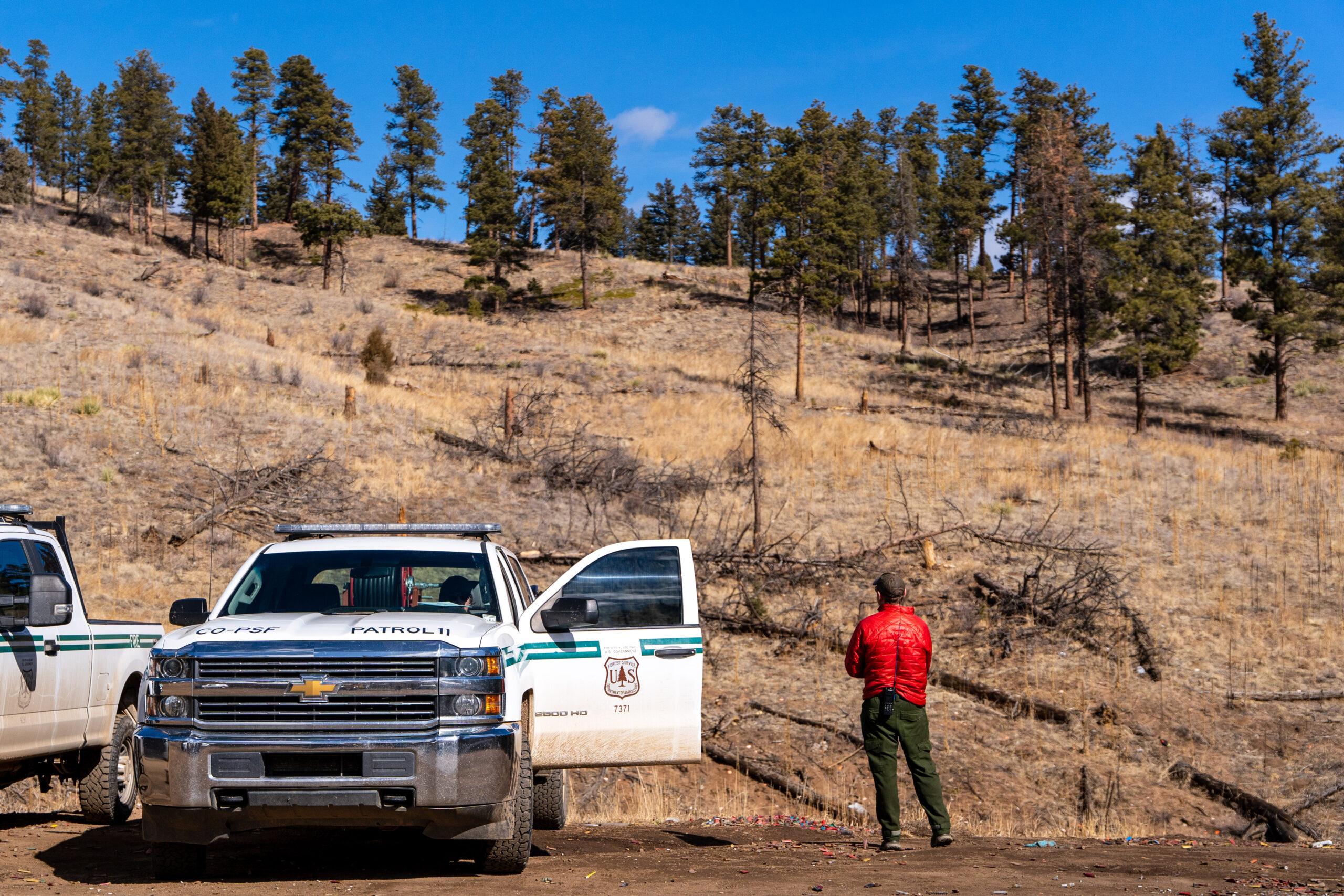
Two major U.S. Forest Service projects — authorized under federal emergency powers — will target up to around 308,000 acres of public land along the Front Range with treatments meant to reduce wildfire risk, including logging. That’s a massive area, around the total size of the city of Los Angeles.
The projects, spread out over at least two decades, may include clear-cutting patches of national forest up to 20 acres, using prescribed burning to reduce timber that could fuel blazes, and spreading herbicide over thousands of acres.
Completing those treatments may also require building temporary roads through thousands of acres of previously untouched forest — known as roadless areas.
One of the proposals, the Lower North-South Vegetation Management Project, received a final sign-off in June, and officials will likely start some prescribed fires and restoration work in the spring of 2026, according to the agency. The other project, the Pikes Peak Vegetation Management plan, is still being finalized.
The plans, and other Forest Service proposals, have drawn sharp criticism from some environmental groups, who say they encourage large-scale logging on public lands.
“All of them — unprecedented in scale and scope — push industrial logging under the pretense of ‘protecting’ communities and forests from wildfire,” wrote Josh Schlossberg, with the environmental advocacy group Eco-Integrity Alliance, in a blog.
In April, the Forest Service also said it would increase timber sales on public lands by 25% over the next four to five years.
Eco-Integrity Alliance called the Colorado projects among “the biggest logging projects in Colorado history.”
The Forest Service strongly denied that claim, and said in a statement that the projects would use a mix of treatments to protect areas like watersheds or evacuation routes.
“Tools may include prescribed fire, hand thinning, mastication, targeted grazing or timber removal, depending on site conditions,” the agency wrote in a statement. Mastication means cutting and grinding timber, debris and brush.
“Logging is one of several tools and is not applied across the entire project area,” it reads.
Environmental advocates also said the project could imperil threatened species in Colorado, including the Mexican spotted owl, the Preble’s meadow jumping mouse, and the rare Canada lynx, all legally protected under the Endangered Species Act.
The Forest Service denies this, and wrote in its environmental review that while the project might temporarily degrade their habitat, it would ultimately provide long-term benefits to aid in the species’ recovery.
The Lower North-South area stretches across around 261,000 acres, mostly on federal land in the Pike-San Isabel National Forest.
The plan requires the Forest Service to survey patches of land before starting any specific treatment, a lengthy process that could take years. Some treatments, like clear-cutting, may not even occur if patches of forest are not dense enough or meet specific forestry conditions.
The plan received supportive public comments from the Colorado Trail Foundation and utilities like Denver Water and Aurora Water, who said the work will help insulate part of Denver’s water supply from wildfire risk.
The Pikes Peak project began a public comment period on Dec. 2, and the first round of public comments are due by Dec. 17. The project will stretch across more than 244,000 acres in El Paso, Teller and Douglas counties, mostly on federal lands.
If finalized, the project is supposed to start work by next summer.
Projects greenlit as emergency actions
Ideas for large-scale federal work to reduce wildfire risk in Colorado’s foothills have been percolating for more than a decade, but reached a crescendo after the 2020 wildfire season.
That year, fires like the Cameron Peak, East Troublesome and Pine Gulch fires destroyed hundreds of thousands of acres, threatening homes and water supplies. Forest Service officials in Colorado decided to move forward with huge forest-thinning projects to guard against future wildfire risk, according to planning documents.
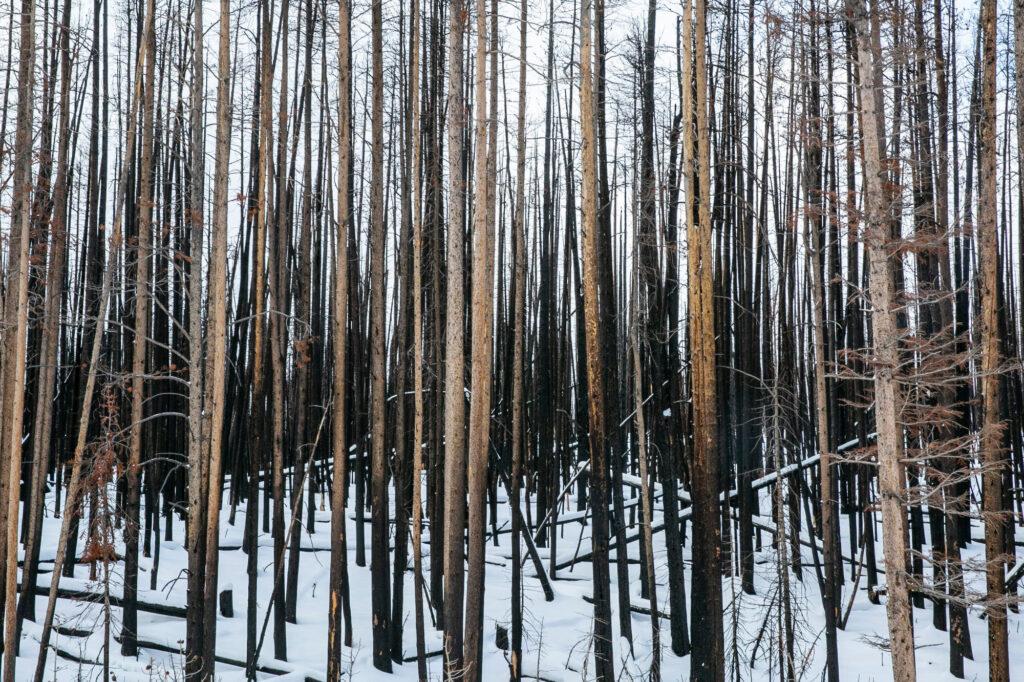
The projects are supported by state agencies, and were ultimately expedited by federal authorities amid a push for fire reduction and increased logging on federal lands.
The Lower North-South and Pikes Peak projects were authorized as “emergency actions” under the 2021 Bipartisan Infrastructure Law, signed by President Biden.
That means that the Secretary of Agriculture determined that the area required emergency treatment to avert disasters that could harm human health or resources on national forest or privately-owned land.
This year, the Trump administration has expanded where those emergency actions can take place.
In April, Secretary of Agriculture Brooke Rollins issued an order designating nearly 60 percent of all Forest Service land — more than 112 million acres — as high-risk for wildfires, disease, insect infestations or otherwise in poor health.
Rollins’ order paved the way for the Colorado projects to continue, and limited the degree to which the public could object to the plans.
The same order was also explicit in its desire to vastly increase timber production on public lands.
“The United States has an abundance of timber resources that are more than adequate to meet our domestic timber production needs, but heavy-handed federal policies have prevented full utilization of these resources and made us reliant on foreign producers,” Rollins wrote in a memo.
Meanwhile, local officials across the West are urging the federal government to be more proactive about fire management, especially after mass layoffs this spring at many agencies, including the Forest Service.
In multiple recent letters, U.S. Senators have expressed alarm at the slow pace of wildfire preparation work, while state and local officials have asked state attorneys general to block potentially illegal cuts to Forest Service staff.
Thinning and clear-cutting alone won’t save homes
The Trump administration, as well as Congress, have proposed speeding up approvals, or even skipping detailed environmental reviews, for forest management projects.
But that can be controversial, because the process usually allows the public to weigh in.
The agency’s push for aggressive thinning to reduce wildfire risk comes as the West is experiencing hotter and drier conditions, which are more likely to spark mega-fires. More people also live in the “wildland urban interface,” as housing developments increasingly impede on forests and plains.
Some environmental groups question whether huge projects like these may be overpromising their wildfire benefits, especially after years of suppressing potentially useful fires in national forests.
“The agency’s underlying assumption that it can manipulate vegetation to address decades of mismanagement is both highly controversial and uncertain,” wrote Allison Henderson, an attorney with the Center for Biological Diversity, in a public comment about the Lower North-South plan.
Henderson called for a more thorough environmental analysis of the Lower North-South project.
The plan is also unlikely to save homes and valuable infrastructure on its own. Instead, property owners must also “harden” their homes from the embers that accompany fires, by installing flame-resistant siding or removing flammable plants.
Intensive home-hardening, especially at a neighborhood scale, has been shown to greatly improve the odds of homes surviving a blaze.