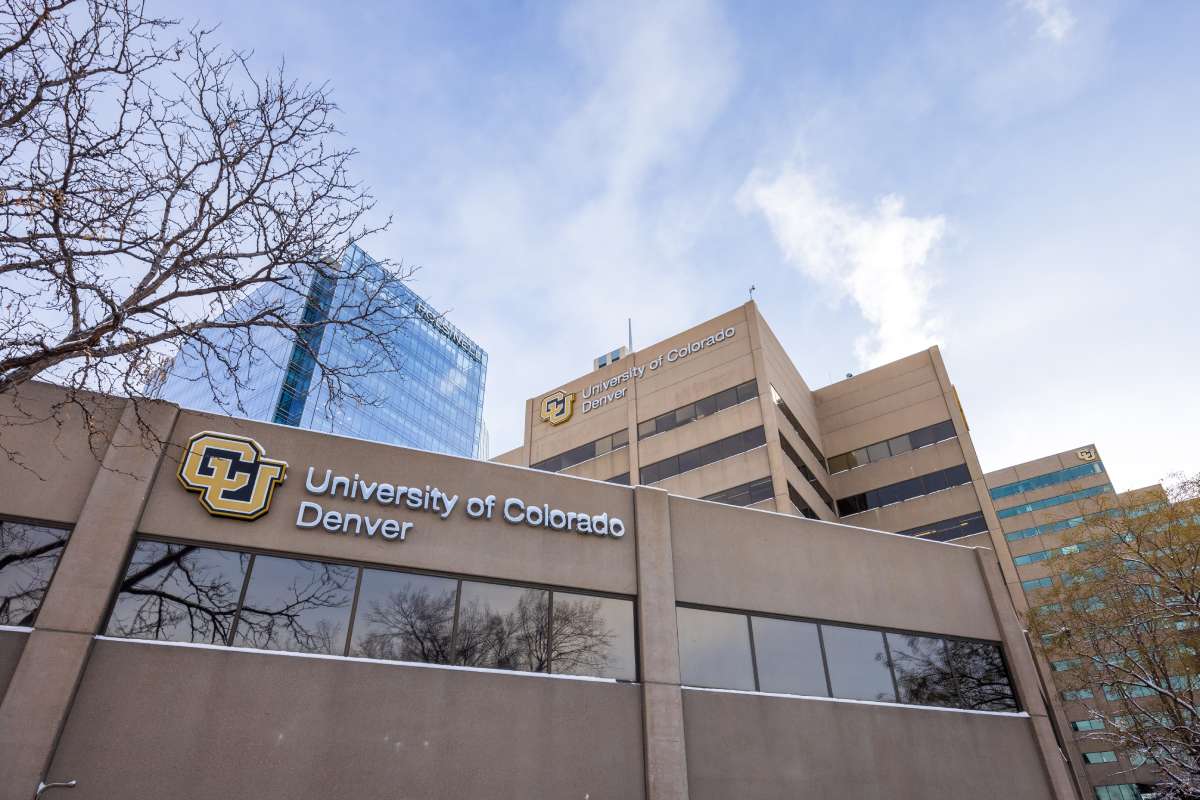
More than 20 female faculty members at the University of Colorado Denver filed a class action lawsuit in Denver district court Friday, alleging systemic wage discrimination based on gender.
The lawsuit asserts that the university has consistently paid female professors less than their male counterparts for performing substantially similar work despite an internal analysis that revealed pay disparities. The suit alleges this violates Colorado’s Equal Pay for Equal Work Act.
The plaintiffs include high-ranking and long-tenured academics from various departments who say that the university pays female faculty less than male colleagues who hold lower ranks, have less experience, or work fewer hours.
“It is our hope that all institutions of higher education in Colorado will regularly conduct proper pay equity reviews, correct pay disparities, including paying back pay… as well as instituting wage transparency,” said Madeline Collison, the plaintiffs’ attorney.
The University of Colorado Board of Regents is named as the defendant. Representatives for the board could not immediately be reached for comment. A CU Denver spokesperson said the university cannot comment because it does not comment on pending litigation.
Colorado’s equal pay law
The intention behind Colorado’s Equal Pay for Equal Work Act, which went into effect in 2021, was to close the gender pay gap by making sure employees with similar job duties are paid the same regardless of sex. The law also requires wage transparency.
After the law took effect, each of the University of Colorado’s four campuses conducted pay equity analyses to come into compliance. CU Boulder, which made its analysis public, found that 387 female faculty members were underpaid and increased their salaries to match their male counterparts. In 2024, after the threat of a class action lawsuit, the university agreed to pay hundreds of female faculty members back pay in a $4.5 million settlement.
The new lawsuit against CU Denver alleges that the university conducted a pay analysis in 2022 but refused to share the results with faculty, citing "privilege." The complaint asserts that the analysis reflected "widespread pay inequities" that the university chose not to correct.
Associate professor Sasha Breger Bush said women faculty have not received pay adjustments as a result of the review, “at least not on any systematic or transparent basis that we’re aware of.”
“Rotten and demoralizing”
Throughout her decade-long career at CU Denver, Breger Bush maintained excellent performance reviews. She served as chair of the university’s faculty governing body from 2023 to 2025. Still, she has been paid less than other associate professors who performed “substantially similar work.” Currently in the School of Public Affairs she is paid “significantly less” than two males with the same rank and job expectations, according to the lawsuit.
“It feels rotten and demoralizing,” she said. “All of the faculty at CU Denver work very, very hard, and it would be wonderful if we were paid fairly. I don't think that's too much to ask.”
The suit also alleges the analysis didn’t include non-tenure track faculty, which constitute the majority of the faculty. It estimates between 250 and 275 female non-tenure track faculty who have or currently are being paid less than a male counterpart. The lawsuit alleges that the Provost’s office discovered that nearly 100 out of 131 female tenure-track faculty were similarly underpaid because of their gender.
Allegations of systemic inequity
The 21-page complaint details specific instances of pay disparity across multiple academic ranks, from tenured full professors to non-tenure track instructors.
The allegations include a tenured full professor who is allegedly paid as much as $20,000 less than recently hired male instructors with lower ranks and shorter tenures.
One plaintiff, Jennifer Reich, a tenured full professor in the sociology department with expertise in vaccines, holds the university’s highest possible performance ratings and more prestigious national credentials than male colleagues earning more than her, according to the suit. The complaint said she earns "substantially less" than nearly all male full professors in the College of Liberal Arts and Sciences.
Despite being promoted to full professor in 2017, she is paid less than a male colleague who received that promotion in 2023. Reich initially believed the pay disparities were an administrative oversight. After attempting to resolve the issue through official channels, she found the university's responses to be inconsistent and opaque.
Reich said what troubled her most was the lack of transparency.
“At times we were all denied, but all at times for exactly contradictory reasons,” she said. “There hasn’t been a lot of transparency. There hasn’t been a lot of clarity.”
In her case, she was told a male colleague got a retention raise because he received an offer for another position. Reich, who has six more years’ experience than the colleague, said that process disproportionately penalizes women, who may be less inclined to engage in that practice.
She said the university’s rationale also ignores the fact that it has the option to bring employees doing the same work up to the same level.
“I value my colleagues, and I want them to be paid what they're worth,” she said. “But that doesn't mean that other people are also not valuable and shouldn't be paid what they're worth. I think there's just a fundamental misunderstanding of what the law requires.”
The suit said many of the rationales given to women faculty are not permitted by state law, such as the market rate at the time of hiring.
What the plaintiffs want
The plaintiffs have requested a trial by jury. They are seeking an end to discriminatory practices, payment of lost wages and back pay, and permanent salary increases to match male counterparts.
For Reich, the lawsuit is about more than individual pay. She would like the university to look at its compliance with the laws on salary transparency so when inequalities occur, “they can be addressed directly rather than buried and rationalized.”
Breger Bush said she loves teaching her students and conducting research.
“But it's not OK for employers to treat their employees in this way — and the law prohibits it.”