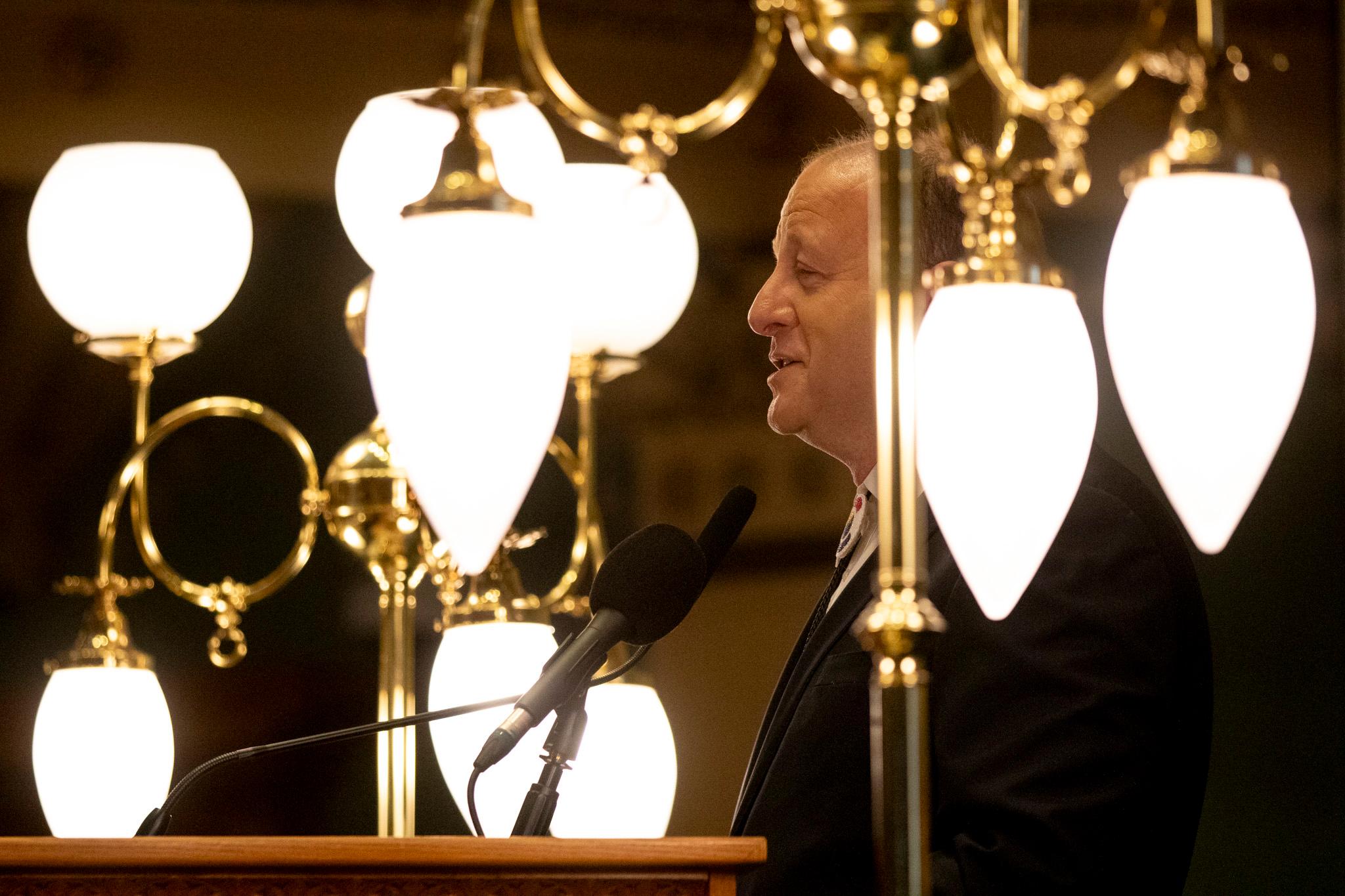
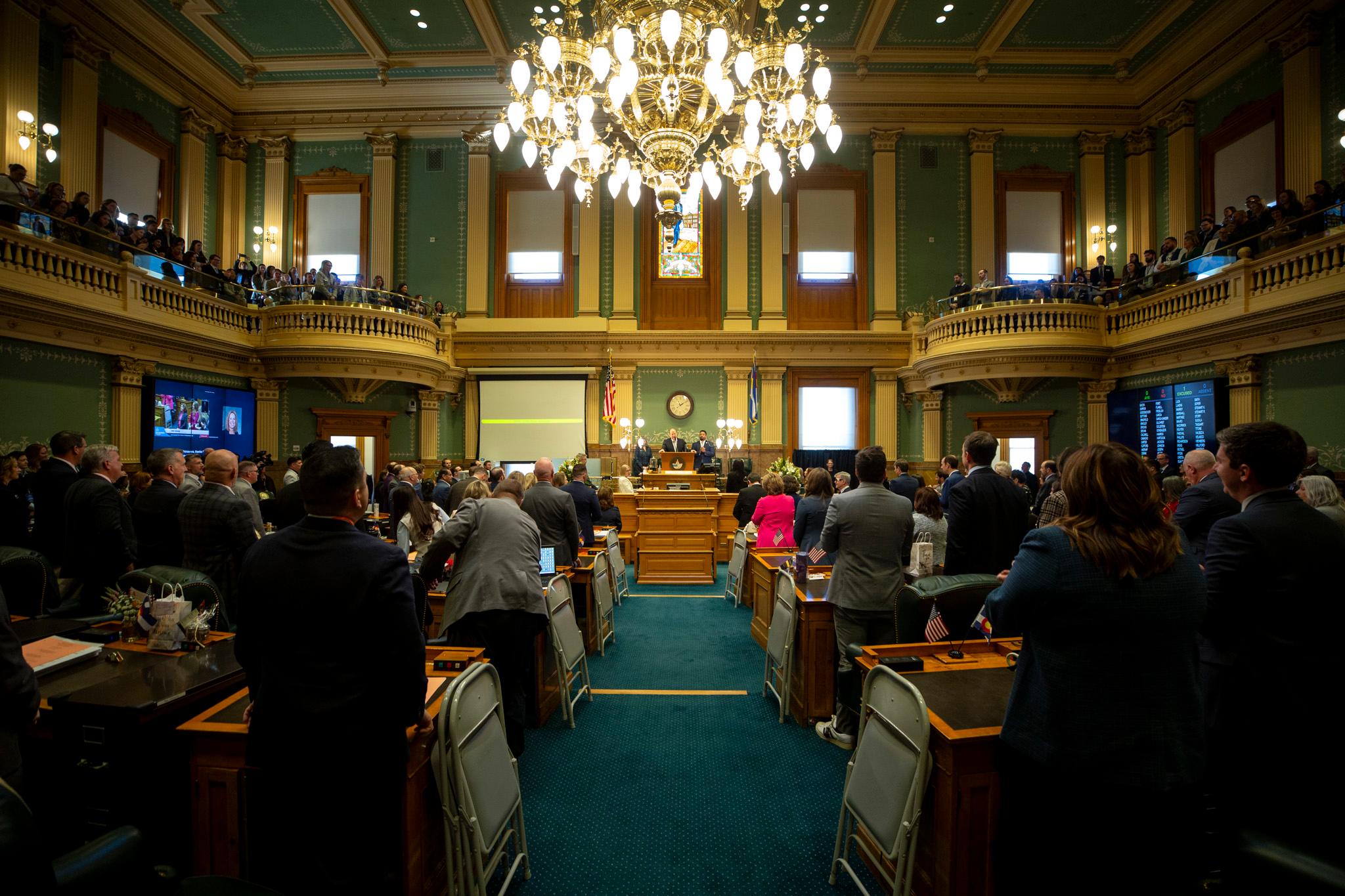
As Jared Polis kicks off his final year in office, the term-limited governor finds many of his signature projects, like climate change and health care, under attack from the federal government.
During his State of the State address on Thursday, Polis discussed threats from the Trump Administration on funding measures from disaster relief to tariffs. In an interview after the speech, he told Colorado Matters senior host Ryan Warner that the Trump Administration’s demand to keep a coal plant in Craig running would only cost residents money.
“Coal is currently the most expensive form of energy on the grid,” Polis said, noting that the plant in question was scheduled for retirement. He added that utility providers like Tri-State have already told the state “that this will likely add tens of millions of dollars in cost, which then in turn is passed along to us rate payers.”
Polis said the state plans to fight that order as well as others from the Trump Administration. Still, there are achievements from his time in office that haven’t been shaken by federal cuts.
“Our work around free preschool and kindergarten? Not directly threatened by any actions of the president,” Polis said. “Our work on housing? Not directly related to, again, what the president does, unfortunately, tariffs have increased the cost of housing by 6 percent or more in building new housing and materials.”
In addition to efforts on housing and pressure from the federal government, Polis discussed Colorado’s budget issues, the prospect of universal health care and what to do about Tina Peters.
This interview has been edited for length and clarity.
Ryan Warner: I want to start with housing, which was not a topic all that prominent in your first State of the State seven years ago, but now is at the top of your list. You have thrown your support behind the HOME Act. It emboldened schools, nonprofits, local governments to build housing on vacant land that's near transit, near businesses, increasing density, but it's another example of zoning and land use handed down from this state. Are you in for another fight over local control?
Gov. Jared Polis: Well, these entities are local as well, so I mean, it's school districts, it's housing authorities, that can be, often, public. So it's really about empowering locals who care about housing to be able to be part of the housing solution. There's so many opportunities with vacant land. It's often owned by colleges, community colleges, school districts, housing authorities, nonprofits with a focus on housing. And, just as we made it easier for private homeowners to be part of the housing solution by making it easier for them to build accessory dwelling units on their property, we also want to make sure that the various nonprofit partners that want to make housing more affordable in Colorado are able to do so.
Warner: Can you take us to a community, get us as close to the ground as you can, that you are aware would make use of this?
Polis: Oh, there's so much land that's owned by different entities like school districts. There are already, even though it's hard now absent this legislation, there are already school districts that are stepping up. I mentioned Eagle County School District to be able to make sure that people that work in the schools — teachers, paraprofessionals — have a place to live, hopefully near work, near school, near transit. We're also working on additional financing tools, so local communities have the ability to build out housing and transit hubs that help get people where they want to go, reduce traffic and make communities more livable and affordable.
Warner: And what is an obstacle today in their way? They own the land, right?
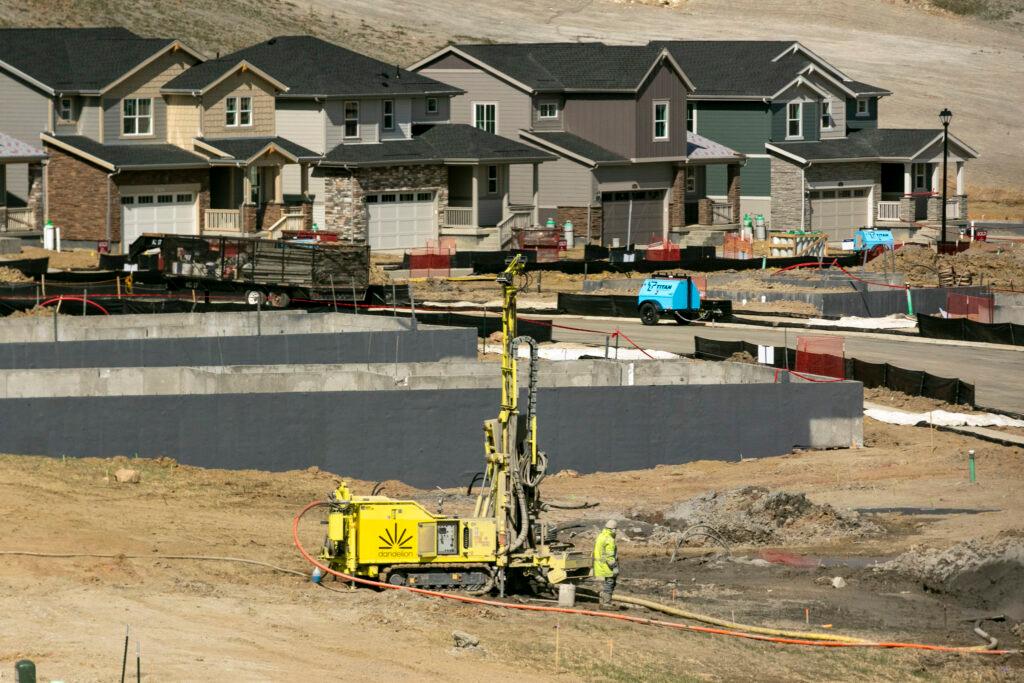
Polis: There's many obstacles. It often takes years of red tape and approval to be able to even come close. I visit housing. I've been (to) and seen many projects that wanted to do 80 homes for teachers or paraprofessionals (then) had to negotiate it down to 40. Housing is really a crisis in this state and what's different from when I took office is the average home price has gone up in the Denver metro area. It really went up in 2019, 2020, 2021. So it's one thing when the average home price is $400,000. It's entirely a different thing when it's $600,000. And what we really need more of in this state are starter homes, homes that young families can afford — $250,000, $350,000 — get the down payment, make the mortgages, build a wealth. Maybe they want to move to a $600,000 or $700,000 home in 10 or 15 years, but they won't be able to afford to unless they get into ownership today, rather than just see their rent check, go to somebody else's bank account every month.
Warner: Last year, you announced that you'd withhold grants from cities that don't get on board with the state's housing vision. I spoke just after your speech with Republican minority leader, Jarvis Caldwell, and he drew this comparison Governor:
Jarvis Caldwell: What I find as hypocrisy is that the governor does the same thing to our local municipalities and counties, where he threatens and says, if you don't do these whatever housing standards that we pass, the state law, I'm going to withhold state money from you. But when President Trump does it, then (Polis) calls it authoritarianism or whatever he's called it, probably on social media or in person. And so I do think it is a double standard on the governor's part.
Warner: Is there a difference?
Polis: Well, an enormous difference. We are not making up conditions. It's following state law. So when anybody doesn't follow state law, they can't be funded. I mean, you have a school that doesn't follow the hours they need to meet the rules they need to have in the classroom, they would risk their funding. So I mean that is an implementation of state law as opposed to, for instance, the whims of an executive or a president.
Warner: You call the president's actions “whims,” but he's saying, “Listen, states, you’ve got to get on board with my immigration policy and the laws around it.”
Polis: Well, the laws are one thing. Of course, states need to follow the laws. So on the rare occasion, he might win in court. That's because he is backing up the law. But more times than not, we've won and other states have won because, in fact, there is no law that he's able to cite that gives any discretion to him for cutting those funds. There's simply something he decided to do. They're not part of a law that was passed by Congress and signed by a president.
Warner: Last week. The US EPA said it would reject a clean air plan from Colorado. Does Colorado's governor, you or the next one have agency now to implement green energy policies?
Polis: Well, these are different things. And what an ironic reason to reject a regional haze clean air plan. Basically, saying you have to have more haze, you have to have worse air. I mean, effectively, that was the message. Obviously, as a state, we're continuing to move forward with lower costs, clean energy, replacing costly coal with lower-cost sources that can save people money on their bills every month. And also make sure we're not subject to changes in the pricing of, for instance, a commodity like natural gas. When the Texas winter storms occurred several years ago, it increased rates by $20 a month for years for many Coloradans and the Colorado Springs municipal utility. Also, for many Xcel customers.
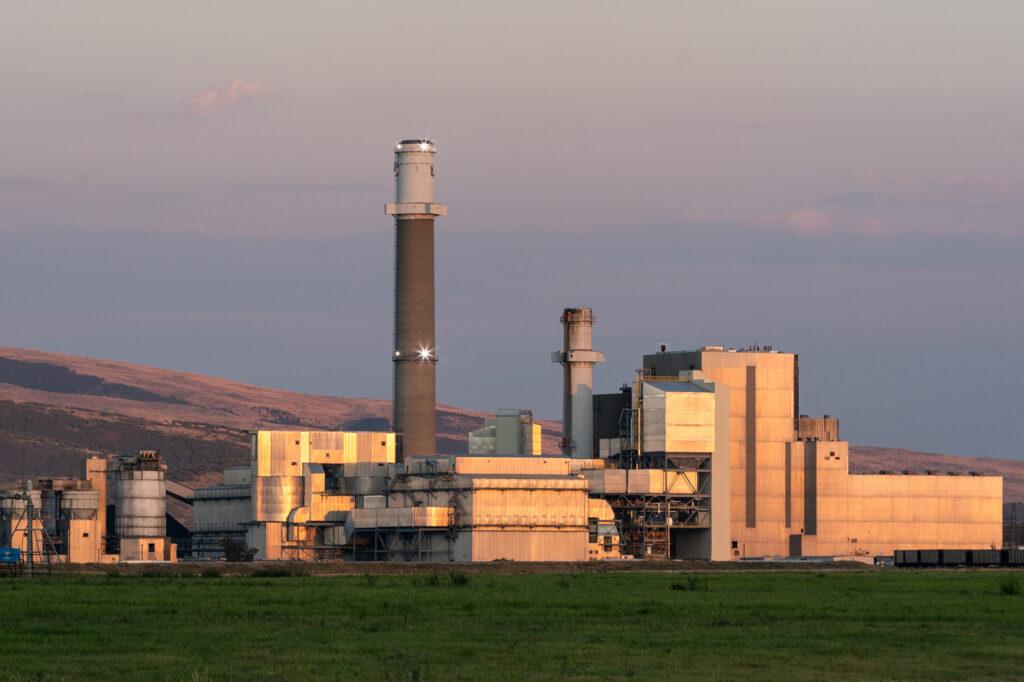
Warner: You are speaking there of the administration's embrace of coal, and they're demanding an aging power station in Craig, for instance, continue operating under an emergency order. And indeed you've said that this is going to spike costs for rate payers, but what's the evidence of that if you keep coal going?
Polis: Well, coal is currently the most expensive form of energy on the grid when it comes to retirement dates that have been planned and set by utilities. If they keep them open under federal orders longer, they've already told us — and by they, I mean folks like Tri-State, Xcel, utilities — that this will likely add tens of millions of dollars in cost, which then in turn is passed along to us right payers.
Warner: That is because they had a plan in place and that's now being disrupted as they aim for a transition.
Polis: Yeah, we're obviously very flexible in coal. There's where you have plants like Comanche 3 and Comanche 2, where it's down, and so we want to delay the retirement of the other plant. We're obviously flexible to find the lowest cost way to serve people working with utilities, but where it doesn't make sense and it adds cost, coal should absolutely be retired so that rate payers can save money.
Warner: But it doesn't sound like that is necessarily going to be allowed by this administration. So is it tough, totes?
Polis: Well, I mean, like many actions, it's subject to appeal. It's subject to challenging the courts. I would really hate to see Coloradans have to pay more simply because they're trying to preserve legacy ways that we provide power, which happen to be dirtier and higher costs.
Warner: Do you plan to sue or is that something you'd leave, for instance, to the attorney general?
Polis: It's my understanding it's currently in an appeals process and obviously we plan to assert all of our rights as strongly as we can both through the regulatory system and in the courts.
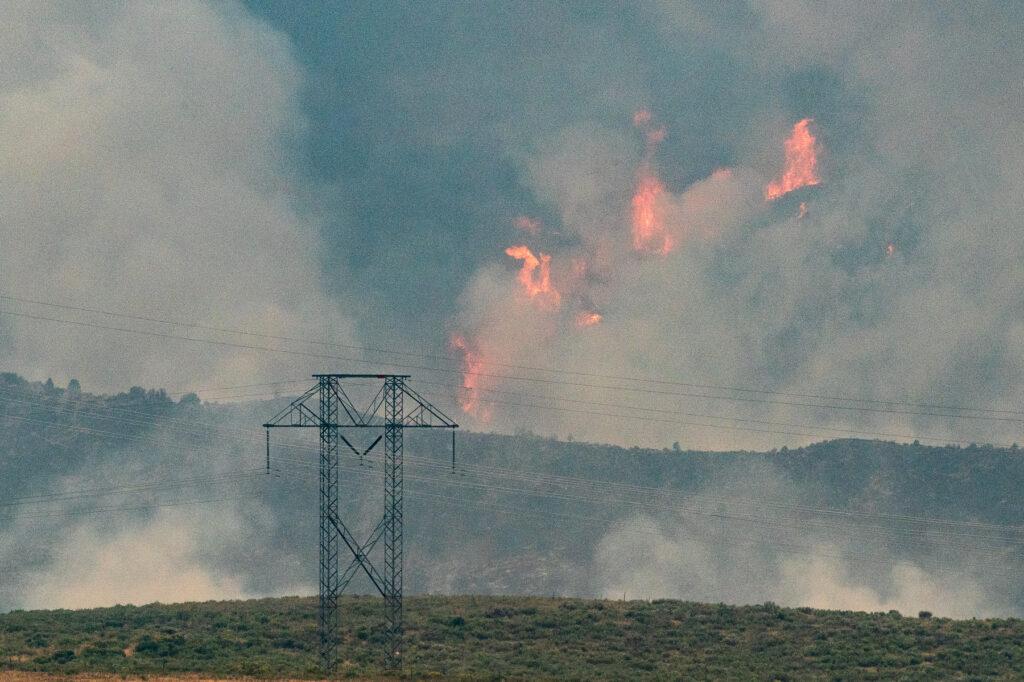
Warner: As you noted in your State of the State, the Trump administration denied Colorado's disaster relief requests for wildfire and flooding. The state is seeing its worst snowpack in years and I have to think you're nervous about what that means for summer fires. Governor, what happens if Colorado goes all four years of an administration without getting any disaster relief funds from Washington?
Polis: When the president fails to deliver disaster relief funds to Colorado, it really interferes with the recovery efforts and future prevention efforts. We had two major events that qualify for emergency disasters. The fires in western Colorado and the floods in southwest Colorado where it'll take years for communities to build back. And in the past, those have been routinely approved by the White House, and yet this time, because of them being denied, it'll interfere directly with our ability of our communities to recover from devastating fires and floods.
Warner: So does that add to the budget gap? You're looking at about a billion-dollar gap that needs to be closed, this legislative session. Does that exacerbate what's going on?
Polis: Not directly. Most of those funds are local for local recovery efforts. The biggest contributor to the state budget challenges is the growth of Medicaid expenditures that's only amplified with some of the Medicaid cuts that are being phased in over the next few years. So what's most important is to seek better outcomes at a lower cost in health care. Yes, across Medicaid, also with private sector health care. And as I mentioned in my speech, it's not rocket science. Almost every other wealthy country does this.
Warner: We heard some of your strongest statements yet on this topic. I mean, you've said for years that federal hurdles limit what Colorado can do, and you have called in the speech for universal health care. Do you mean that in the Bernie Sanders way?
Polis: Well, you'd have to ask him. I think, as I said, every other Western industrialized country finds a way not just to cover everybody, but to do it at a much lower cost. So obviously if there is some kind of single-payer system where everybody is a basic level of care and people can pay for care or insurance above and beyond that, whether it's a way that we can have a multi-payer system like some countries have, where you choose between several payers that together can provide universal care, all of whom act to drive down costs and provide competition. The only version I've been against is what would be like a VA for all, or the British system, which is government-delivered health care services. I don't think the government should effectively employ the people that provide care, but I think there's a lot of room for more efficiency and reform to drive down costs on the payer side. And I would really look to countries like Japan, which I cited in my speech, to Germany and others.
Warner: President Trump just released a health care outline. It takes aim at some of the same villains you do: pharmacy benefit managers, health care lobbyists. It has just come out as we speak. Have you seen it? Any thoughts?
Polis: Well, look, I mean, what it takes is Congress to take this up. I certainly hope the president would be a willing partner in these efforts to take on the special interests that have tremendous influence at the national level. And here in the state of Colorado, that includes hospitals. Nonprofit hospitals in Colorado — nominally nonprofit — have raked in profits of over $1 billion a year in our state. Whether it's insurers, whether it's pharmaceutical benefit managers, whether it's big pharma, there's other ways that we could do to negotiate better prescription drug costs to find ways to provide more care and better care for less. And that's exactly what we should do at the federal level.
Warner: This is an election year. It's very possible that the makeup of Congress could change. Are you speaking to the current Congress or the one you hope will be seated?
Polis: Yes, both. I certainly hope the current Congress acts and if they fail to, it'll fall on the laps of the next Congress to rein in out-of-control health care across the country and cover more people.
Warner: You created an office to save people money on health care in Colorado. Does this issue catapult you onto a national scene? Is this your message if you run for president?
Polis: Well, I think you're reading a lot into my work to save Coloradans money on health care, and we did cite the $3 billion that we've saved because of the national landscape. The expiration of, for instance, the tax credits for the exchange. It's hard to be able to be proud of saving $3 billion if costs have gone up over $15 billion because of other factors. But certainly, compared to other states, we're doing better and people covered as well as cost increases. But we know we need to do more. And yes, I want to do everything I can to get Congress to step up and take action.
Warner: Well, with the clock ticking on your last term, do you know what you're doing next? Let me just ask that a little bit more pointedly.
Polis: Well, this is my last State of the State address. It's important to remember I have a whole ‘nother year to serve as governor. We have a lot of areas we want to make progress on reducing housing costs, including reducing homeowners' insurance rates, reducing healthcare costs, improving our schools, and I'm going to run through the tape and get as much as we can done over the next year.
Warner: Are you braced for Minneapolis-style clashes between ICE and Coloradans, and what, if anything, are you doing to prepare?
Polis: Well, I truly hope that the federal government can return to being a constructive partner and keeping Coloradans safe, and that means, of course, working together to apprehend criminals, whether they're Americans or whether they're immigrants. It was tragic to see what happened to a former Colorado resident in Minnesota, and of course, the many non-criminal immigrant families that are torn apart every day.
Warner: Well, as some have said, hope is not a plan. What preparations are you engaged in if something like what has happened to Minneapolis happens in Denver or another Colorado community?
Polis: Well, to the extent federal law enforcement agencies want to work with us to apprehend criminals and gangs, we're always happy to do so. Whenever they seek information about trying to tear apart families that have not violated any criminal laws, we don't share that information with them and don't assist in their efforts to tear people apart
Warner: And to Coloradans worried about the actions they've seen from ICE agents and whether that could manifest here. I'll ask another time. What is your message to them? Are there any preparations in place?
Polis: It's a very good worry to have, and I fully share it, and you can see what's happening in Minnesota now, along with the inability of the state to prevent these federal enforcement actions.
Warner: That your hands are tied, essentially?
Polis: Well, any federal enforcement actions are separate and distinct from what the state does with their own resources, and we're always willing and do work with our federal partners to apprehend criminals and make Colorado safer and go after drug dealing and human smuggling. But to the extent that they're working on other things in our state, we are not allocating a single dime of our enforcement resources to tear families apart and apprehend non-criminals.
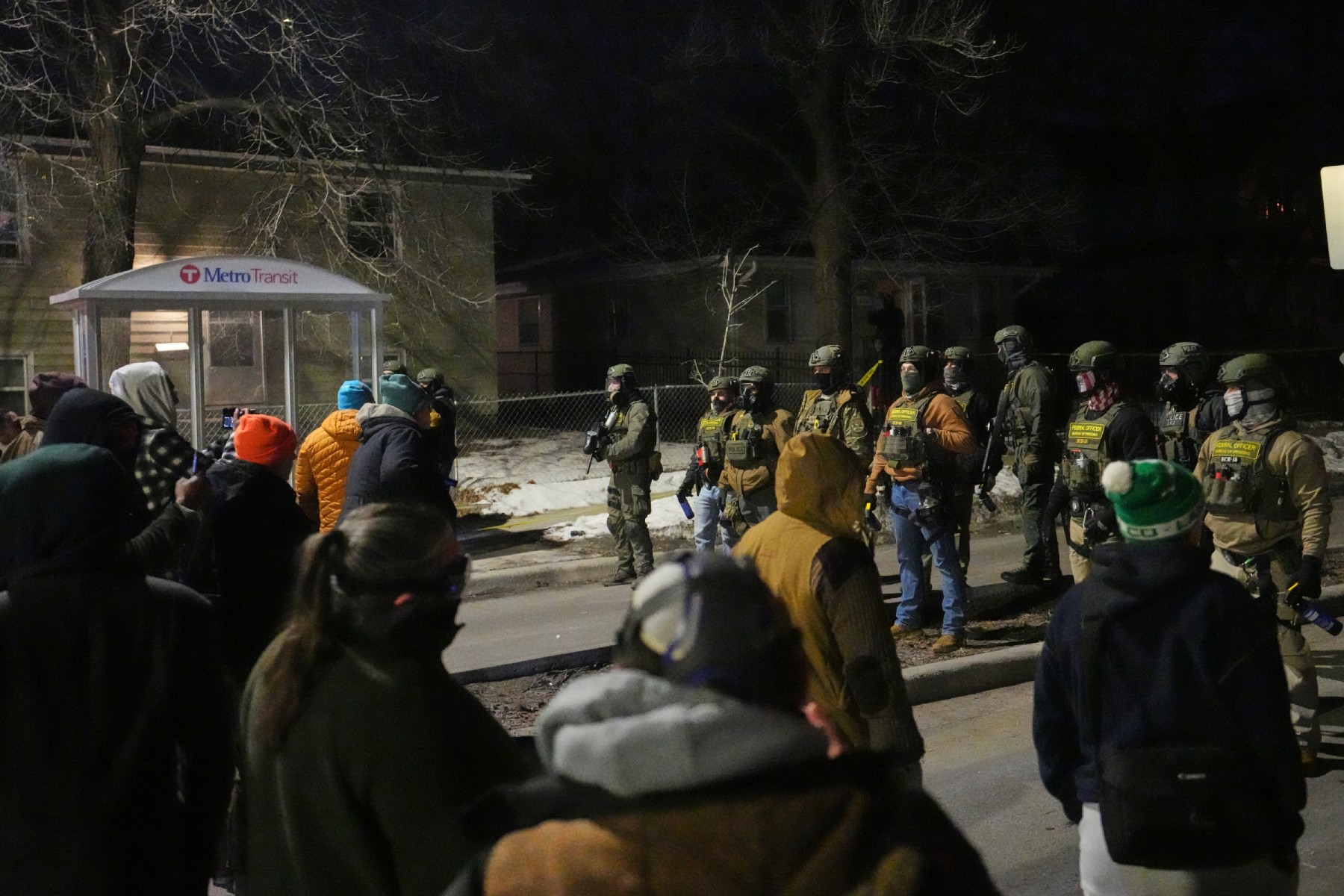
Warner: Denver wants to arrest ICE agents who conceal their identity while making arrests. Do you think that should be a statewide policy?
Polis: Well, I've not heard what Denver is proposing. We obviously want to make sure that people are not impersonating any kind of law enforcement personnel, whether it's local or federal, and we want to make sure we have the right safeguards in place to make sure that law enforcement is legitimate.
Warner: Do you think ICE agents have the right to be masked if they make arrests in this state?
Polis: Well, there's certain kinds of police operations where people wear masks and local law enforcement does that as well. I think what's most important is making sure that nobody is pretending to be a law enforcement agent, which is against the law and has its own specific criminal penalties. And sometimes declining to state one's identity is a way that can further the impersonation of law enforcement.
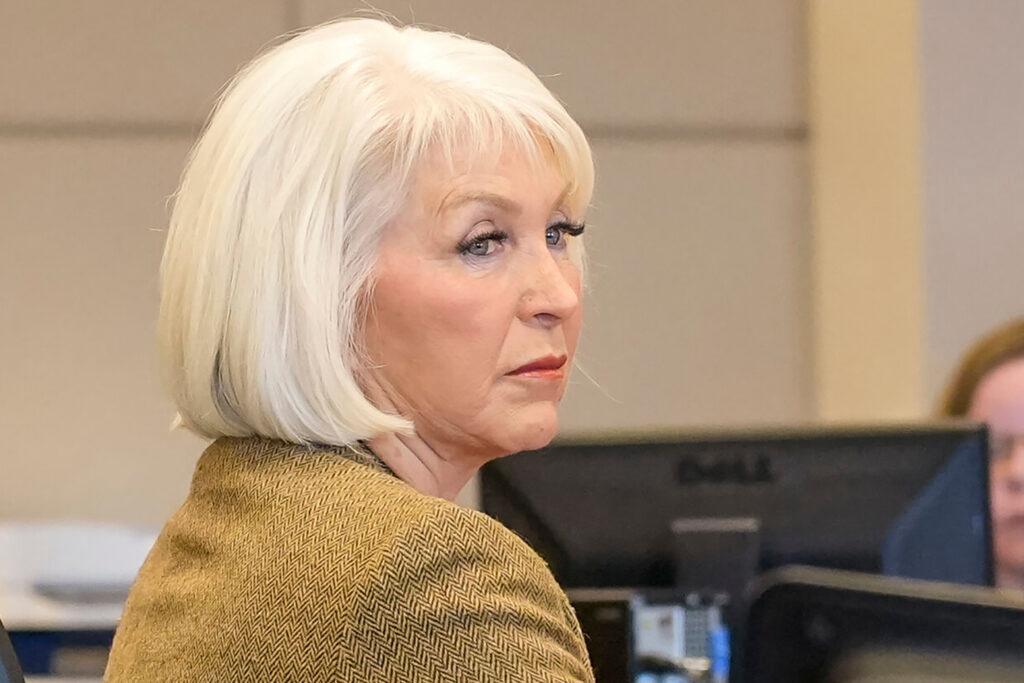
Warner: This time last year, people couldn't stop asking you about RFK. Now it's Tina Peters. You said her nine-year sentence was harsh. I’ll just say a review of Department of Corrections policies shows that she could actually qualify for release into community corrections as early as the first half of 2027. It's very unlikely, in fact, that she serves anywhere close to nine years. Where's the harshness in your mind, governor?
Polis: Oh, well, those are all derived from a term. So if somebody is in jail three years, they might very well go to community corrections after one-and-a-half or two, and they might get parole after two or two-and-a-half. It depends largely on behavior in prison and other factors. When you look at people who have been convicted for nonviolent, first-time offenses, absolutely, her sentence stands out. I think there's no question about that, and we have hundreds of applications for clemency and for pardons — and I thoughtfully review each and every one of them. And in my final year as governor, I do want to lean into the value of mercy and do what we can to give people a second chance.
Warner: Among the constituents reaching out to you on this, the League of Women Voters, the Secretary of State, county clerks. All urging you to keep Peter's sentence intact. What's your message to them even as you consider this notion of mercy?
Polis: Well, I mean if you want to run for governor, you can be governor and then you have the ability to grant clemency and pardons. I mean, I'm the one who's here and I review the cases, try to make sure that when people are sentenced harshly or unfairly, we address that. I, in a rather high-profile way, did that on the truck driver whose illegal actions killed (four) people driving carelessly and without the correct preparation, he was originally sentenced to 110 years. I brought that in line with what I thought was a more ordinary sentence for that for 10 years and of course the dozens of people every year who might've made a mistake 10 or 20 or 30 years ago have paid their debt to society and won a pardon so that they can legally buy a gun or get a sensitive job or travel abroad in some cases. And I encourage Coloradans who would benefit from this, a second chance, to apply by April 3rd, which is our deadline for me to review those cases that come in during my term in office.
Warner: I have asked you over the last several months, I think, if not longer, about Tina Peters, and you hadn't until this point used the word harsh with me. What seems to have changed is the national environment? The pressure that you are getting from the Trump administration to release her and the various tools he has used to apply pressure? Are you cracking?
Polis: Well, no. Look, I don't care what the president says. I mean, when he attacks our mail-in voting system, that's something I believe in. It's an interstate constitution. It doesn't matter what he may or may not say about different inmates that we have. He's certainly entitled to his opinion. He, of course, separately in the matter of this inmate tried to grant a federal pardon, which we believe has no weight of law is not applicable here. Every time you've asked me, I've always said I'm going to look at it or I've often said. Obviously in the past, if people are older or sicker, we look at it. I mean I've always said we're going to look at it and there's really not a different answer today.
Warner: Do you have a timeline for when you'd make a decision about Tina Peters?
Polis: No. I mean, people are focused and you're welcome to be focused on her, but there are many folks who've applied, including violent criminals, and I have looked at disparate sentences on some of those in the past, so I thoughtfully review all of the applications that come in in a similar way. Some are ruled out earlier, especially on the violent end that involves a process that provides victims the opportunity to be heard along with the prosecuting attorney and I'll continue that process as well as, again, if new ones come in by April 3rd, I'll certainly review those by the end of my term as well.
Warner: Is it important that she wasn't terribly sorry for what she did?
Polis: Yeah, there's many factors I look at in clemency, so one of them you look at was it violent or not. One of them you look at is was it a first-time offense or is it a habitual offender? I also look at age and disability and health and you look at, also, whether people take accountability for the crime. So some people I've looked at have some or all of those attributes and those are the types of things that I look at in any clemency review that I do.
Warner: Colorado has an AI regulation bill that's supposed to take effect this year. It may get some tweaks and it focuses on limiting discrimination that could arise from the use of AI. Is that the biggest concern you have when it comes to artificial intelligence?
Polis: Well, first of all, I'm against discrimination, period. Whether it occurs from a human, whether it's an algorithm, whether it's AI, it doesn't necessarily matter. It's just wrong to discriminate on somebody based on their race or their gender or their age. It's illegal, it's wrong. I support any system that furthers making sure that Coloradans are free from discrimination. Separately, AI has great promise and opportunity. Most of us use it in their daily lives, whether it's kids in school, whether it's on the job, whether it's figuring out health care issues or whatever it is. It's a great tool and like many Coloradans I use, I want to make sure that I'm able to continue to do so.
Warner: Does the governor's office use artificial intelligence regularly and could you perhaps just lift the curtain a little bit on its application in your office on a daily basis?
Polis: Well, in my State of the State address, I specified that my speech was not written by AI lest there be any doubt, it was not. We do have a policy for the state to use it and we lead into it, especially around customer-facing applications. I'm sure members of my staff and me use it for research as well, and again, we don't track the usage of it, but it's like many other tools. It's like internet search mechanisms, consulting experts. There's many ways that we gather information and like most Americans and Coloradans, AI is one of those.
Warner: If you don't track its use in your office, how can you know if it's discriminating or not?
Polis: Well, to be clear, this bill relates to decision-making and things like loans or health care. What my office would use it for would be similar to what you might use it for. I mean, when you type something into Google, you get search results, you get AI results, you look at both, and so it's unavoidable whether you know it or not. If you're listening to your show, you almost certainly use it in some way because it's fully integrated into many products that are part of our everyday lives.
Warner: It's also often wrong.
Polis: Absolutely, so are search mechanisms and websites that they reveal. In fact, AI is a derivative of that, right? If there's bad information on AI, it pulled it from a website with bad information. So you need one of the things that's important for people of all ages, are generally tech literacy research skills on the internet. Just because some website said it, just because somebody said it on some social media site, just because AI said it, obviously, you want to make sure it's appropriately verified.
Warner: Governor, is Donald Trump a pedophile based on what you've seen of the Epstein files that have been released so far?
Polis: I have not (read the files.) I have a very busy job, Ryan. I've not had a chance to read any of those files and maybe — you asked me what I'm doing when I'm done being governor — I really hope I have better things to do than read them. Even then, I do hope that you in the press and others are poring over them, but it's just not something I would have any time to do.
Warner: As you approach this last year in office, is there something of a cloud over what you have been able to achieve or the lasting nature of what you have been able to achieve, given how much pushback there has been from Washington? Is Donald Trump a foil to some extent to the successes that you laid out in the State of this State?
Polis: Generally not, right. Our work around free preschool and kindergarten? Not directly threatened by any actions of the president. The voters approved (that), dedicated funding, those are here to stay. Our work on housing, not directly related to, again, what the president does. Unfortunately, his tariffs have increased the cost of housing by 6 percent or more in building new housing and materials, so a factor there. Reckless spending of Congress and increased deficits because of HR1 (the Big Beautiful Bill) contribute to higher interest rates and higher mortgage rates. So there's many factors, but not directly in terms of the work we've done on removing red tape and to make it easier to build housing, free preschool and kindergarten. Our work around health care, again, there's work the federal government needs to do, but we are doing what we can as a state with the flexibility we have. I wish we had more and continuing to work to make Colorado more affordable, livable, and sustainable.