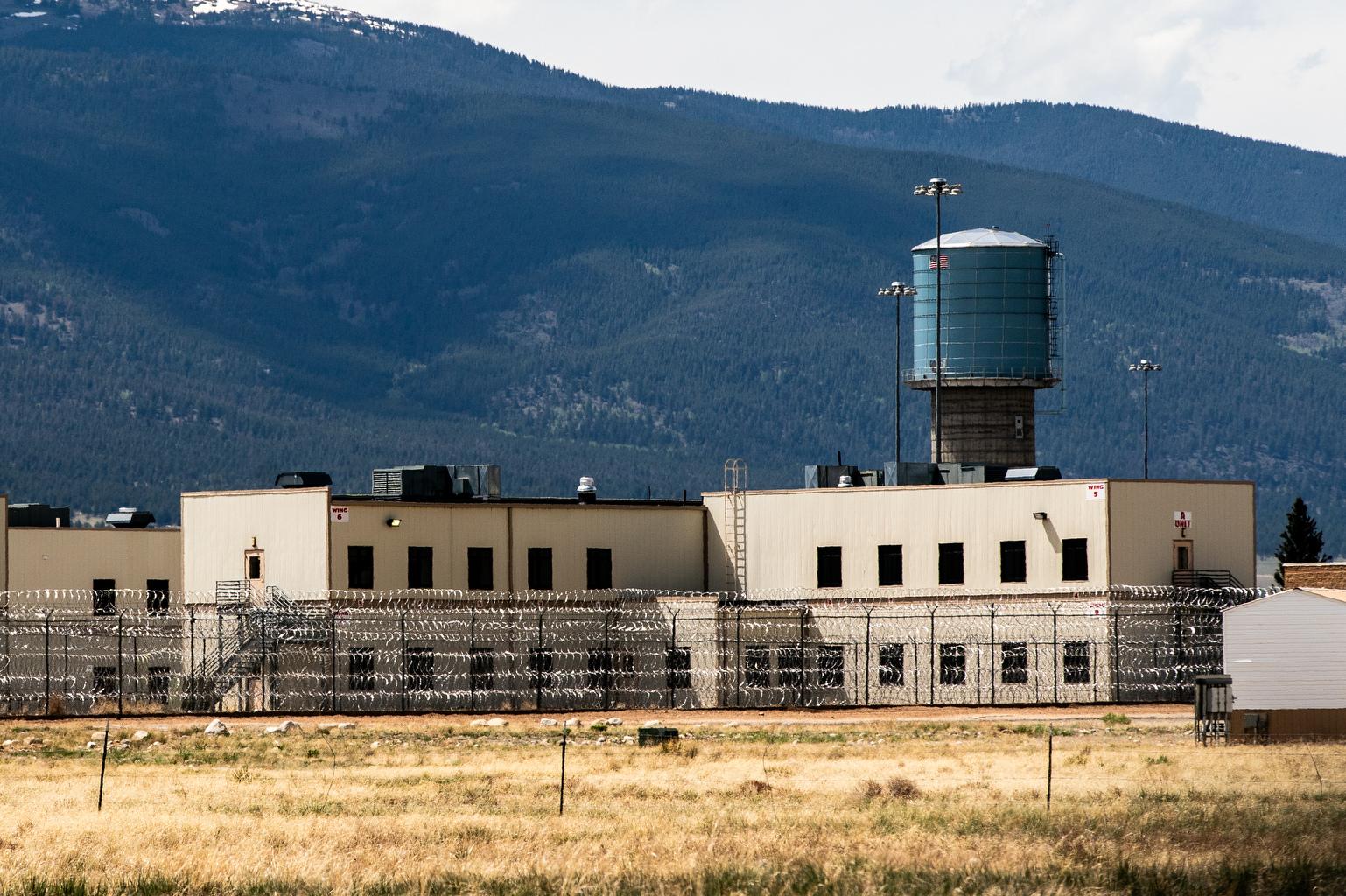
In an unusual move, the state’s powerful Joint Budget Committee offered a rebuke to the Colorado Department of Corrections on Wednesday, rejecting the department’s budget request to pay for additional prison beds.
In a 4-2 vote, Democrats cited the lack of a holistic plan to address the state's growing prison population, despite repeated requests for the administration to do so.
“The frustration is that we are just at this point where it's been repeated asks, year after year, and we've seen no movement,” said JBC Chair, Democratic Rep. Emily Sirota of Denver.
Sirota said withholding the money, for the time being, is one way to put pressure on the department to at least come up with, if not a concrete plan, “a plan for a plan.”
“Because what other mechanism do we have to get them to the table?”
The Department of Corrections requested ongoing funding in the budget for 788 state prison beds to the tune of $2.4 million because the male inmate population is “much higher than the current budget expected.”
The JBC already approved funding for an additional 153 private prison beds. And the department said the state’s prison population is well above the number of beds supported by the current budget.
“In the short-run, the DOC may deal with capacity pressures by using temporary ‘sled beds,’ increasing the local jail backlog, and contracting with in-state and out-of-state providers for additional beds,” the department wrote in its request for additional funding.
Democratic Sen. Judy Amabile of Boulder said she wants to see the department address some of the barriers to release certain non-violent offenders, such as a backlog to funding more treatment programs.
“If people don't have access to these things that they need in order to be parole eligible, then I don't understand why we're not asking for money to get more treatment providers in there to do that.”
Amabile also expressed frustration at the lack of a plan for offenders who are not a danger.
“My understanding is we have hundreds of people in DOC who don't need to be there because they're not dangerous.”
Democratic Rep. Kyle Brown of Louisville also reiterated the need for a long-term strategy.
“Until I see a more comprehensive plan about how we manage our prison population, including proactive steps, I don’t feel comfortable moving the caseload forward at this point,” he said.
However, the committee did fund some of the department’s additional requests, including some payments to jails and money for contract medical staff so health care services would not be interrupted, while discussions continue on a broader plan to fully fund the budget request.
The Department listed other challenges besides capacity, such as rising healthcare costs and the difficulty of hiring enough nurses and social workers to work with inmates. Staffing issues are the reason the state workers' union said it would not support prison expansion.
“This is not a position we take lightly,” said Hilary Glasgow, Executive Director of Colorado WINS, in a written statement.
“Colorado WINS has never opposed a DOC request for additional prison beds. Limited prison capacity is, of course, a challenge for staff, but we are in the midst of a staffing crisis that’s compromising safety for our members, the incarcerated population, and the public, and adding more beds is only going to make things much worse.”
Republicans on the budget committee echoed similar concerns to Democrats on the lack of a plan, but did not vote to hold up any funding.
Rep. Rick Taggart of Grand Junction said he was worried about the burden local jails face in housing state inmates, and Sen. Barbara Kirkmeyer said she is not convinced that a funding delay for DOC would help the situation.
“I mean, we can get plans, but we're going to pay for it one way or another,” said Kirkmeyer of state prison costs. She also faulted Democrats for not pushing harder for answers from the Department of Corrections.
“I guess it's a big huge slap on the wrist, tell 'em to get in here and you want to see some planning, but I don't know why y'all haven't been pressing them in the last couple of years.”
Democrats countered they have tried to work on comprehensive solutions to systemic problems in the state prisons.
“We did try to push back, and we got nowhere,” said Amabile. “I have run bills that I've been told aren't going to see the light of day because the governor won't sign them. And a lot of my colleagues have also done that. And so we've been shut down at every turn.”
Department of Corrections leaders will get a chance to discuss the prison population and other issues on Thursday when they are scheduled to testify before the House and Senate Judiciary Committees at the agency’s annual SMART Act hearing.
The budget committee said the DOC and the Governor’s office also have a chance to brief the committee again on Monday.