
Ask a Colorado Democrat in Washington, D.C. about why President Donald Trump and his administration seem to be singling out the state, and you get a variation on a theme: political punishment.
Democratic Rep. Joe Neguse called it “clear, blatant and unlawful retaliation.” Democratic Sen. John Hickenlooper said the state is being “targeted … for a political beef.”
Democratic Sen. Michael Bennet went to the floor of his chamber and said, “The people of Colorado have found themselves the victims of political retaliation.”
In the last five months, Trump has announced plans to move Space Command headquarters, rescinded hundreds of millions in transportation and energy funding, is dismantling a premier weather and climate research institution in Colorado, and even vetoed a bipartisan Colorado-specific bill.
And those are just some of the moves. Democrats have been clear that they see it it’s political retaliation against a Democratic state that did not vote for him in any of his three runs for president.
If you ask a Colorado Republican lawmaker on the Hill about Trump’s actions, the response varies. But one thing is clear: the blame isn’t just on the president’s shoulders.
Republican Rep. Gabe Evans, who represents a swing seat, sees it in a policy light.
“We are working with the administration to make sure that we're fixing all of the dumb stuff that Democrats have done to Colorado,” he told CPR News. He blames Democrats in Colorado and in Washington.
Some examples he points out are taxes on tips or energy dominance. The Republicans' One Big Beautiful Bill (now referred to as the Working Families Tax Cut) instituted no federal tax on tips through 2028, but the state has an income tax on tips. When pressed on whether it’s retaliation or punishment, Evans added. “I think that this is a policy conversation. You have to ask specifically about the policies in question.”
A White House official defended the moves, noting the National Center for Atmospheric Research in Boulder serves “as the premier research stronghold for left-wing lunacy.” The official said the decision to deny a FEMA disaster declaration and veto the Finish the AVC Act was to ensure federal tax dollars are spent appropriately, and withholding child care funding to ensure there is no fraud and misuse of taxpayer dollars.
The official also noted how the administration is helping the state, such as $200 million for rural health, or claiming that the Republicans' signature tax bill will increase wages for Coloradans.
Still, when looking at some of the decisions by the Trump administration, GOP Rep. Lauren Boebert called it “unfortunate, but it’s unfortunate because our state is so poorly run and defies federal law on a regular basis.”
Boebert said, “If you’re going to violate federal law, then you should not receive federal funding.”
Both Gov. Jared Polis and Denver Mayor Mike Johnston have rejected the sanctuary label, noting Colorado and Denver cooperate with immigration officials on criminal matters, but limit civil immigration cooperation, saying they will not arrest people based on their immigration status alone.
But there are areas where she thinks there should be exemptions, she added, like FEMA money to help recover from wildfires.
It’s Republican Rep. Jeff Hurd’s district, which Trump won by 10 percentage points, that saw the two requests for FEMA disaster declarations turned down.
“We're trying to understand both in the public sphere, but also behind the scenes, exactly what we can do to make sure that these critical programs are funded in Colorado and that we're not hurting the parts of the state that should be getting this help,” he said.
Gov. Jared Polis’s office recently put out information on how Trump and the GOP Congress have “brought economic uncertainty” to each congressional district in the state. It ranged from $487 million in federal cuts to Hurd’s 3rd Congressional District to $216 million in federal cuts to GOP Rep. Jeff Crank’s 5th Congressional District. Crank’s office did not respond to a request for comment.
There is bipartisan agreement on at least one reason Trump might be taking his ire out on Colorado: the state conviction of former Mesa County Clerk Tina Peters, who backed Trump’s baseless claims about the 2020 elections.
“I don't think there's any doubt that he has directed his cabinet to bring the full force of the federal government onto Colorado because of the conviction of Ms. Peters and essentially his unlawful effort to try to somehow secure her release,” Neguse told CPR News.
It’s an idea supported by comments from Trump himself.
“The state of Colorado – the poorly run state of Colorado – with a governor who’s incompetent. And frankly, with a governor that won't allow our wonderful Tina to come out a jail,” he said at a December event in the Oval Office. In a New Year’s Eve tweet, Trump referred to Polis as a “Scumbag Governor” and wished Polis and the Republican DA who prosecuted Peters, “only the worst. May they rot in Hell. FREE TINA PETTERS!” (The typo was in the tweet.)
Polis declined a request to transfer Peters to federal custody, but he has called Peters’ nine-year sentence “harsh.”
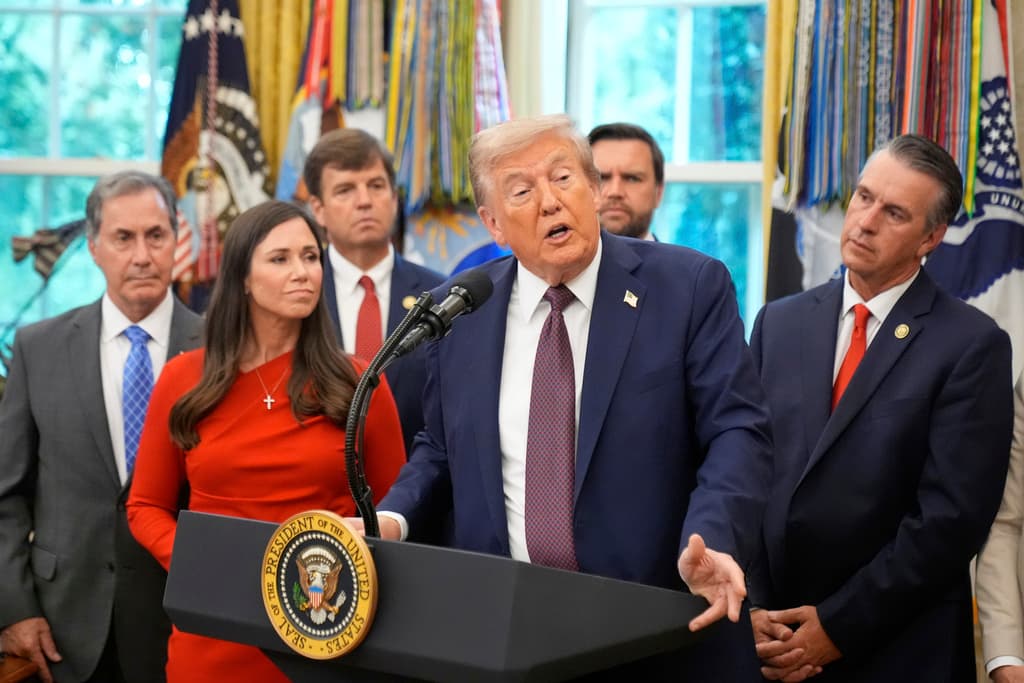
When Trump announced the Space Command headquarters move out of Colorado Springs, it wasn’t national security he talked about when it came to the state, but how Colorado runs its elections.
“The problem I have with Colorado -- one of the big problems – they do mail in voting. They went to all mail in voting. So they have automatically crooked elections. And we can’t have that. When a state is for mail in voting, that means they want dishonest elections, that’s what that means, so that played a big factor also,” he said.
There was no evidence of significant voter fraud in 2020 or in any other Colorado election using mail-in ballots. Colorado officials often tout the state as having the gold standard mail-in ballot system.
Despite the criticism, Democratic Rep. Brittany Pettersen said Polis is not “going to bend the knee” and is trying to set an example of “what happens if you actually stand up.”
“We know bullies don’t stop coming back,” she said. “We need to unite in Colorado and fight back across the country and speak out because these actions aren’t going to stop here.”
Though Boebert agrees Peters is playing a role in Trump’s treatment of the state, she doesn’t think it’s the only reason.
“I don't know everything that he's doing there and the exact reasons, but I know that the sanctuary status is a huge problem, not just for President Trump. It's a huge problem for me, [and] for Coloradans,” she told CPR News. Boebert did not mention her decision to sign a discharge petition that forced a vote on releasing the files of convicted sex offender Jeffrey Epstein.
Still, being labeled a sanctuary jurisdiction could also be a problem for the state financially.
On social media, Trump said that starting February 1, he will withhold federal funding to sanctuary cities and states, but gave little details.
The administration is reviewing federal funding — for grants, loans, contracts and other monetary awards — to Colorado and 13 other states that he lost in the 2024 elections. All but one have a Democratic governor. Colorado and Denver are both listed as sanctuary jurisdictions, according to lists compiled by the Department of Homeland Security and the Department of Justice.
But it’s unclear how the Administration would be able to withhold funding as Congress holds the power of the purse.
Hurd said it’s not clear why the administration is doing what it’s doing overall, but “we need to stand up for Article one and if Congress has appropriated the money and the law provides for the spending, we need to do that. Whether or not we agree with it or not, this is something that I don't think the executive branch should be pulling these funds without legal justification.”
Hurd added, if the Trump Administration is unhappy with how the funds are being spent, Hurd says there are other ways to address it, such as another recissions package or passing a new law.
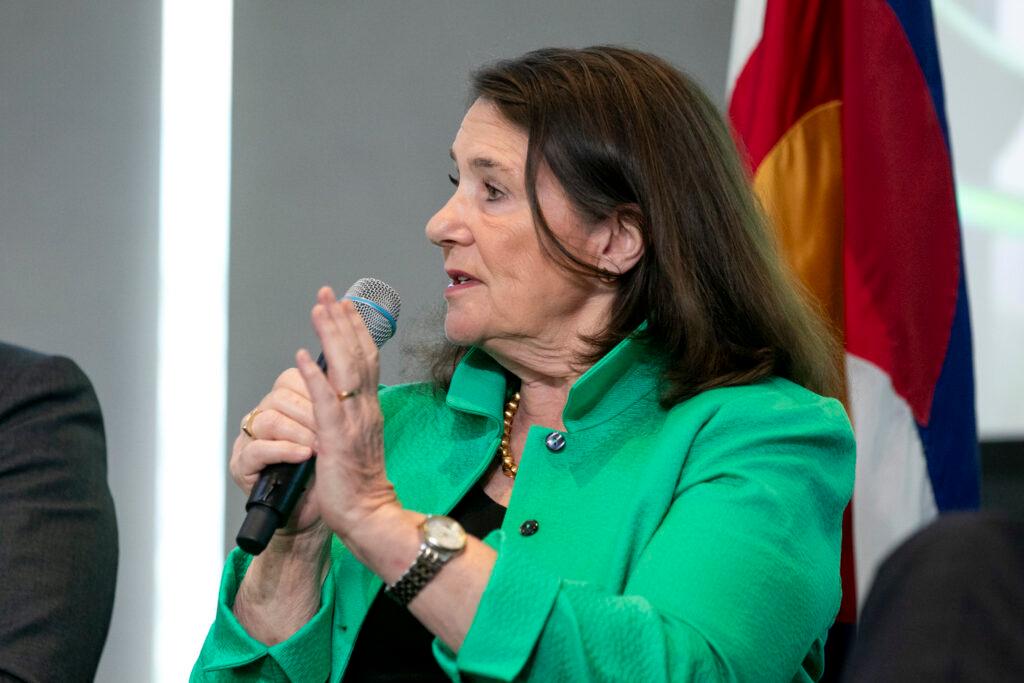
Dean of the Delegation, Democratic Rep. Diana DeGette, put it more bluntly
“It's illegal. You can't take away previously authorized federal funding to a state because you're mad at them for some reason,” she said.
And if the Trump administration seeks to take away more congressionally approved funding, DeGette says the state will do what it’s done before during this administration: go to court to stop it.
Last week, a federal judge issued a stay on the Trump Administration’s attempt to halt federal funds for child care and other programs aimed at helping low-income families.
There is additional federal funding the administration can target. That’s why Democratic Rep. Jason Crow said the state needs to be “vigilant.”
“Which underscores the fact of the upcoming midterms and retaking power to put a stop to the lawlessness and recklessness of this administration,” Crow added.
| This story is part of a collection tracking the impacts of President Donald Trump’s second administration on the lives of everyday Coloradans. Since taking office, Trump has overhauled nearly every aspect of the federal government; journalists from CPR News, KRCC and Denverite are staying on top of what that means for you. Read more here. |