A child in Colorado has died from the flu, according to the state health department. The agency said the child was younger than 5 and from outside the Denver metro area.
It’s the third child in the state to die from the flu this winter.
The Colorado Department of Public Health and Environment on Wednesday confirmed the death, which it noted on its viral respiratory diseases dashboard as the third since Oct. 1, 2025, when this year’s season started.
“We offer our condolences to the family and are deeply saddened by this tragic loss,” said health department spokesperson Hope Shuler.
The most recent death comes amidst what has been a bad flu season, both in the state and nationally. The fatality is the second in the last two weeks and the third in a month.
The U.S. recorded 32 pediatric flu deaths as of mid-January, according to the website of the federal Centers for Disease Control and Prevention.
Last week, the Colorado health department reported a second child had died of flu in Colorado this season; the case was in a high school-aged child from outside the Denver metro area.
In mid-December, the state health department reported the season’s first influenza-associated pediatric death. That child was elementary school-aged and from metro Denver.
Colorado reported three pediatric flu deaths last respiratory season. The most recorded in recent years was 2019-20, when four Colorado children died from flu.
Health care providers around the state report this flu season has been a particularly rough one, with 853 hospitalizations in Colorado recorded during the week between Christmas and New Year, a new record.
“Started before Thanksgiving, and it's been going solid since like the rest of the state,” said Dr. Brianna Fox, the chief of staff with Lincoln Community Hospital and Care Center, in Hugo, 100 miles east of Denver. “Colorado's leading the nation in the number of flu cases this season. So we've been just as busy out here.”
Fox said she’s seen people hospitalized with flu this season, as well as a few deaths.
“Flu, especially if you're high risk, have lung problems, young or old, can cause a lot of complications after getting sick,” that can result in potentially life-threatening illness, Fox said.
Anyone can get the flu, according to the state health department, but some people are at higher risk of serious complications, like hospitalization or death.
People at higher risk include people who:
- Are aged 65 years and older.
- Have certain chronic medical conditions, like asthma, diabetes, and heart disease.
- Are pregnant.
- Are younger than 5 years old.
Nearly 4,000 people have been hospitalized with flu in Colorado since the beginning of October. About a thousand have been hospitalized with COVID-19 and around 450 have been hospitalized with RSV.
Most Colorado children, like most Colorado adults, are not now vaccinated for flu
About 29% of all Coloradans have gotten a flu shot this season, which is slightly lower than last year, according to the state health department. The numbers are worse in many rural counties in the state; about a dozen counties, especially on the Eastern Plains and Western Slope have flu immunization rates below 20%.
The rates are only a bit better for the youngest kids.
For children 6 months to 9 years old, the flu vaccination rate is 32.3%, which is a bit higher than last year’s rate.
That appears to be far below national numbers, published by the CDC. It reports more than half of all children 6 months to 4 years old are vaccinated for flu, as of the start of 2026.
For older children, those 10-19 years old, Colorado’s rate is lower, around 22%, which is also far below the national figure.
The oldest Coloradans are the only demographic in which a majority, just barely, have gotten vaccinated. For those 65 and older, the rate is 51.2%.
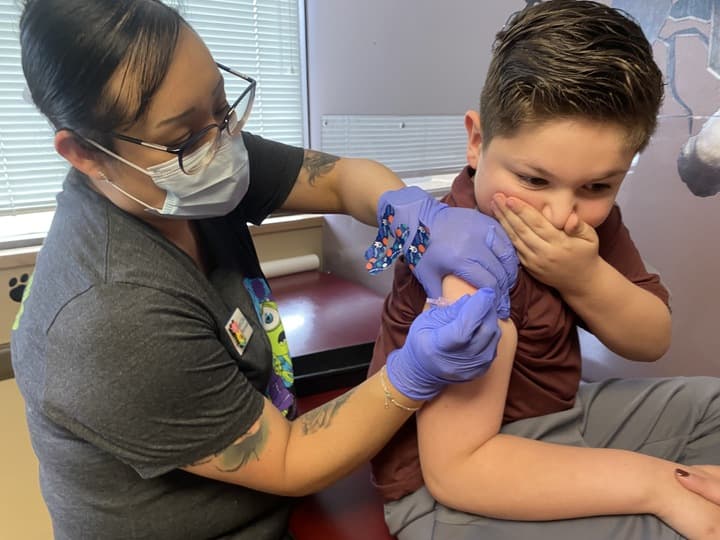
Fox said the flu shot helps your body be prepared for the flu when it comes and it can prevent the worst long-term effects, like getting sick enough you need to be admitted to a hospital.
“After you get the flu, your body spends all its effort fighting the flu off, you usually end up with pneumonia and post-flu complications, then that's usually what ends up killing people,” she said. “So the vaccine prevents that.”
The flu season lasts until May and doctors and public health officials say it’s not too late to get a flu shot.
Fox said she always recommends it.
“There's very few reasons somebody shouldn't get it. And even if you're young and healthy, you protect your grandparents, you protect little kids, you protect people who are going through treatment for chemotherapy, people with immune system problems that can't be vaccinated,” Fox said. “It's part of the greater good. So I do recommend it, even if you’re young and healthy and otherwise low risk, to think about other people.”
Colorado’s flu trends have improved a bit in recent weeks, though the rate of flu tests coming back positive, the weekly sentinel positivity rate, is still in double digits. About 200 people are now hospitalized with influenza in Colorado, according to the state’s website.
Colorado health officials offer these guidelines on who should get the flu vaccine:
- Everyone 6 months and older should get a flu vaccine every season with rare exceptions, according to the CDC.
- Vaccination is especially important for people who are at higher risk of serious complications from influenza.
- You can get a COVID-19 vaccine and a flu vaccine at the same time.