The independent monitor of Aurora had strong words for the city in a special report released in May, after Aurora police have shot and killed three people in crisis within the span of less than one year.
“Three young individuals are dead. A police officer was gravely injured. A police canine was seriously hurt. Three families have suffered irreversible losses. All responders and clinicians will carry the consequences of each event forever,” it reads.
The monitor, which routinely reviews the Aurora Police Department’s progress on the consent decree it entered into in 2022, said in the report that Aurora’s behavioral health system has strengths, like the city’s Crisis Response Teams, where police officers work with behavioral health clinicians when responding to high risk crises.
It says for real systemic change, the city needs to look at the behavioral health system as a whole. It’s calling for a taskforce to review if there was anything Aurora’s behavioral health system could have done to prevent these three people from dying.
Most recent fatal shooting
The most recent death was in April, when an officer shot and killed a 23-year-old after attempting to deescalate the situation. The man had stabbed the officer and a police dog, and then the officer shot him.
“Aurora cannot change what happened on each of those fateful days. But it can potentially learn from them,” said the special report, which was published outside of the typical two times per year. “Aurora should therefore treat the April 9th and other recent incidents as a catalyst for the next stage of reform.”
A grand jury will be determining whether there is enough probable cause to file criminal charges against the officer.
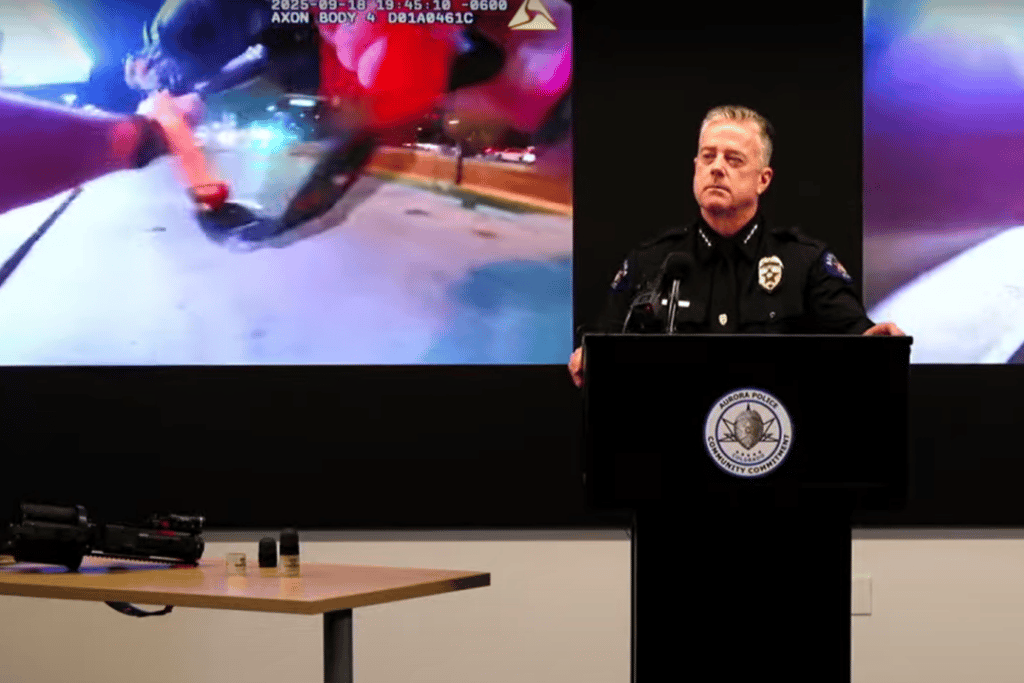
In September 2025, police responded to a call outside a gas station where a 17-year-old called 911 and said he wanted to open fire inside the business and shoot. The officers used a less lethal weapon before shooting and killing him.
An investigation later showed he did not have a gun on him. No charges have been filed in this case, as the 18th Judicial District’s Critical Incident Response Team determined the officer’s actions were justified.
In May 2025, an officer shot and killed 32-year-old Rashaud Johnson, who was reportedly behaving erratically in a parking lot near Denver International Airport and touching parked vehicles’ door handles. The two physically fought. According to Aurora Police, Johnson charged at Mills and the officer shot him. Johnson was unarmed.
Johnson’s family has filed a lawsuit against the officer.
Reviewing the system at large
The report praises the work of Aurora in its behavioral health responses and the progress made since entering the consent decree. But it doesn’t end there.
“Aurora has done meaningful work, but an examination of broader systems within and outside of the City should be undertaken to consider pathways for improvement and prevention of the type of incidents described in this report,” it reads. “Continuous improvement in Aurora must therefore extend beyond APD and AFR to the broader behavioral health and public safety continuum.”
The city said its management and public safety leadership teams have “wholeheartedly embraced a culture of continuous improvement” from before the start of the consent decree, and that they are open to conversations about reviewing the systems.
“As the consent decree monitor noted in his special report, the city continues to build on its successful crisis-response partnerships which pair clinicians with paramedics and specially trained officers on certain types of behavioral health calls. Chief Chamberlain, Chief Oughton and other city leaders recognize the need to examine the broader systemic issues involving behavioral health, agree with the consent decree monitor’s recommendations and welcome deeper conversations about this topic with all community stakeholders.”
The city did not respond to a question about about whether it has started to create ataskforce, which the report recommended.