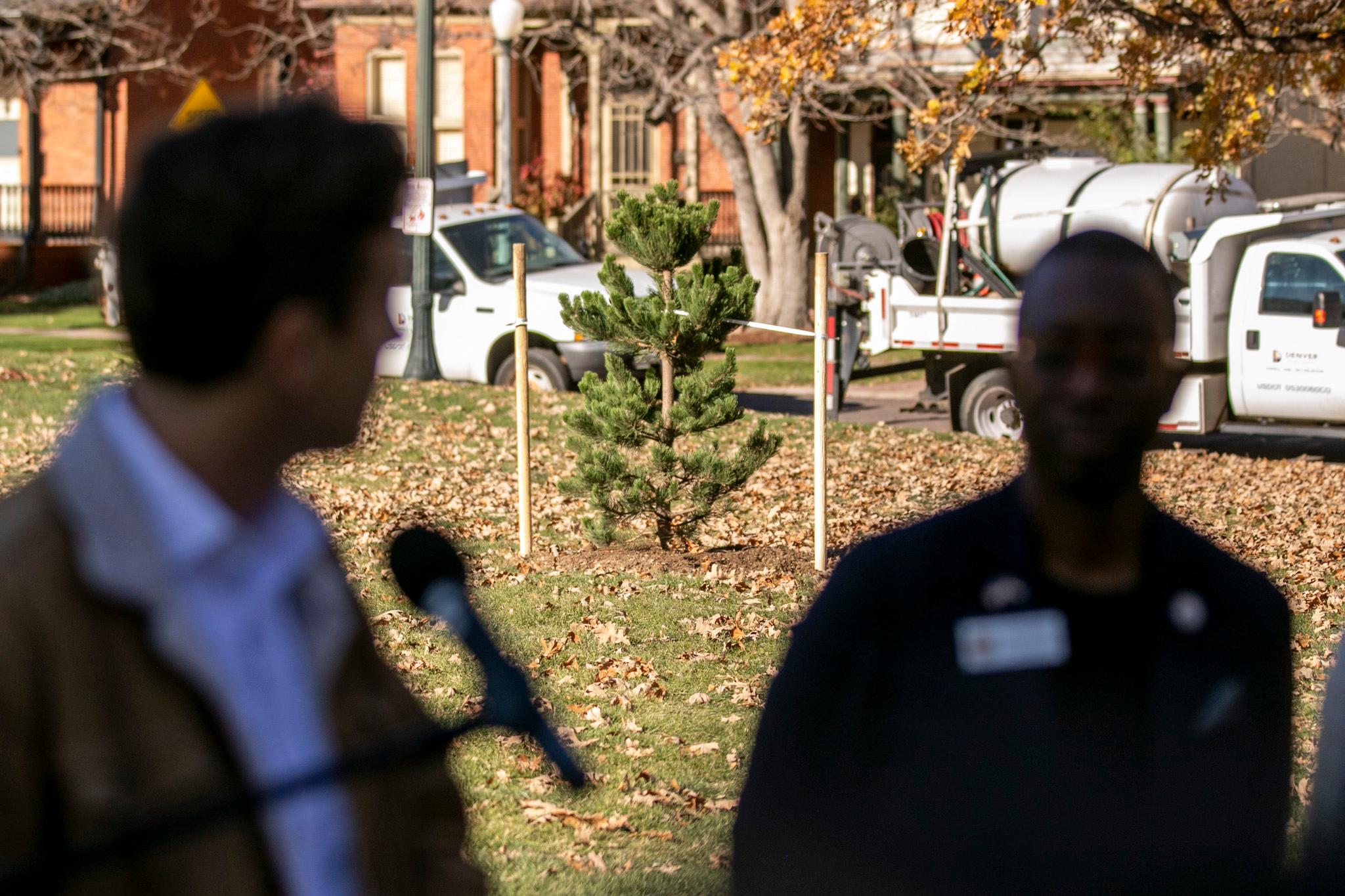
On an unseasonably warm morning in November, Denver Mayor Mike Johnston gathered reporters and city leaders to celebrate a tree.
The sapling — a deciduous tulip tree known for its yellow spring flowers — sat in a shallow hole dug into Benedict Fountain Park, an oasis of green turf nestled against downtown skyscrapers. By burying its roots, Johnston declared the city had met a goal that his administration set the previous January: planting 4,500 trees in 2025.
Denver typically plants closer to 2,500 trees annually, according to the city’s forestry department. By accelerating the pace, at least for a year, Johnston said the city had shown its commitment to guarding residents against rising global temperatures, despite its recent budget struggles.
“Every tree planted is a new location of shade,” Johnston said. “It’s a new, wonderful place for someone to sit on a Saturday morning, or take someone on a date, or propose.”
The successful tree-planting sprint, however, comes as Denver sets to miss a major climate target. By 2025, the city planned to cut its planet-warming emissions 40 percent below 2019 levels, a milestone toward completely eliminating any contribution to global warming by 2040.
Johnston admits Denver isn't close to meeting the benchmark.