Dust. In your home, it’s a hassle. On the moon, it can be downright hazardous.
The weak gravity of the lunar surface makes it easy to kick moon dust up into floating clouds. Particles are clingy and remarkably abrasive.
On Apollo missions in the late ‘60s and early ‘70s, that dust clogged instruments and ate away at astronaut spacesuit boots. While the medical science is incomplete, NASA suspects inhaling moon dust is harmful for lung health.
All this means further understanding these tiniest specks of moon rock is high on the list of priorities for upcoming Artemis moon missions. NASA has announced it will spend nearly $25 million on a pair of instruments designed and built by CU Boulder’s Laboratory for Atmospheric and Space Physics to do just that.
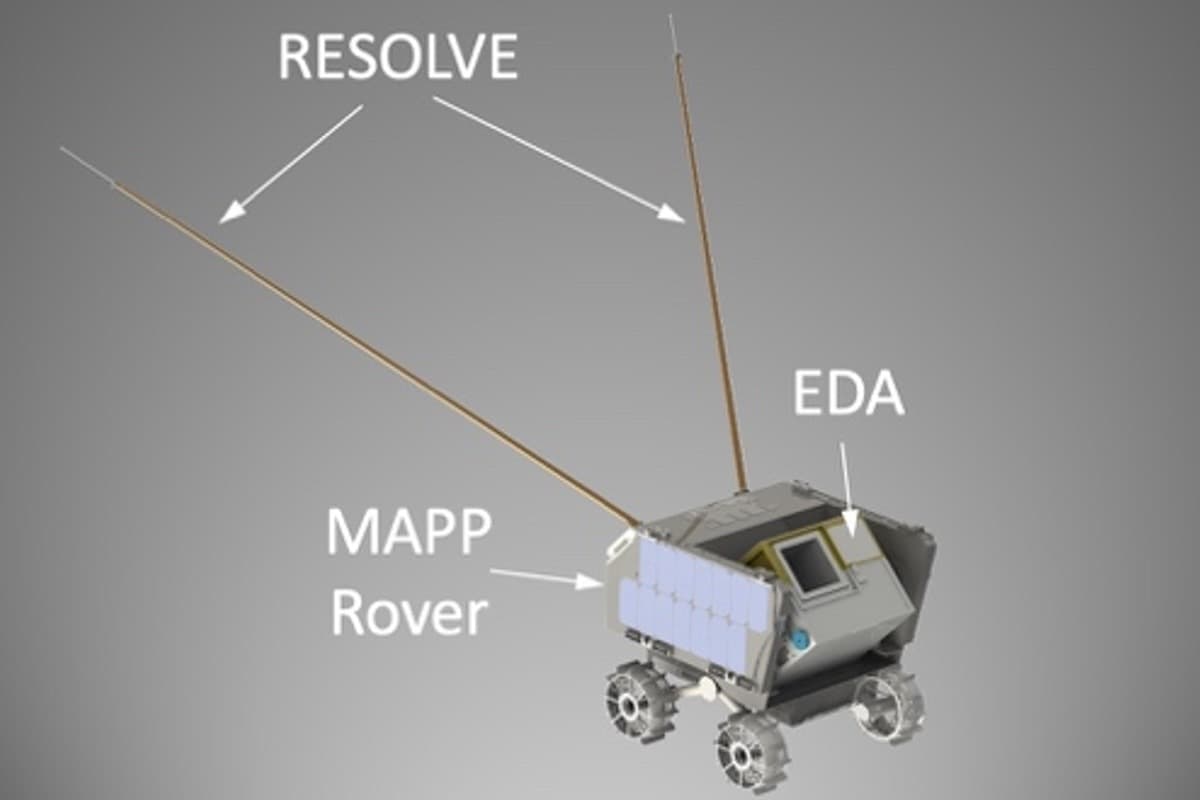
The lab’s DUst and plaSma environmenT survEyoR (creatively shortened to “DUSTER”) will be mounted on a rover designed by Colorado-based Lunar Outpost and consists of two main components.
First is an instrument called an Electrostatic Dust Analyzer (logically shortened to “EDA”), which reads the velocity, size, flux and the electric charge of floating dust particles.
Next is what the team calls the RElaxation SOunder and differentiaL VoltagE (shortened to, um, “RESOLVE”) instrument. The RESOLVE will characterize average electron density above the lunar surface through a process known as plasma sounding.
Xu Wang, senior researcher at the lab and a CU Boulder physics lecturer, is leading the DUSTER proposal. He said in the lab’s December statement on the funding that the project will help NASA better grasp how the dust and plasma environment works at the Lunar South Pole, where the Artemis missions will land.
“By studying this environment, we gain crucial insights that will guide mitigation strategies and methods to enable long-term, sustained human exploration on the Moon,” Wang said.
As of now, DUSTER is on track to be part of the Artemis IV mission, scheduled for launch in late 2028. It will be the second Artemis mission to land on the moon and will also include the construction of the first lunar space station, Gateway. However, NASA noted in its statement on DUSTER funding that final decisions about what equipment will accompany Artemis IV “will be determined at a later date.”
If DUSTER is ultimately included in the mission, the instruments from CU Boulder will ride atop a rover built by the Colorado space company Lunar Outpost.
The Jefferson County-based business has been making waves in the private space industry in recent years.
A similar rover from the company was set to be the first U.S. robotic rover operating on the surface of the moon before its lander (from a different private space company) crash-landed earlier this year. Lunar Outpost is also a finalist to build the next generation of “moon buggy” that Artemis astronauts would eventually drive on the lunar surface.
Colorado’s space industry has seen rapid expansion in the last five years. More than 2,000 aerospace companies are based in the state, giving Colorado the nation’s highest concentration of private aerospace employment.