
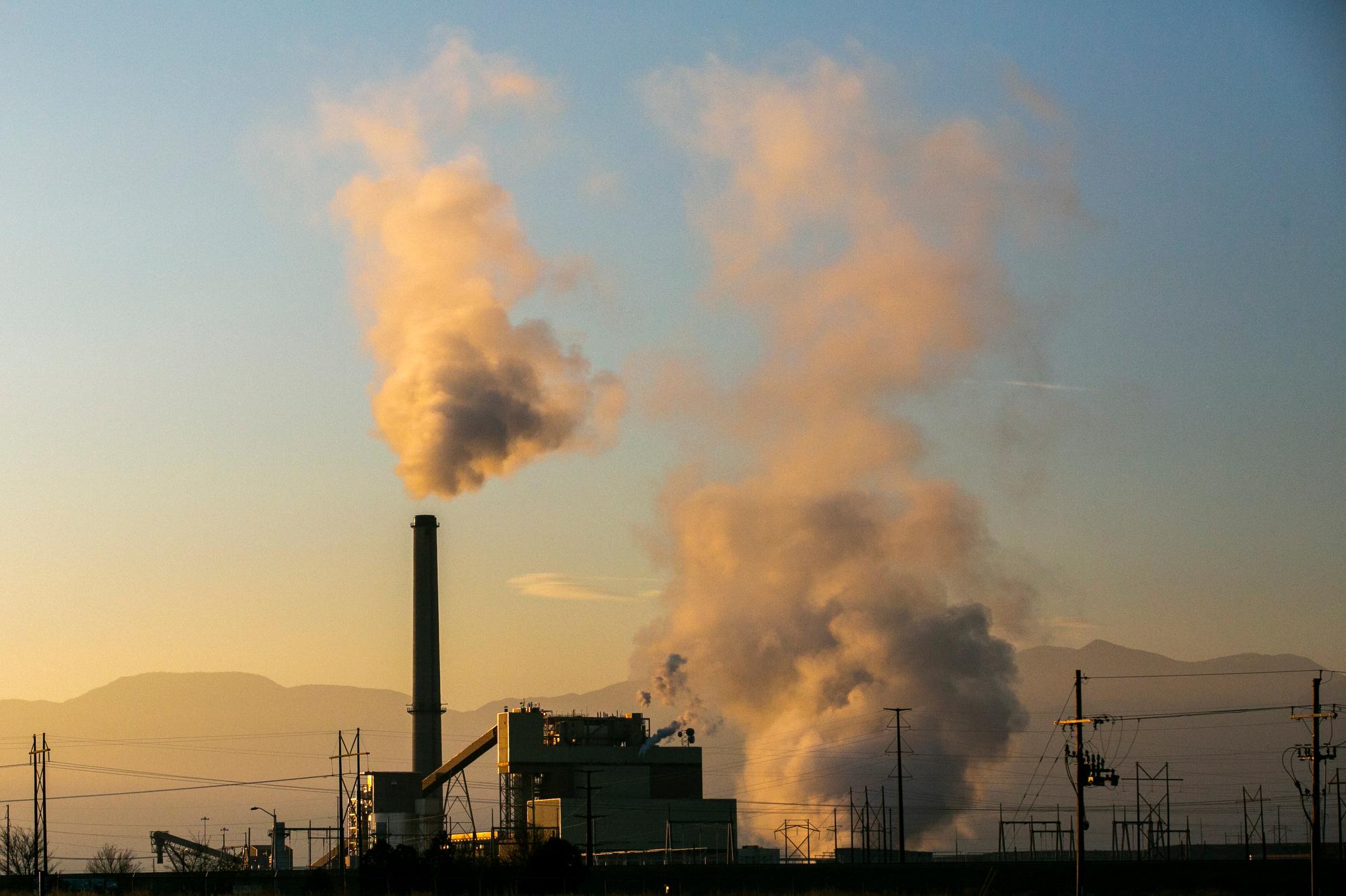
Colorado Springs Utilities claims it can't comply with state law and reduce its greenhouse gas emissions 80 percent by 2030. Closing Nixon 1, a coal-fired generating unit in Fountain, is a fundamental step in the utility's original plan to meet the target.
A bipartisan cohort of state lawmakers who represent the Pikes Peak region said it plans to introduce legislation that would extend the deadline. Without a delay, proponents warn Colorado Springs’ municipal utility will struggle to deliver affordable, reliable energy to its nearly 250,000 electricity customers.
The planned legislation comes as the federal government works to block Colorado’s efforts to shift away from coal. Last week, the U.S Environmental Protection Agency rejected a state plan to protect air quality seeking to codify coal plant retirement dates into federal law. In late December, the Trump administration also issued an emergency order to keep a coal plant in Craig running beyond the end of last year.
Opponents ask why CSU is the only utility requesting this exemption and say clean energy is the most affordable and reliable path forward.
The bill has not yet been introduced or released to the public for view. The state's legislative session begins this week.
Travas Deal, Colorado Springs Utilities CEO, said achieving the law's deadline has become increasingly challenging.
“This bill will allow Colorado Springs Utilities to file a new clean energy plan by 2026,” Deal said. “Giving us more time to secure reliable and affordable replacement power for the coal-powered unit at Nixon Power Plant currently mandated to retire in 2029.”
In 2020, prior to Deal leading the utility, CSU approved a plan that would achieve the mandated reductions, in part, by closing the Ray Nixon power plant by 2030.
Deal, who previously worked in the coal industry, said he's committed to sustainability, but that the utility needs more time.
“Without adjustments, we risk reliability and affordability for homes, businesses, hospitals, and military installations,” Deal said.
When asked about a contingency plan, Deal said the utility cannot meet the current deadline and is focused on getting the proposed legislation passed.
“If it does not pass for some reason, we'll definitely take a look at it. But right now I feel confident that anybody that's looking at the best interest of our current customers, businesses, our military communities and future growth will take a look at this and say this is needed,” Deal said.
State House Minority Leader Jarvis Caldwell, a Republican who represents part of El Paso County, supports the proposed legislation.
“Over the last several years, the legislature set aggressive energy mandates without fully grappling with what those mandates mean for the people who are expected to pay the bill,” Caldwell said.
State Sen. Marc Snyder, a Democrat who represents parts of El Paso and Teller counties, said the utility needs to build more infrastructure, namely high-voltage power lines, before it can sustainably achieve the state's mandated goals.
“Until we have the local infrastructure in place, such as expanded electrical transmission to reliably deliver more renewable power, we cannot possibly and responsibly achieve the next major round of emission reductions without creating an unacceptable financial burden on rate payers,” Snyder said.
A study by the Sierra Club contradicts these concerns. It found delaying the closure of the Ray Nixon power plant would be one of the most expensive options, and it could cause the utility to miss out on expiring federal tax credits for wind and solar.
Matt Gerhart, an attorney with the Sierra Club, said CSU appears to be the only utility in the state looking for an exemption to the clean energy mandate.
“2030 is still four years away, we have four full years,” Gerhart said. “There's plenty of time to build new natural gas, wind, solar batteries, whatever suite of resources CSU wanted to use to replace Nixon could be brought online between now and the end of 2029.”
Gerhart said the utility could follow the same steps it took to retire other coal plants, like the Martin Drake coal-fired plant that was closed in 2023.
“I think the reliability argument really is a red herring because it makes this absurd assumption that they would retire Nixon without replacing it with anything which no one is advocating for them to do,” Gerhart said.
In a press statement, Paul Sherman, a climate campaign manager for Conservation Colorado, said that Coloradans need stronger enforcement against polluters.
“Colorado’s air quality gets worse every year, as the ‘brown cloud’ frequently hides our mountains and the Front Range,” Sherman said.
Once introduced at the state capitol, the legislation would have to pass both chambers and be signed by the governor before it became law.