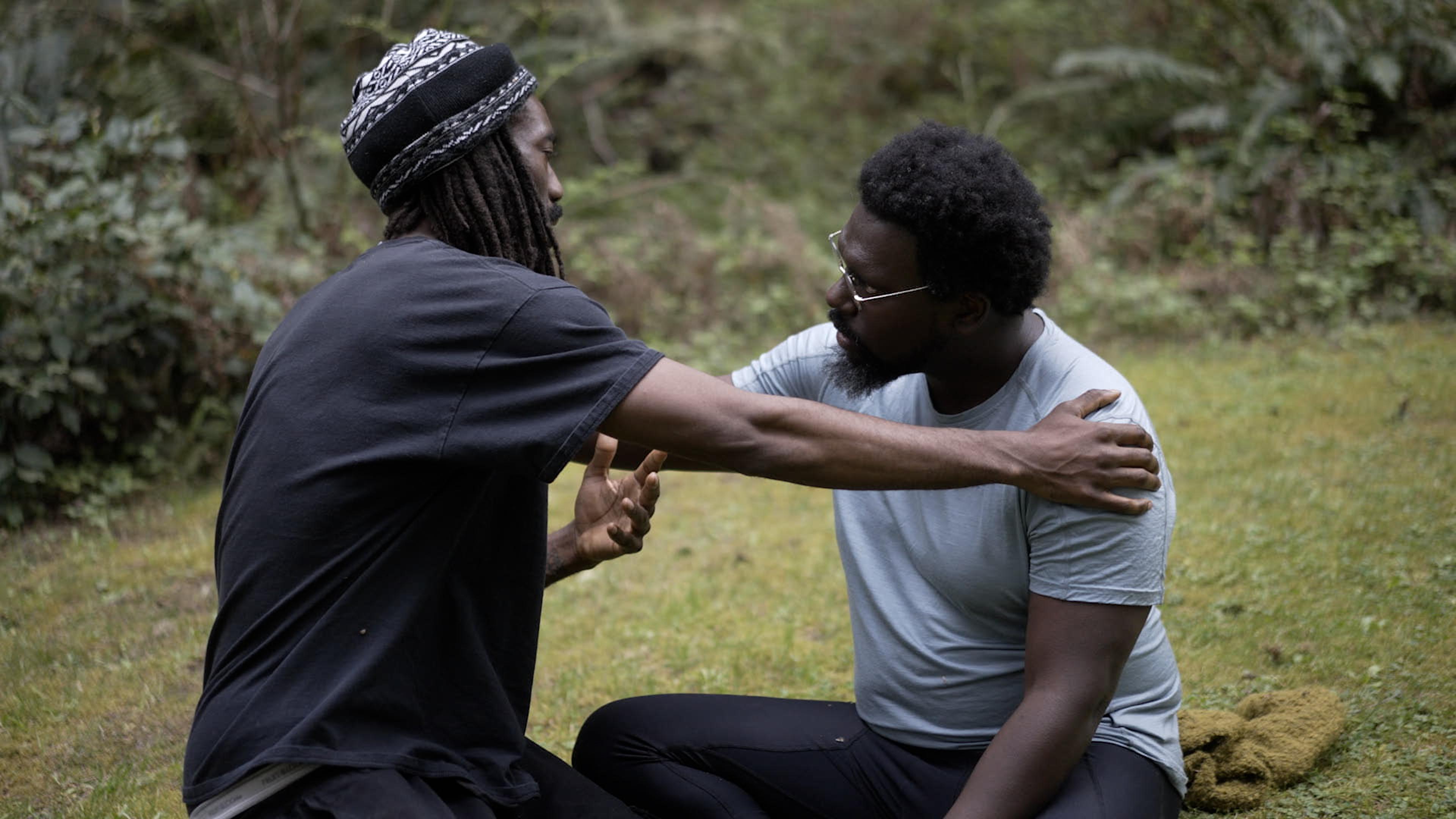
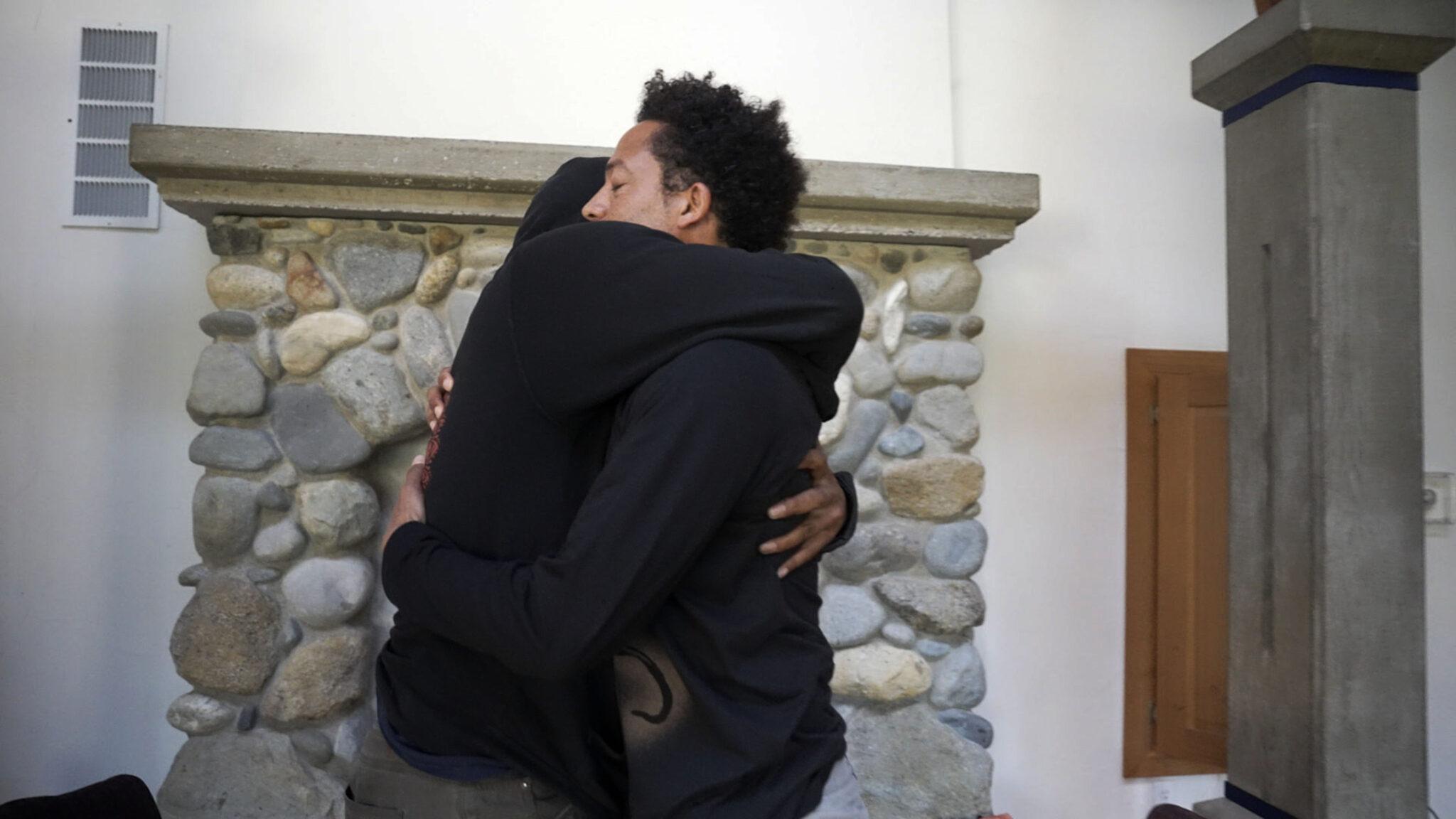
At a movie screening in Aurora this weekend, Black men will be seen tucking each other in, singing lullabies, holding hands platonically and hugging freely — as ways to heal, bond and dismantle stereotypes about them
It’s actually two movies: “Dark and Tender,” and the sequel, “Dark and Tender: The Big Island,” both of which are less than a half-hour in length but leave a much longer-lasting impact. They will be screened at the Vintage Theatre, a 119-seat space normally used for play performances, in Aurora’s cultural district near Colfax and Dayton Streets on Friday evening.
In the first one, filmed in 2024 on Whidbey island in Washington state, 10 men, all of them Black — with a range of ages, skin complexions, and places along the cys-to-trans continuum — are documented coming together to get experience in healing and connecting, through listening, holding hands, hugging and talking from a deeper place — even tucking in each other on massage tables, folding blankets gently around each other’s faces.
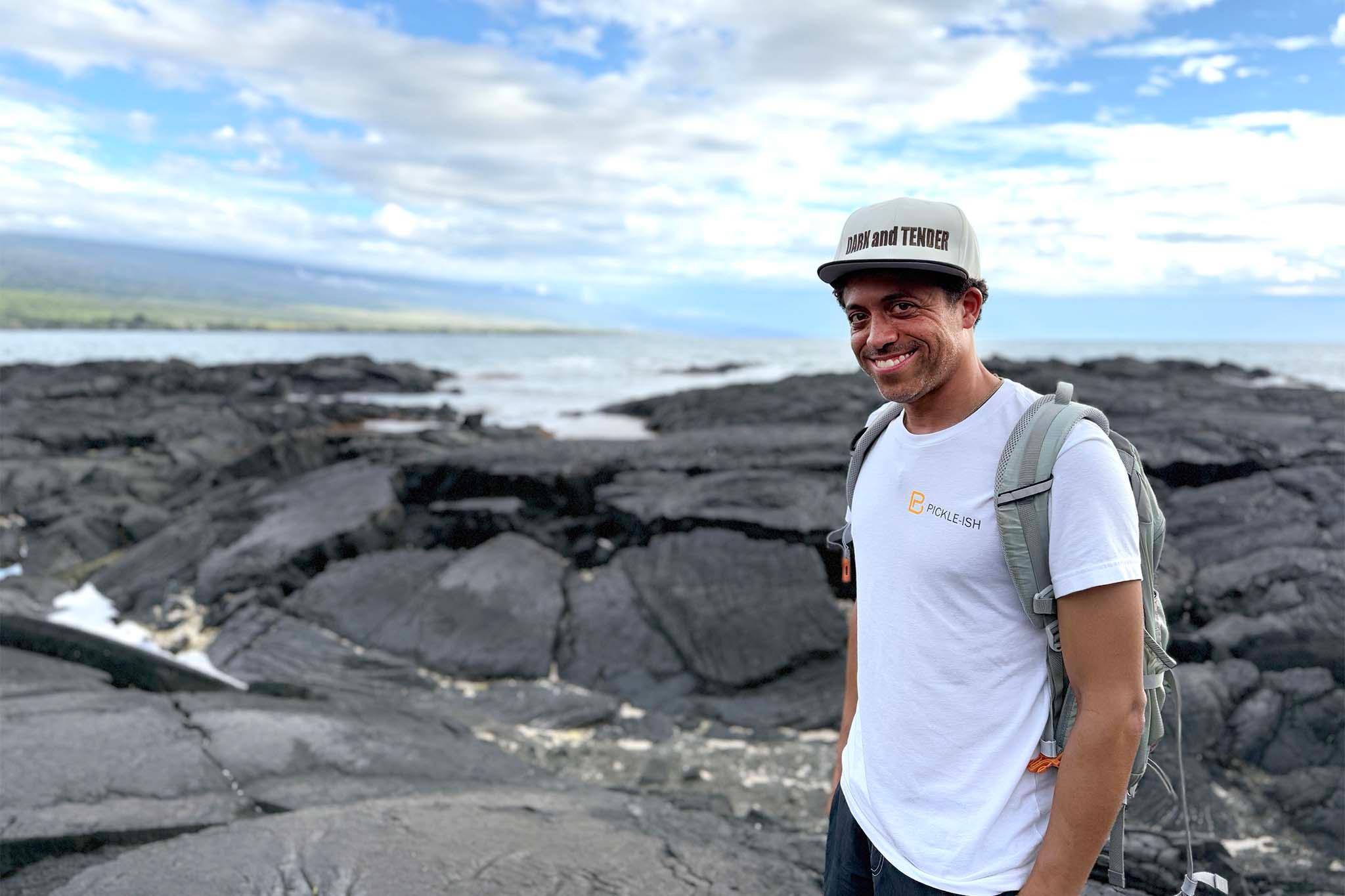
In the second film, recorded over a week in January 2025 on the Big Island in Hawaii, a group of men about the same size — some repeat participants, others appearing in the Hawaii film only — engage in similar activities. This time, a week-long experience at a retreat center shows some crying, others taking tentative steps towards holding hands with each other as a way to unite in a non-competitive way.
One participant describes himself as playing life roles not always associated with Black men, as an active caretaker to his children, who often cooks and expresses his feelings. He had the experience of being “tucked in” on a massage table. Surrounded by caring hands of other Black men who also sang soft songs, they covered him in striped blankets, even folding the blanket back a bit around his face, as he relaxed with his eyes closed on a massage table.
“So this is my second tucking-in this year, and it was remarkably different,” he says in the film. “A lot of it was me, but also just the space and the brothers tucking me in …. As soon as you guys started singing … it was very surreal but wonderful at the same time. I felt cared for and safe and they're comfortable and yeah, it could have lasted longer for me.”
The films were made by the California-based founder of the Chronically UnderTouched Project, Aaron Johnson. His vision is making touch accessible and safe between Black men as a way to allow them to heal and resist historical images of Black men being portrayed as violent, brutish and oversexualized. In the film, he talks about how he tried to Google “Black men” and “platonic touch,” and found nothing. (A search on Google Scholar using the same terms also yields no results.)
“We don't accidentally hold another Black man's hand in America,” he says in the film. “That's not something we would be very intentional if I'm holding another Black man's hand, it's something I have to intentionally do and if we actually add a platonic container to that, that actually holds even more rare in our culture. Romantic actually has some context, but platonic we're like, ‘I don't even know how that’s even supposed to happen.’”
He says it’s not so uncommon in other parts of the world. “We go to parts of Africa. Folks that are from that region have said, ‘Well, in certain parts of the country on this continent, folks are walking down the street just holding hands as adults,’” he said, adding the same is true in parts of the Philippines.
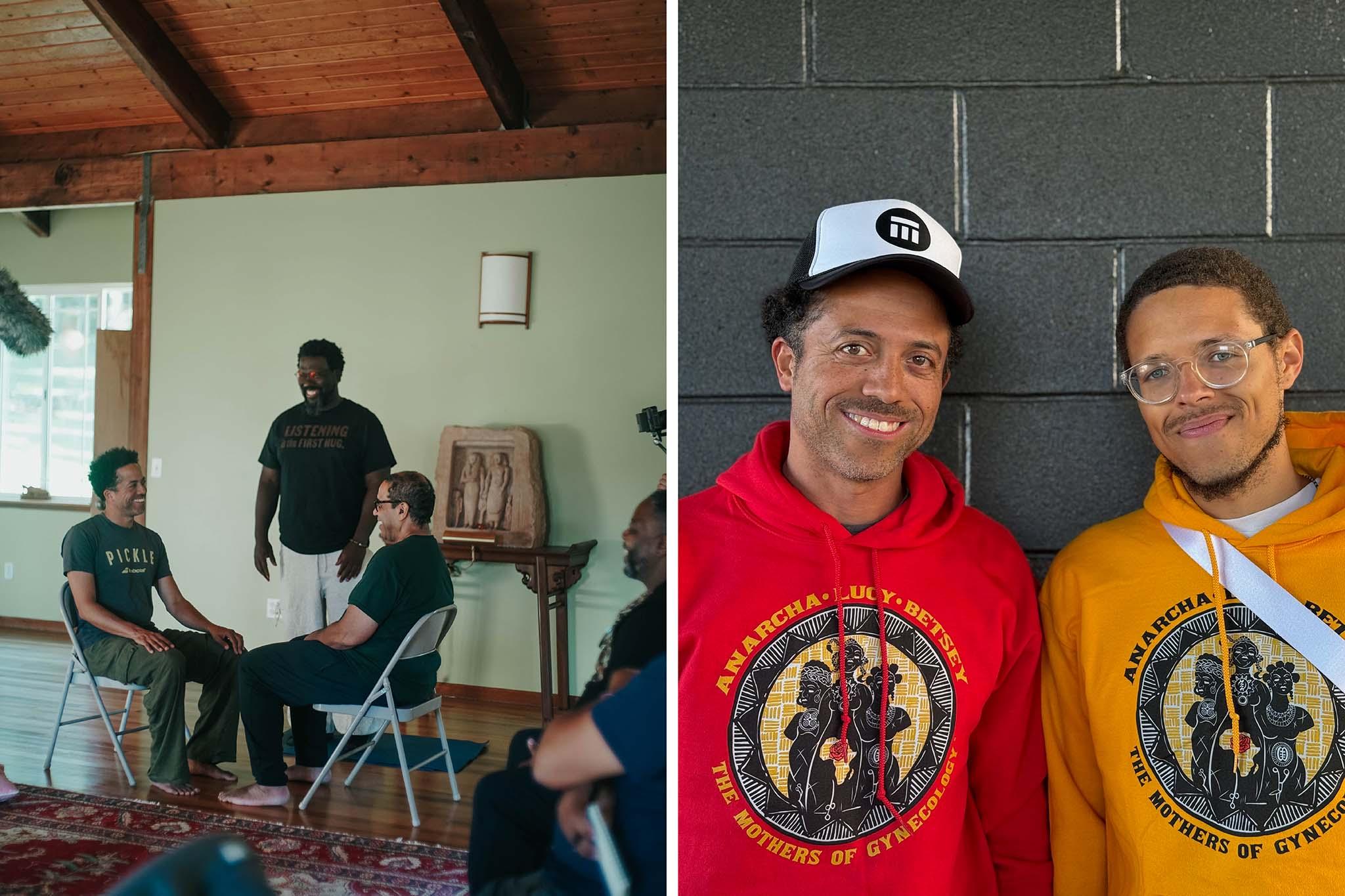
Kaylyn Wright, a 26-year-old yoga instructor in Inglewood, California, participated in one of the films and is coming to Aurora to co-present it this weekend. He was a part of the tucking-in experience for yet another participant, offering healing as he held his hands on the neck and face of a man who was moved nearly to tears in the film. He was recorded as he asked Wright and others to flatten out their palms or reposition their hands around his face and neck in a way that felt more soothing.
In an online interview, as he prepared to travel from California to Colorado, Wright said it was moving for him to both model and participate in being vulnerable.
“Yeah, I definitely felt like, in that moment, just really feeling like I wanted to support their experience and what they were going through,” he said. “It’s different to be offered and for someone to ask for what they need, especially in the space and all the conversations we were having around masculinity .… It was like a mix of discomfort, but also a place for me to challenge myself and let go …. It was a big learning moment for me of like, ‘Oh, it's OK to ask for what I need as a man.’”
Along with Wright, Kingsya Omega, an Aurora-based somatic healer who offers one-on-one emotional release sessions as well as intuitive acupressure, will co-present the film. A few hours before the film begins, they both will offer some samples of the healing work they do — participation in which will be optional, Wright said, stressing that no one is pressured to experience any physical contact.
Omega is also a licensed massage therapist who organizes gatherings in which people sing, find ways to relax and bond in community by doing breathwork and somatic movement in Denver and Fort Collins. He said he came to know of Aaron Johnson when he was traveling in Hawaii. Since then, he said he has been consciously working on allowing himself to connect more with men, after having mainly women in his life. He coordinated with Johnson and the theater to set up the presentation — the first screening in the Rocky Mountain West. He said allowing himself to participate in Johnson’s workshops and let himself be vulnerable was healing for him.
“You feel more whole, you feel more human when you have more compassionate, caring, tender connections and bonds with other humans, especially men, especially when you've been without it for a very long time because of, you know, just the, the typical patriarchal culture that sometimes pits us against each other,” Omega said.
He said the work of the CUT Project seeks to allow men to have the sorts of bonding moments and friendships with each other that women more typically share freely.
“We just, we just don't have access to it,” he said of such relationships. “We just have too many homophobias or too many boundaries, or too many walls between us. And then when we break those walls down, when we pull back the phobias and look through the boundaries at who we really are, intrinsically, energetically at the soul level, then there's this incredible connection between the work ahead for us and the relationship that's possible to build and co-create together.”
Conversation and healing activities start at 5:30 p.m. on Friday, and the screening begins at 7:30 p.m., followed by a question-and-answer session. Both films are also available as paid rentals at the CUT Project’s website, cutproject.org.