By Kristen Richard
Six years ago, Todd Olander, a fifth-generation farmer and founder of Root Shoot in Loveland said he saw the writing on the wall: “We needed to make sure our soil was resilient.”
Olander’s solution was to turn to regenerative practices such as planting cover crops, not tilling the soil, and more recently, he started growing several new varieties of winter barley, an ancient grain. These were not small nor inexpensive changes to make, but, “I've always wanted to prove that what we are doing is actually making a difference,” he said.
Agriculture is a big climate polluter, producing about ten percent of the CO2 in the United States — not to mention other greenhouse gases like methane and nitrous oxide. But the state is willing to help pay farmers who are looking for solutions as part of their goal to reduce greenhouse gases 100% by 2050.
In 2025, the Colorado Department of Agriculture awarded $120,000 to producers seeking to improve soil health and optimize water usage, among other initiatives, for their Climate Smart Market Expansion Project.
Olander applied and received a $30,000 grant and used the money to partner with New Belgium Brewing to show that there was a potential market for climate-smart crops like winter barley — namely, a type called “Thunder.” Developed at Oregon State University, it’s a high-yielding malting barley planted in the fall, and is known for its cold tolerance and brewing qualities.
Olander also partnered with Downforce Technologies, a company based in the United Kingdom that helps farmers measure things like their soil health and carbon sequestration.
Together, they piloted a new project using winter barley, a fall-sown cereal grain that provides early-season ground cover, weed suppression, and soil erosion control, while also allowing earlier harvest than spring-sown crops.
They demonstrated that the grain, and other regenerative practices, not only sequester more greenhouse gasses and improve soil health, but still create a quality product — in this case, beer. But the question remained: was there a market?
Taste testing
Winter barley, Olander explained, stays in the ground a few months longer, enabling it to grow longer roots. Therefore, it’s not only more drought-resistant but sequesters more CO2 into the ground. Additionally, not tilling the soil means those greenhouse gases aren’t being released back into the atmosphere, and tractors don’t drive back and forth across the fields as much, which further reduces greenhouse gases.
Of course, that’s all just theoretical on a specific farm like Olander’s, until someone can actually prove it. And Downforce did. Over the course of a couple weeks, technicians found that when compared to similar farms, Olander’s farm was now in the 84th percentile in terms of soil health and carbon sequestration due to the regenerative practices implemented — like planting winter barley. Basically, it sequestered more CO2 than similar crops and farms.
As for what to do with the barley — the plan was to utilize it in one of Colorado’s best-known industries — beer.
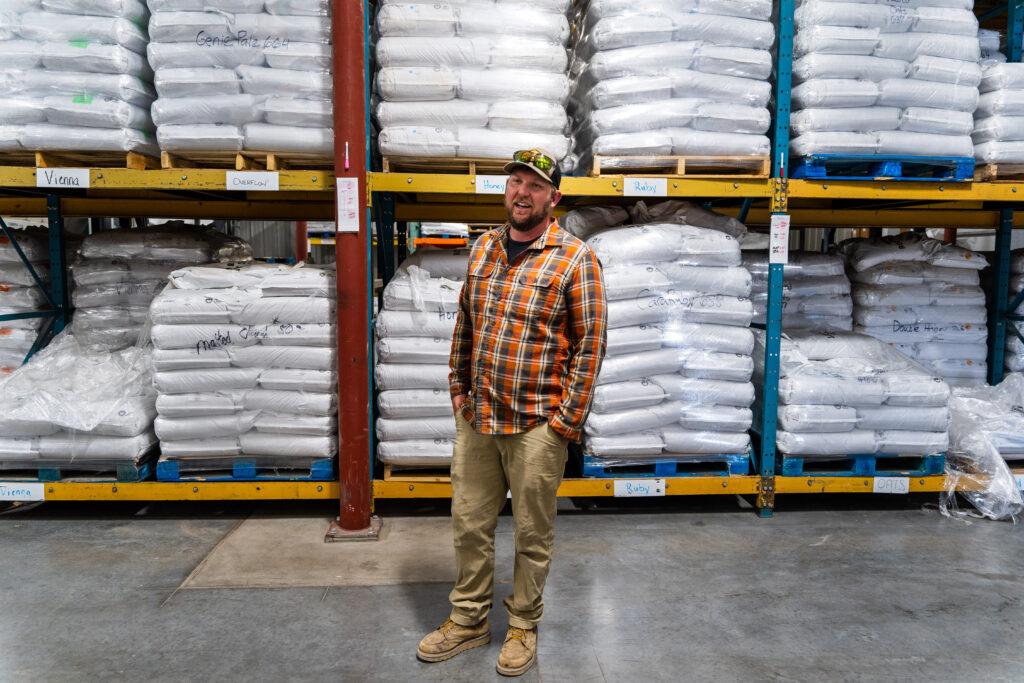
“We were looking for a brewery partner that's focused on sustainability,” said Olander. So they turned to New Belgium Brewing, which was looking for ways to be more sustainable and source locally.
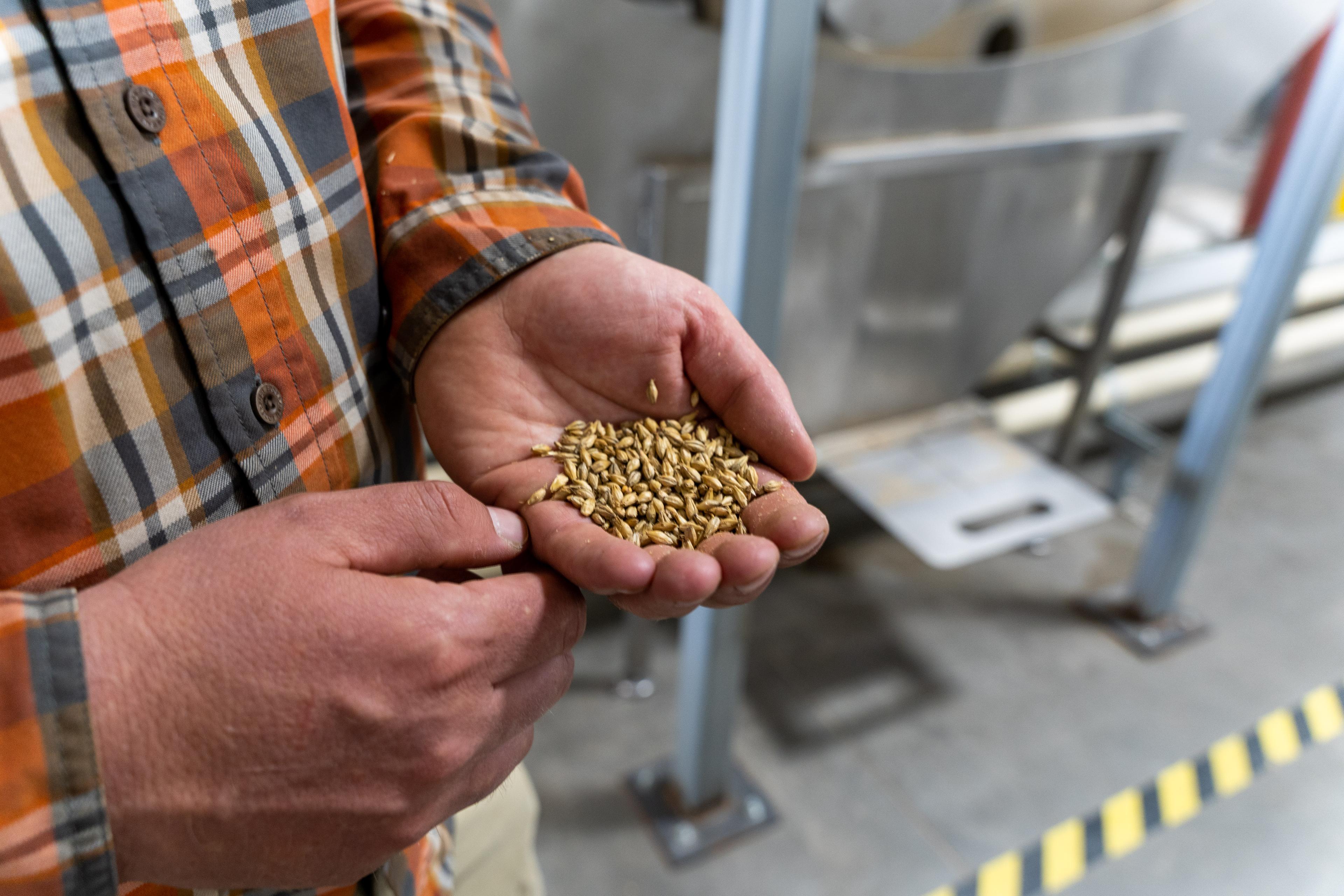
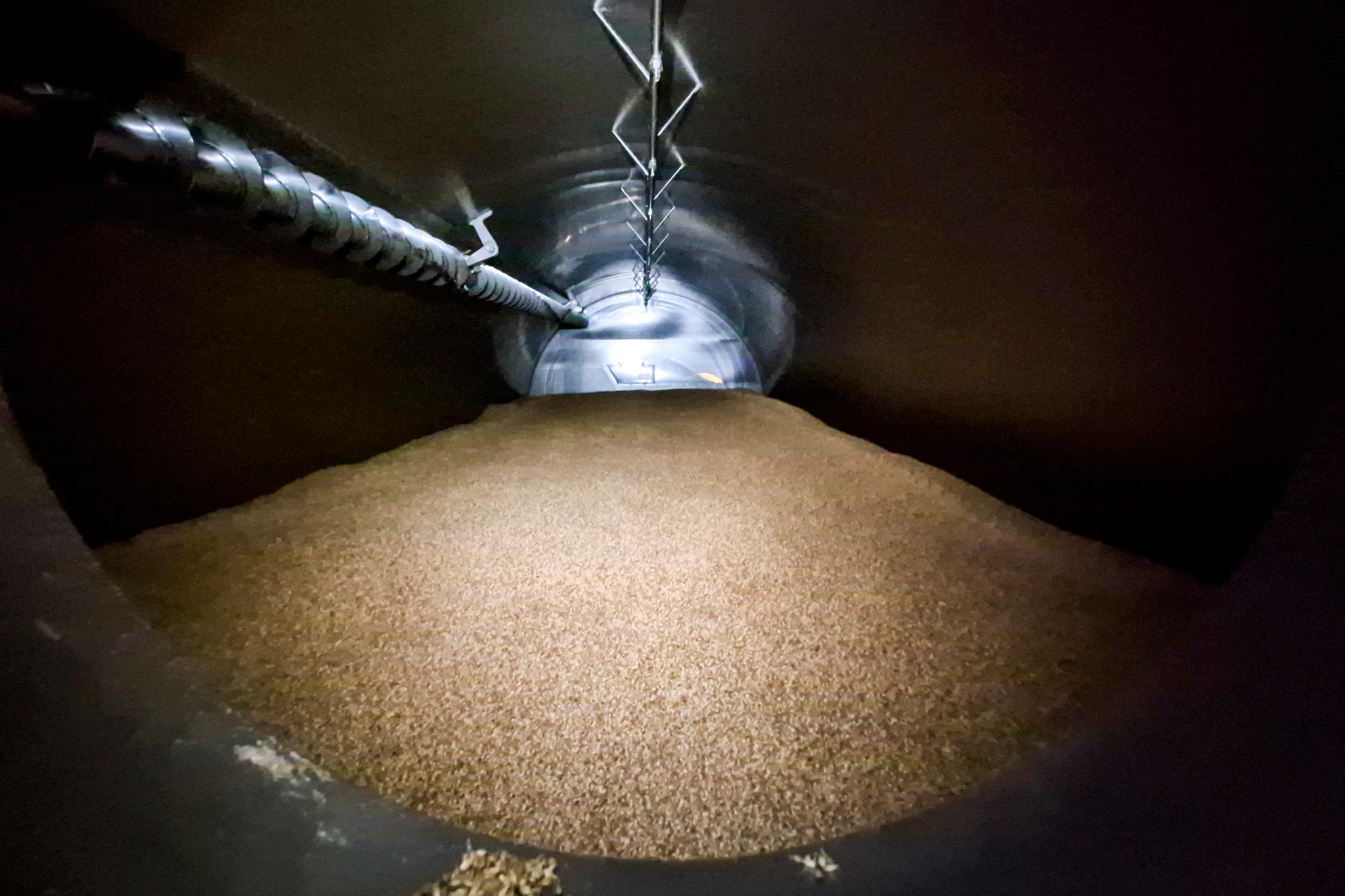
But Walker Modic, senior director of environmental programs at New Belgium Brewing in Fort Collins, said first they needed to figure out if it would make good beer. The winter barley went through the malting process, which enables it to be brewed or distilled. New Belgium then ran the malted barley through some tests at their pilot brewery in Michigan.
They were looking for many different things but namely “does it provide the right sensory component to beer,” said Modic. “And then when we put it through our system, will it yield the right amount?”
It performed, according to Modic, as well as any other malted barley would. And while they haven’t made a beer with it yet, their testing showed that there could be a use for this type of barley.
Winter barley isn’t the ‘silver bullet’ but it’s a start
“Change is really difficult in farming,” said Olander. “It's a very low-margin industry, and you don't want to make a big change that's going to result in you not making money year to year.”
Much of the barley grown in Colorado is destined for Molson Coors — they contract with hundreds of farmers across the Mountain West and they primarily use spring barley in their beers.
“So that's kind of your only option,” said Olander. “Which is great, but a lot of those farmers are not changing their practices.” He said because of that, there’s a lack of incentive for barley farmers to farm more sustainably or explore growing alternative crops.
There are other obstacles in the way — namely, the price. Cover crops, for instance, are great for the soil but costly to plant and depending on what they are, don’t necessarily net a profit.
Switching to low-till practices also means investing in specialized machinery, special seeding equipment, and more. It also takes time for the soil to recover, meaning yields will decrease for a period of time.
Sustainable farming can also result in a higher price tag on the consumer end. Which is tough, notes Emily Philpott, CEO and board chair of Dry Storage, a mill and bakery with a special focus on heirloom grains and flours in Boulder, because people often view them as bulk products, and, therefore expect them to be inexpensive.
“What we're trying to help people understand is that, like coffee, we have to adjust the entire supply chain and associated pricing,” Philpott explained. “This way farmers are compensated fairly and they are able to farm properly, which includes organic and regenerative practices.”
Amanda Laban, markets division director of Colorado Department of Agriculture, oversees the state’s farmer grant program. She said creating new markets for emerging grains is a challenge.
“We wanted producers to signal that if they were willing to pay more to produce premium products, the consumers would be willing to pay more too. Then we could create a sort of a win-win situation.” They didn’t provide any marketing materials to the grant recipients. But they advised them on the importance of increasing consumer awareness and knowledge of their practices.
“Smaller companies like us don't have the marketing dollars to educate the mass public,” said Philpott. But she argued that if larger companies, like Whole Foods, continue to use words and labels like “organic” and “regenerative,” it would increase consumer education and demand.
While switching to regenerative practices can require some upfront costs, and farmers may have to wait a few years to see results, Olander argues that the soil will end up paying farmers back in the long run.
“Our yields have decreased over the last six years,” said Olander. “But so have our inputs. Eventually, your soil will take care of you when things get tough.”
Laban agreed. After all, “Many farmers have been switching to more regenerative practices on their own out of necessity,” she said. Noting that growing drought-resistant crops when water is scarce is just a smart business decision. Over time, production costs will decrease.
“Regenerative practices aren’t always a philosophical or ethical choice, it's a business decision,” said Laban.
But winter barley isn’t a silver bullet. Olander said it’s a start. He’s hosted a number of field demonstrations for farmers to illustrate practices they have implemented and the impacts.
“If I can get this in front of as many farmers as possible,” said Olander. “I hope that will get the wheels turning. If they can see the proof in front of them, then hopefully that makes a difference.”
But the future of the state’s Climate Smart Market Initiative remains unclear.
In 2025 the Trump administration cut funding for the $3 billion Climate Smart Commodities program launched under the Biden administration. Trump’s U.S. Department of Agriculture has said it will re-tool the program, replacing it with the Advancing Markets for Producers initiative, in order to provide more direct support to farmers and cut down on administrative costs.
Still, Laban said the state agriculture department is seeking more funding to support the Colorado program.
Editor’s note: CPR’s Tegan Wendland contributed reporting.