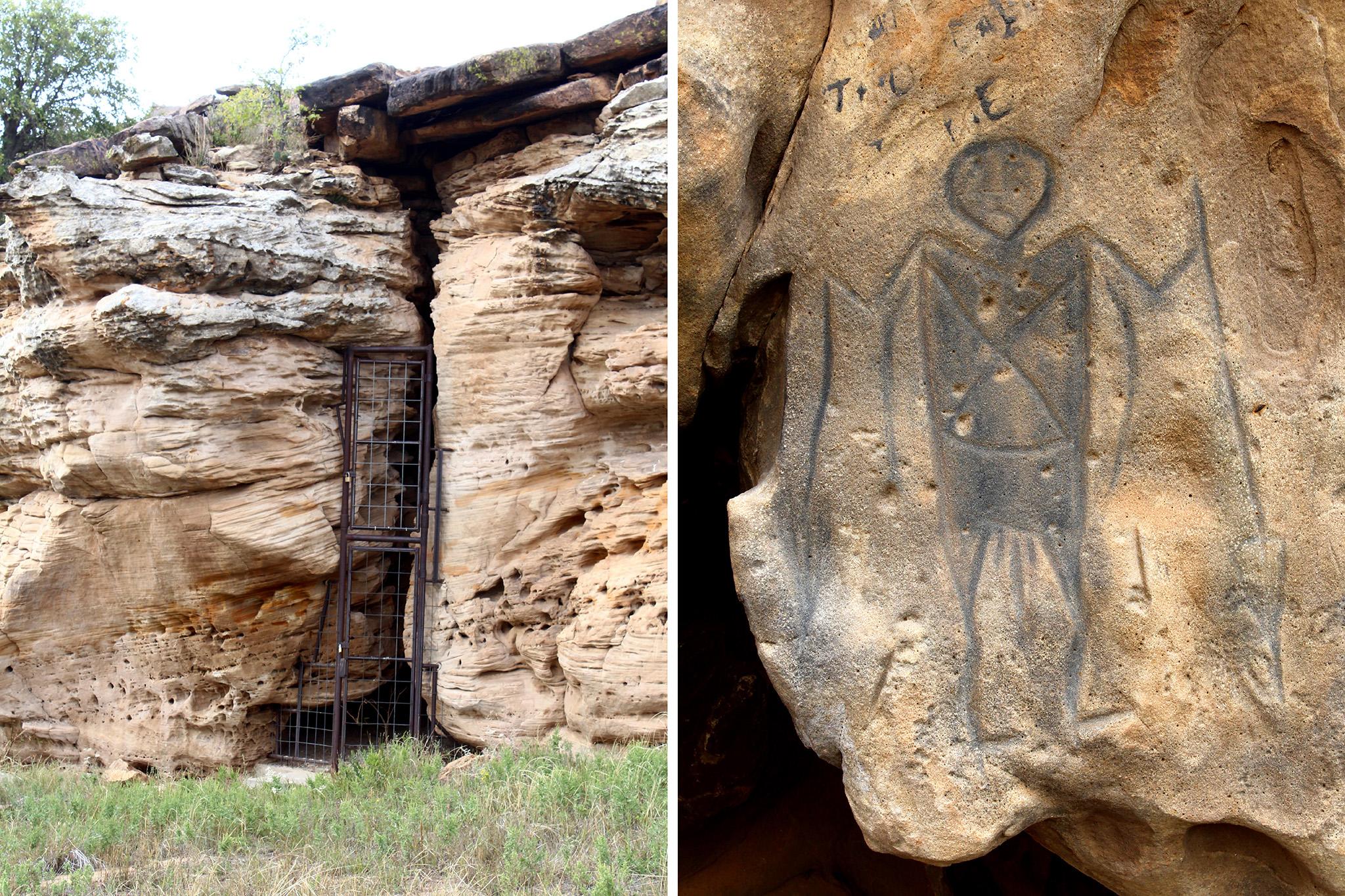
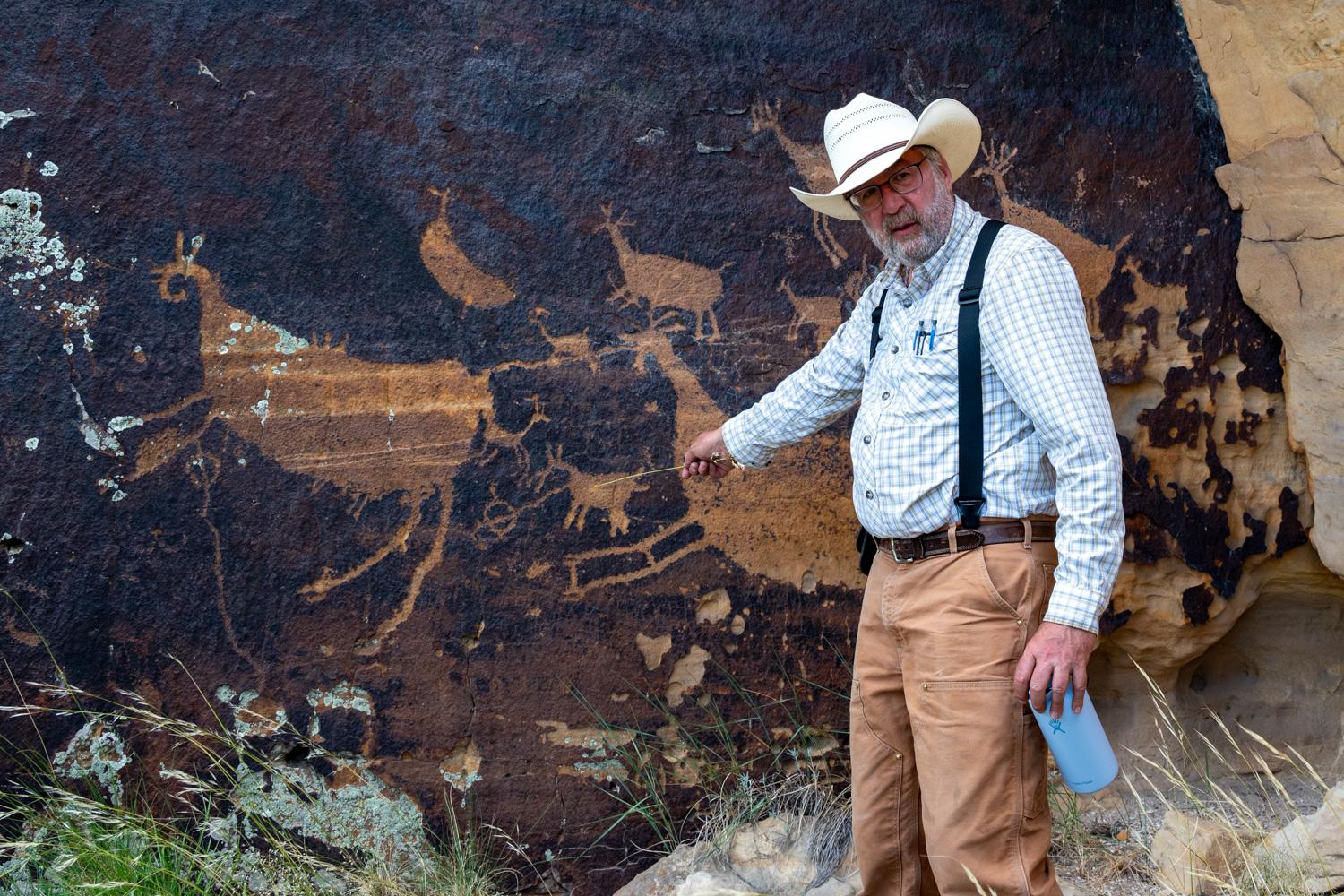
Images carved or painted on rock walls in southeastern Colorado by ancient Indigenous peoples often evoke wonder about who made them and why. These petroglyphs and pictographs carved and painted on rock cliffs provide a glimpse into the past of a place and people.
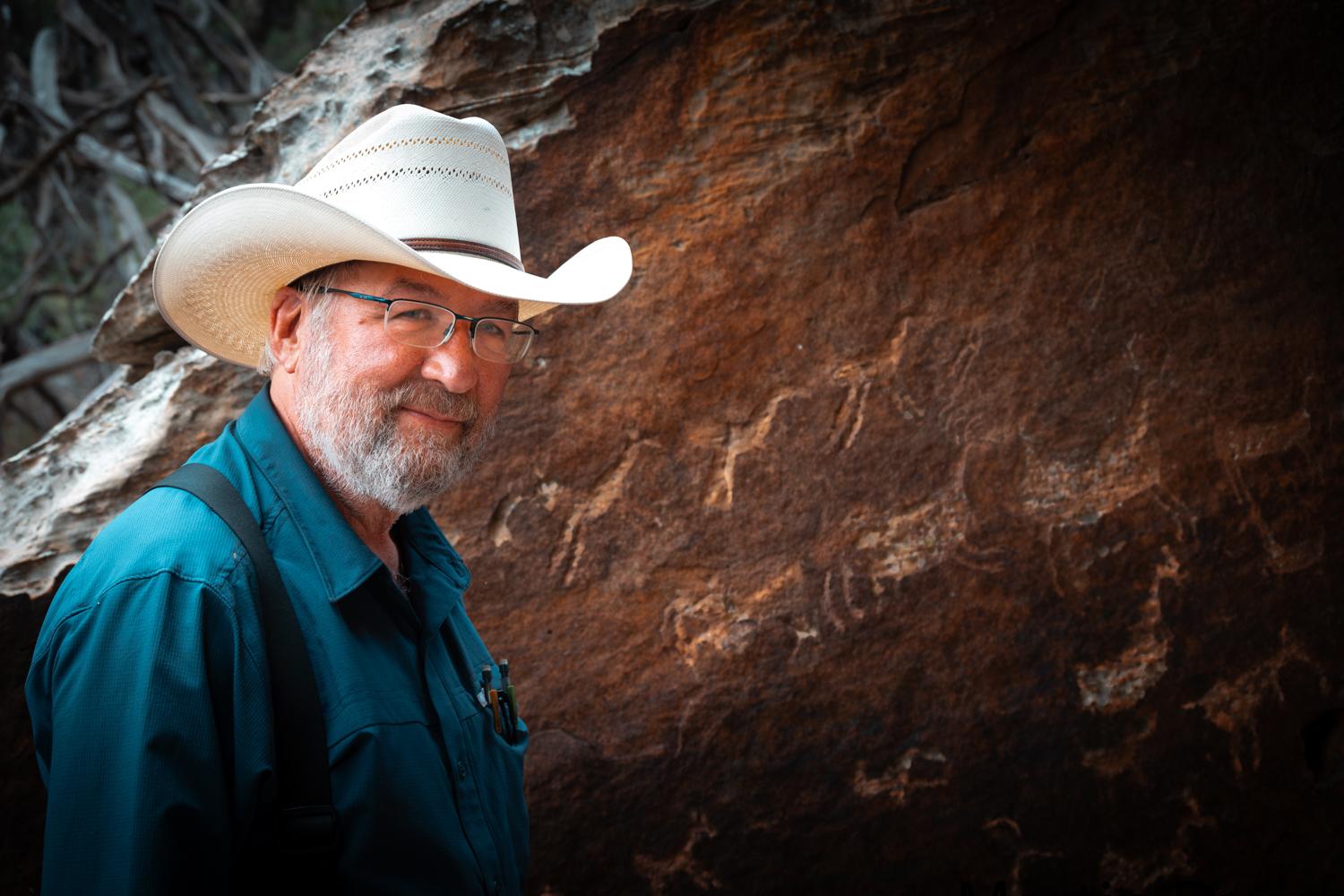
KRCC’s Shanna Lewis spoke with archeologist Mark Mitchell of Paleocultural Research Group about rock art, what we know about it, and the enigmas surrounding it, too.
This interview has been edited for length and clarity.
What's the difference between a petroglyph and a pictograph?
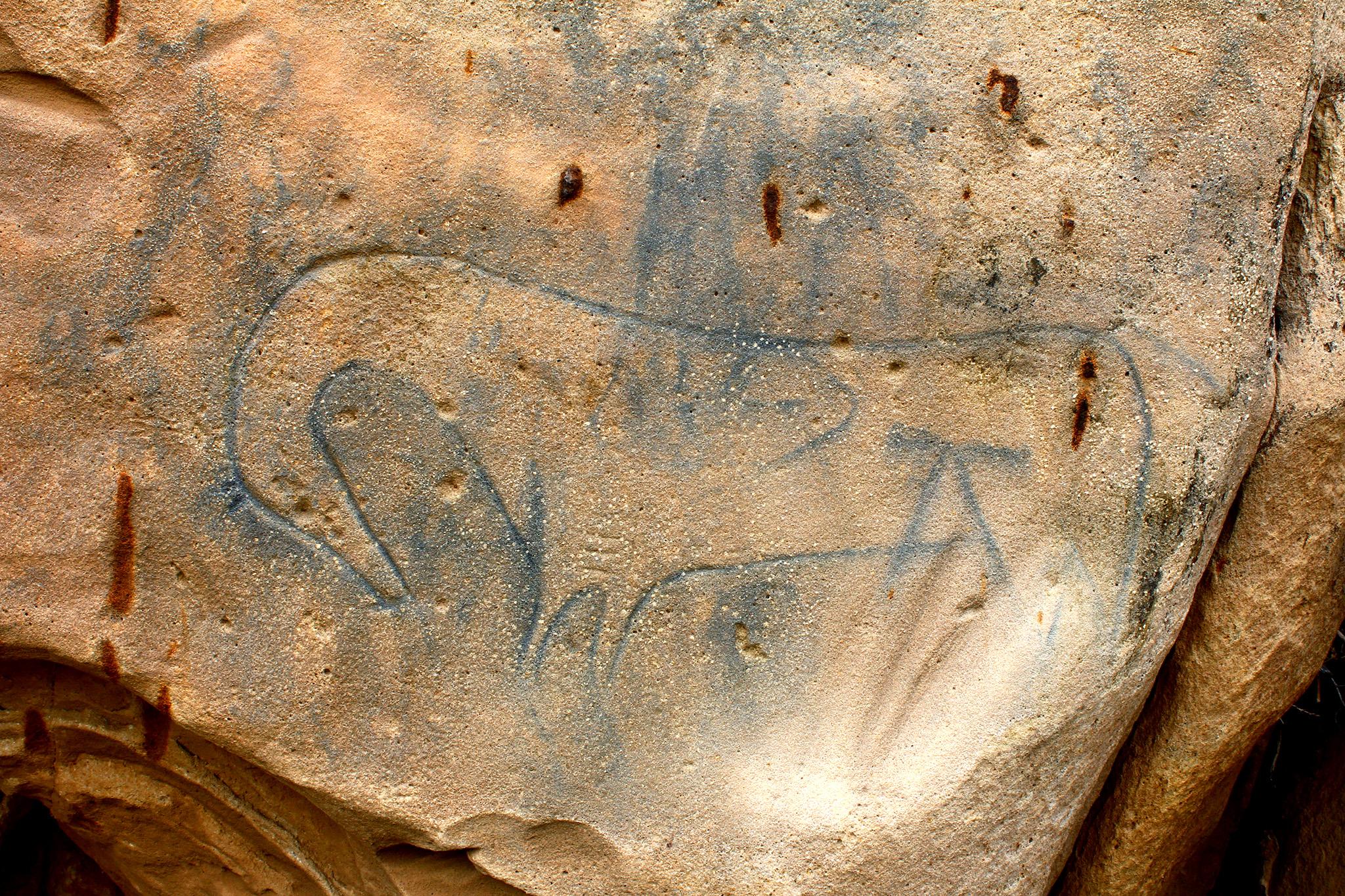
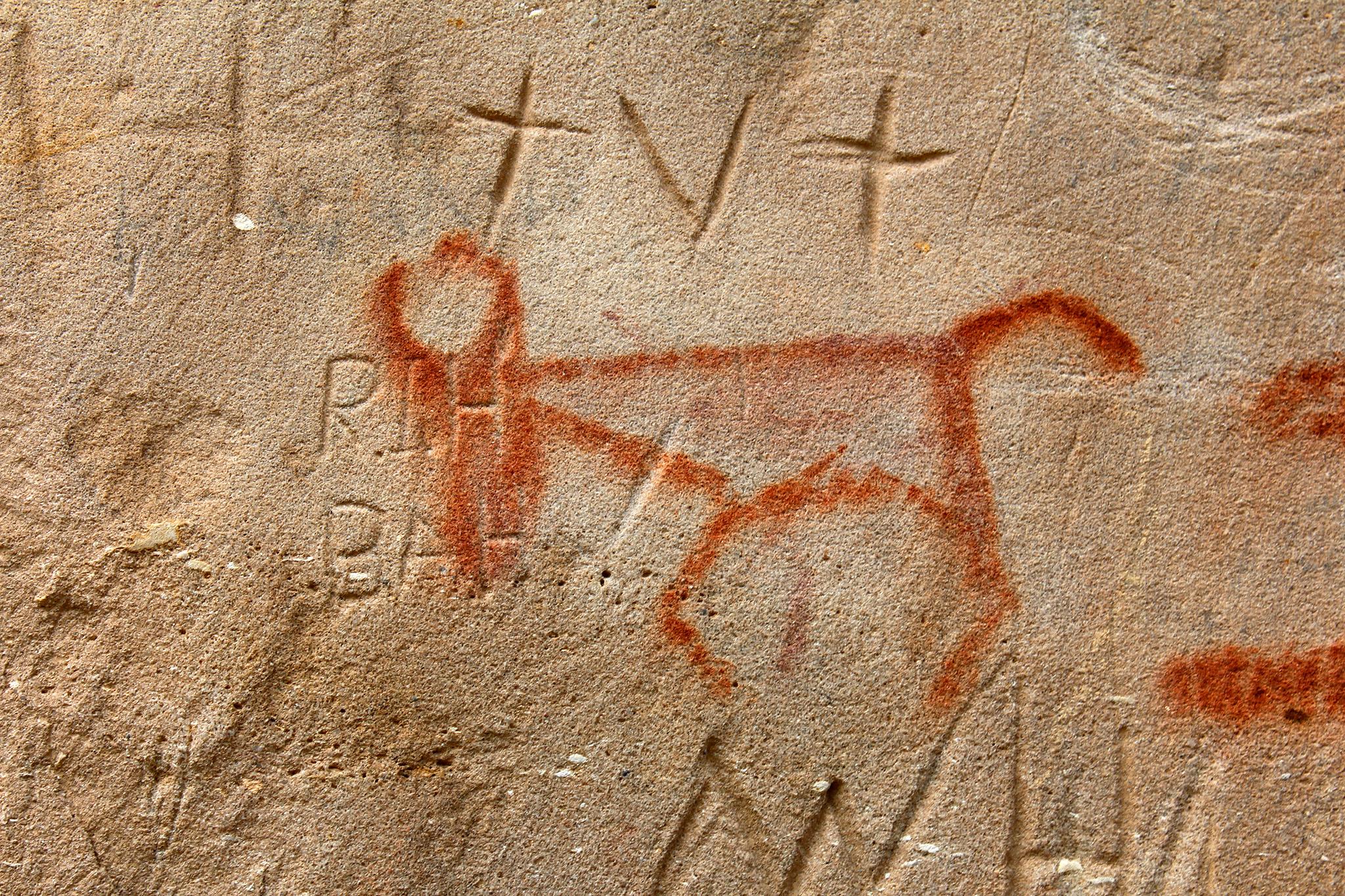
Petetroglyphs and pictographs are types of rock art or rock imagery. Petroglyphs are pecked, scratched or carved into a rock surface. Pictographs are painted onto the rock surface by creating a paint or pigment that is applied with a brush or some other tool. Petroglyphs are a lot more common than pictographs, but that may be just a matter of preservation. The paint could be quite old and has washed away or weathered away. Petroglyphs, because they're pecked into the rock surface or carved into the rock surface, have a longer lifespan.
The paints in a pictograph were they created from natural substances that could be found in the area?
Pigments like red ochre or hematite combined with some kind of binder to hold it together and to hold it to the rock surface, and then some sort of liquid added to make it fluid enough to brush onto a surface. All natural ingredients would have been used. There's yellows and whites and reds and charcoal, black colors. Compositions often are quite complex, involving separate colors.
What kind of imagery do you see in this art?
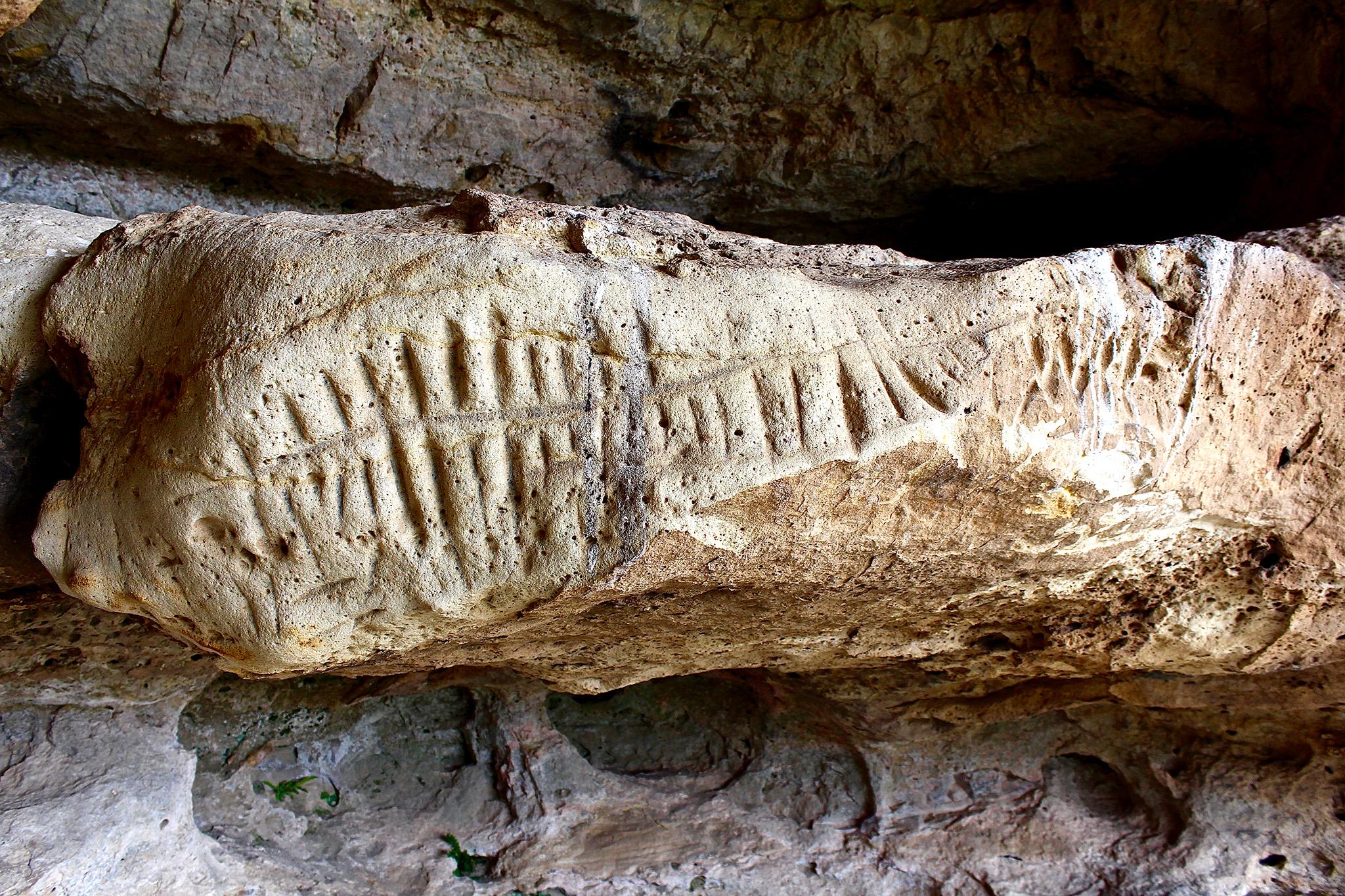
There's categories of motifs: animal forms, what archaeologists call zoomorphs, are extremely common, like pictures of bison and deer and sometimes animals that obviously have four legs but are sort of in indeterminate species. Also, other kinds of animals, birds, for example, water birds, are a common theme in some parts of North America.
Another group of images is human figures. They may be actual humans. They may be deities or cosmological figures taking human form, but they appear to be human arms and legs.
Then there’s lots and lots of abstract imagery: rows of dots, concentric circles, bisected squares, that sort of thing. The other main category is weaponry, like bows and arrows. In more recent rock art, we see shields and firearms, spears, bow lances, other kinds of specialized military or hunting hardware.
How old is this artwork, and who are the artists?
Those are very difficult to answer questions. How old is especially difficult. We do not have good methods for dating rock art. Some of the pictographs can be dated because there's enough organic material in the paint still remaining that they can be directly dated by radiocarbon or carbon-14 dating. But generally, we don't have a good sense of how old rock art is. It usually has to be dated indirectly. So something associated with a petroglyph panel or a pictograph panel could be dated.
We think that some of the oldest rock art in North America is at least 8 to 9,000 years old. We may be missing some of that earliest rock art simply because it's weathered away and it's not extant anymore. Of course, a lot of the recent rock art, we know how old it is because of the things it depicts.
Horses, for example. Horses were reintroduced by the Spaniards in the 16th Century. So we know an Indigenous American depiction of a horse can't be older than the 1500s, 1600s. But with those few exceptions, it's very hard to know exactly how old most of the rock art that we see is.
In terms of who made it, we have the same kind of problem. We can recognize some of the most recent rock art because it depicts items of Pueblo Indian cultural repertoire. We do, for example, see Ute rock art that depicts ceremonies that we recognize as Ute, that we know about that occurred in the 20th century, and still go on today. So we can see the depiction of those at some point in the past. And we can see that those authors are Ute people in western Colorado. But as you go farther and farther back in time, our ethnographic connection to the modern Indigenous Americans becomes more and more difficult to sustain. So some of the oldest rock art, much of which is abstract and doesn't show items of cultural patrimony, items of cultural significance, we really don't know who the artists were.
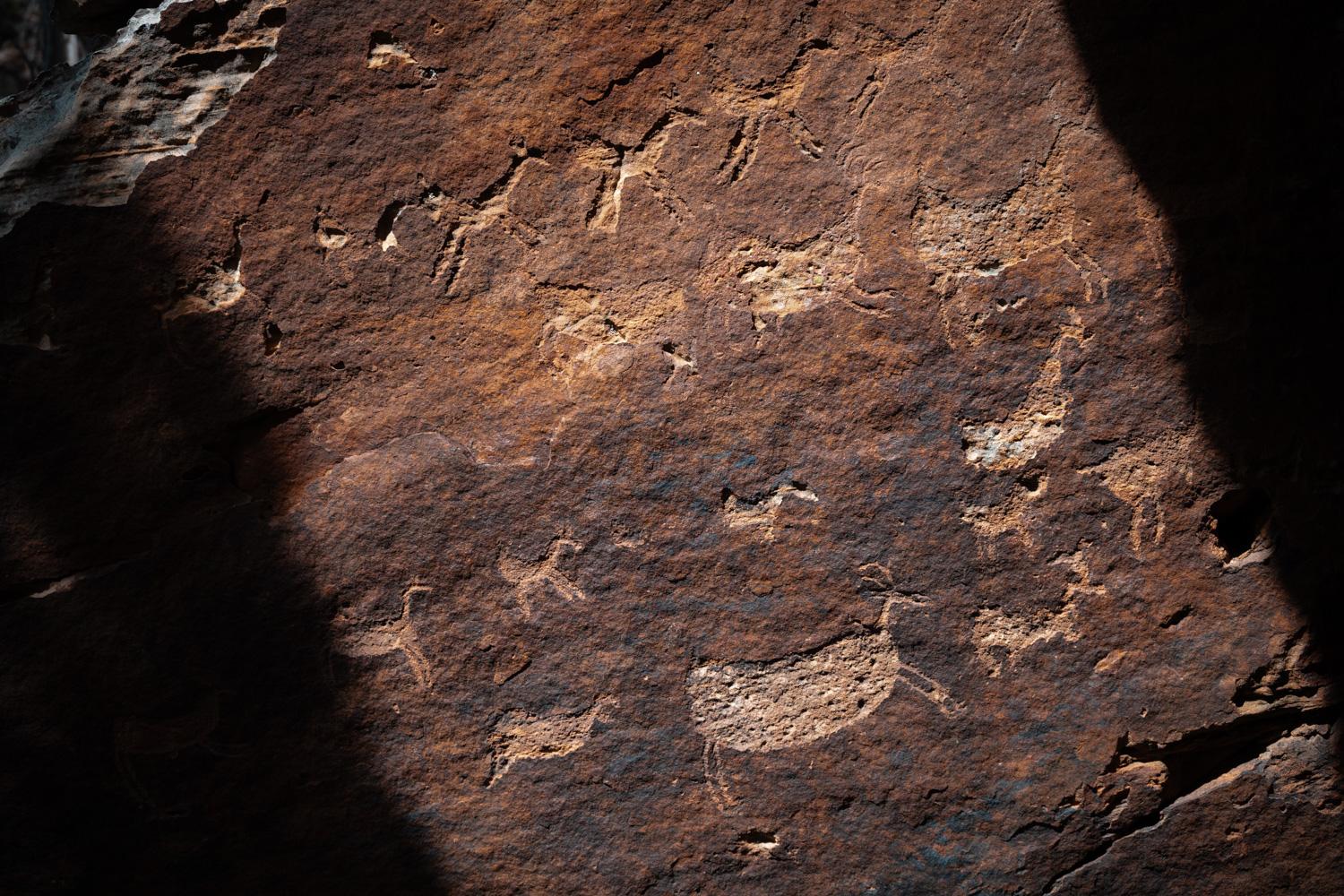
Why is it there, and what's to be learned from it?
It's so evocative. It's so obviously meaning-laden. That's one of the reasons people want to see it today, because it really has this sense of reaching into the past and understanding something or trying to understand something about the ideas, the thoughts, the world of people in the past. It's right at our fingertips, but we don't really have as good of a sense of what it meant to them as we'd like to. So even despite the fact that it's very evocative, we don't really know what it's for. For example, is it storytelling? Some of it is. Maybe a lot of it's not. Is it depictions of important cultural figures, deities or culture heroes? Maybe it is, some of it's not. Is it historical? Is it depicting events that occurred? Is it more like a legendary history or a traditional history about the movements and activities of cultural groups in the deep past? It could be all of those things.
Is it art even? It may not even be art. It may be performative. In other words, the image itself has little significance. The act of creating it might have been very significant. And we really don't know. We do know that some American Indian groups look at rock art as a form of divination, telling the future, not the past or the present. We don't know. And that's one of the really interesting things about rock art.
What archaeologists do with it is try and understand where it is in the landscape. What's it associated with? Does it occur where people lived or not where people lived? Is it on high places, low places, near water? We can maybe track the groups that produced it by understanding what the distribution is across the landscape. So even though we want to know a lot about the meaning of it, we don't know as much as we'd like. But we can do other things to try and understand something about the past using rock art as the base.
How can rock art sites be protected, and what are you protecting them from?
It's a challenge. Vandalism is a problem. People will shoot guns at rock art images. They'll put their own names or dates onto the panel, which is a form of graffiti and vandalism. They'll try and take them away for themselves. So there's a group of people that either don't respect them or don't care about them. They're vandals.
But we also think about people who love them, folks who are interested. and sympathetic to historic preservation. They have a chance of damaging rock art also by touching it, by getting up close to it, by undermining rocks, by standing close to it. They're in some ways loving it to death. We also need to be thinking about that.
These sites are very vulnerable. They're very exposed, and they're ephemeral in some ways. They're easily damaged. Some of the things that land managing agencies do to protect the sites include creating trails that bring people to the sites without bringing them directly up to the rock face. The agencies put up interpretive signage to help people who may not be aware of the cultural significance of these places to understand it. They'll try to communicate a preservation message and why it's important, and what is important about preserving them for the long term.
Agencies that manage public lands like the Bureau of Land Management, Forest Service and Park Service have identified sites for people to visit so that they can appreciate them, learn something about them, and see them in a safe way that's not going to cause any damage to the site itself.
Why preserve rock art?
Rock art is a fantastic resource because it's so evocative, because it brings people into some sense of the past and that's really special for everyone. So being able to experience it is important. There’s a fundamental core cultural significance of these places to Indigenous people and it should be important to all of us.