This story was updated at 3:20 p.m. with the latest temperature information.
Just days into spring, Colorado is getting more summer-like heat, and Denver hit an all-time temperature record for a day in March.
“Hate to say it, but yeah, it’s gonna be hot out there,” said National Weather Service meteorologist David Barjenbruch in Boulder. “When your high temperatures this time of year are normally closer to 59 or 60 degrees, we’re talking almost 30 degrees above normal for the day.”
Denver International Airport recorded a temperature of 87 degrees around 3 p.m. Wednesday, the hottest temperature ever measured in the city in March. The previous record for the month was just set Saturday, at 86.
That followed Tuesday in metro Denver, when temperatures decimated a 130-year-old record.
“This particular record was set in 1896. It was 76 degrees, and we shattered that one by a good 5 degrees,” he said. “We went up to 81 yesterday for a high, but we’re going to be even warmer than that today, and we are absolutely going to obliterate today’s record high temperature.”
Denver’s record high for March 25 had been 75 degrees.
The latest surge of heat follows a broader pattern, with multiple Colorado cities setting all-time March warmth records just last week.
Barjenbruch said it’s tied to a “horribly stagnant” weather pattern that’s been locked in place across the U.S. this year. While storms have repeatedly hit the Northeast, leading to one of its coldest and harshest winters in recent memory, the West has remained under a ridge of warm high pressure. That imbalance has kept Colorado unusually warm and dry for months, contributing to what he described as an “almost ridiculously mild winter” and now an early-season heat wave.
“I don’t believe we’ve ever hit 80 degrees or more for four consecutive days in March like we did last week,” he said. “Those kinds of temperatures for this time of year just haven’t happened before in our recorded history.”
But it won’t just be metro Denver feeling the heat.
“It is going to be extremely warm once again across pretty much all of the state,” Barjenbruch said. “Some of our plains locations will be touching 90 degrees — Sterling, Fort Morgan, Greeley will probably hit 90 today. It’s going to be close to 90 in Denver, and Grand Junction will be approaching 90 degrees as well.”
Even the mountains won’t offer much relief.
“Valley locations like around Dillon and Silverthorne, maybe Breckenridge, they’re going to be pushing that 70-degree mark for daytime highs today,” he said.
The combination of heat and dry conditions is also raising concerns about fire danger, despite relatively light winds.
“It’s hot and dry,” Barjenbruch said. “You walk across the grass at a park or something, it’s just crispy, so anything can start and spread.”
Officials urge people to avoid activities that could produce a spark and lead to a wildfire, including dragging chains on highways, mowing in dry conditions, lighting charcoal grills or failing to fully extinguish cigarettes.
Thursday will bring another warm and potentially record-breaking day, but a cold front is expected to offer brief relief later in the week.
“A cooling trend will usher in considerably cooler air for Friday when we will probably be in the mid to upper 50s in metro Denver. But, by Saturday and Sunday, we’re back in the 80s,” Barjenbruch said.
The prolonged heat is also taking a toll on the state’s snowpack, which is now at historic lows.
“We are indeed the lowest in history that we’ve recorded here in Colorado,” Barjenbruch said. “In the southern part of the state we’re only near a quarter of the normal snowpack. In the north part of the state, we’re only around half of our normal snowpack.”
That could have ripple effects in the months ahead.
“We certainly need a weather change or we’re going to have issues with forest fires. Then we start to look at water supply issues,” he said. The city of Denver is already preparing, declaring a Stage 1 drought restriction Wednesday as its water reservoir storage stands 5% below average.
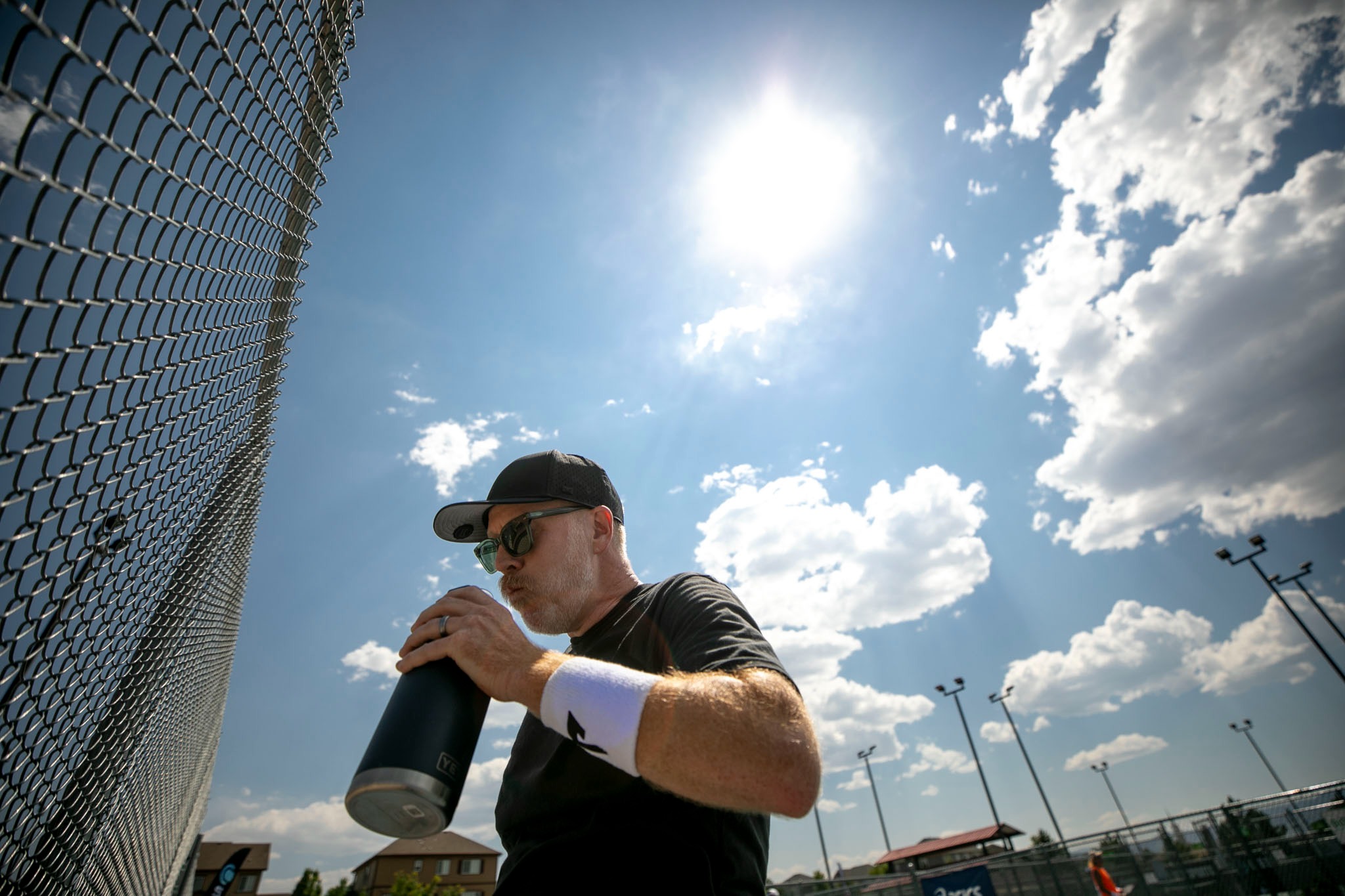
Precipitation could arrive late next week in lower elevations, but until then, officials recommend staying hydrated and keeping homes cool.