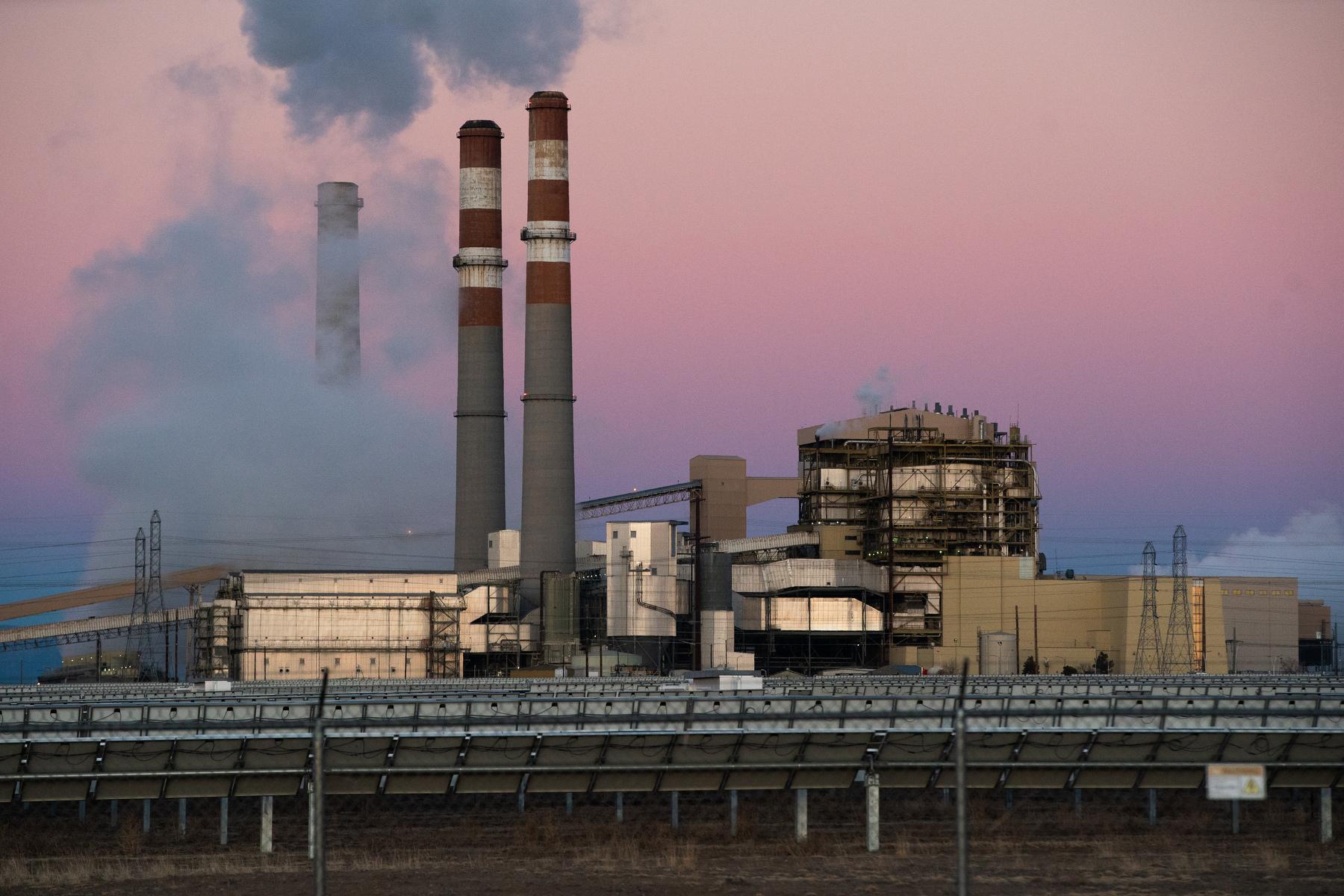
Last week, state utility regulators sharply questioned Xcel Energy’s repairs to Colorado’s newest coal-fired power plant, Comanche 3.
Since it opened more than a decade ago in Pueblo, the behemoth plant has been beset by technical problems and months-long outages. It has been offline since August 2025, when it suffered a catastrophic breakdown. Xcel now believes the plant won’t reopen until at least August 2026, because repairs have been delayed.
Multiple commissioners on the Public Utilities Commission (PUC) said the plant’s woes could put the state in a bind during the summer, when demand for electricity can skyrocket.
“Not to state the obvious, but we have a real problem with Comanche 3,” said commissioner Tom Plant during a meeting.
But despite the importance of the plant to the state’s grid, much of what is known about why it broke down, what equipment is being repaired and the cost to fix it remains shrouded in secrecy, according to some advocacy groups.
In public reports submitted to the PUC, Xcel has redacted even basic information about the repairs, including the estimated cost to fix Comanche 3, how much its insurance will cover, or what equipment inside the coal plant is being repaired.
Xcel has also blocked the public release of recent emissions data from Comanche 2, a sister coal-fired power plant in the same complex, even though that data will eventually be publicly available through a U.S. Environmental Protection Agency database.
CPR News submitted a Colorado Open Records Act (CORA) request for the unredacted repair information, but was denied by the PUC. In a letter, the agency said the information is confidential and cited a statute indicating the information could be an Xcel trade secret.
Xcel regularly redacts information in public documents at the PUC to protect its business interests. Colorado open-records laws also allow certain categories of information, like commercial data or trade secrets, to be kept confidential.
But some advocates say Xcel’s Comanche redactions go too far, especially since consumers may one day end up paying for Comanche 3’s repairs through pricier energy bills.
Leslie Glustrom, a senior advisor with the non-profit Clean Energy Action, said the redactions kept ratepayers in the dark about potential air pollution — and how their money may one day be spent.
“It’s hard to figure out why a cost to repair a coal plant is being called a trade secret,” she said. “We have no usable information about how much that’s costing.”
Xcel Energy declined to comment about the redactions.
PUC rules allow for some information to be withheld
In December, state regulators allowed Xcel Energy to keep Comanche 2 open, extending a state deadline that would have closed it by the end of 2025.
The PUC’s decision was spurred because of the troubles at Comanche 3 — commissioners wrote that the “single justification” to extend Comanche 2 was because of how unreliable its bigger, newer sibling had become.
In granting the extension, state regulators ordered Xcel to submit a bevy of reports that catalog the status of its repairs and costs. Some of that information, while redacted to the public, is not confidential to everyone.
State utility regulators can see Xcel’s full reports, as can groups like Western Resource Advocates and agencies like the Office of the Utility Consumer Advocate (UCA), who regularly spar with Xcel at the utilities commission. But they are barred by non-disclosure agreements from revealing the information.

Joseph Pereira, the UCA director, said that the PUC process can be opaque to the public. State regulators often grant a broad brush of confidentiality to information that may not actually be so sensitive.
“A top-line number on the total repair cost doesn’t seem like that would be a trade secret,” Pereira said.
His office is now moving to challenge the confidentiality of the cost estimate so it can be made public.
Glustrom said the redactions set a bad precedent, because utility regulators may allow Xcel to hold back information that’s in the public interest, but potentially damaging to the company.
“If the PUC allows Xcel to just declare whatever they want as a trade secret, it's a little bit like with your kids,” she said. “You give them an inch, they'll take a mile. Xcel's already taken a mile.”
In an interview, a PUC spokesperson pointed to CORA rules that protect trade secrets and said a party could challenge the confidentiality provision to release the information.
What we know about repairs
While key information has been redacted, Xcel’s reports offer some details.
Xcel has oscillated between how long it’ll take to get the plant up and running again. It’s attributed at least some delays to supply-chain issues with Japan-based Mitsubishi, which is performing off-site repairs to Comanche’s equipment. General Electric is performing on-site work.
State regulators have said there’s no guarantee that Xcel will be able to bill the repair costs back to customers through higher energy bills. The company will have to prove to regulators at a later date that its expenses were reasonable.
Xcel also insists that third-party equipment caused Comanche’s failure and that it was operating the plant correctly, a point that environmental groups have questioned.
Comanche 3 continues to roil Colorado energy politics and delay renewables
Because it’s the state’s largest coal plant, its outage has caused a slew of concerns, including whether Xcel has enough electricity to meet rising demand in the summer, when heatwaves can strain the grid — to whether the company will delay closing its remaining coal plants.
In its reports, Xcel has insisted that the most cost-effective solution is to repair Comanche 3 and keep it running through the end of 2030, when it’s slated to retire.
The Trump administration has also been bullish on coal, and used emergency powers to compel power plant owners to keep the lights on at their aging coal plants.
In December, the Department of Energy ordered a broken coal plant in Craig to stay open, over the objections of its owners. It renewed that demand on Monday with another emergency order to keep the plant open.
Some state lawmakers have also pushed to delay closing Colorado’s other coal plants. Republican Congressman Jeff Hurd has also urged the Trump administration to indefinitely keep the lights on at Comanche 2 because of Comanche 3’s outage and a looming demand for electricity.
Comanche’s outage has also affected several renewable projects, according to Xcel. The company is aiming to speed up its massive Singing Grass wind project in Kiowa County, and get it online by June so it can help replace the electricity lost from Comanche 3.
Another project, the Arroyo 2 solar project in Pueblo, was slated to come online by October. It is supposed to tap into transmission lines used by Comanche 2, which would send the project’s power coursing through the grid.
But Comanche 2’s extension may delay the solar project. Xcel is now seeking additional approvals to get Arroyo 2 on the grid when planned.
- Xcel Energy’s plan to replace state’s biggest coal plant could start with renewables and gas — and maybe end with nuclear
- Gov. Polis’ administration moves to stop a Pueblo coal plant from closing by the end of the year
- Pueblo County wants Trump to keep its aging coal plants open past their planned closing dates
- The owner of Colorado’s largest coal mine sees a future in coal — and so does the Trump administration