White-yellow-white-red may want to embrace the European tradition of taking an August holiday.
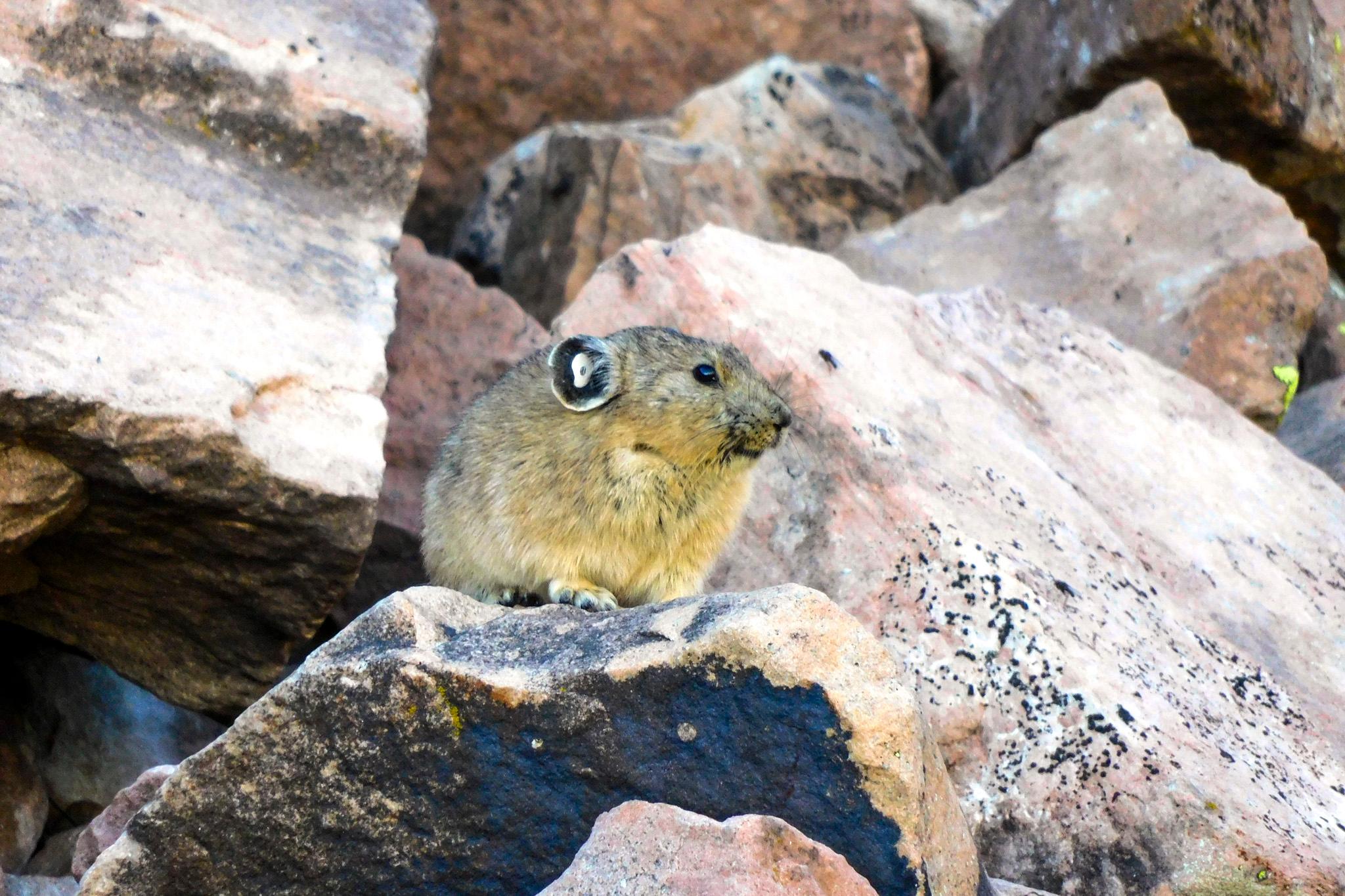
White-yellow-white-red is a pika, an old one at that. The pseudonym refers to the tag code that helps identify her.
One of the more senior residents of the La Sal Mountains in eastern Utah, recent research suggests that White-yellow-white-red is more likely to be stressed in the late summer, and anything that could make life easier would probably be a boon to the whole area.
And, that data about how taxing August can be on her and her neighbors comes via a recently published study from a Colorado Mesa University team that examined the ways climate stressors are wearing on the American pika.
Karli Weatherill, a Colorado Mesa University student who worked on the study, said the six-year project differed from population-based surveys by focusing less on pika numbers and more on how they were responding as their environment changed.
“There's a lot of different features of a habitat that can influence the pika stress response,” Weatherill said. “So if we can understand which of those features impact the stress the most, then we can actually target those features and make management strategies that will be most effective in decreasing and mitigating their stress.”
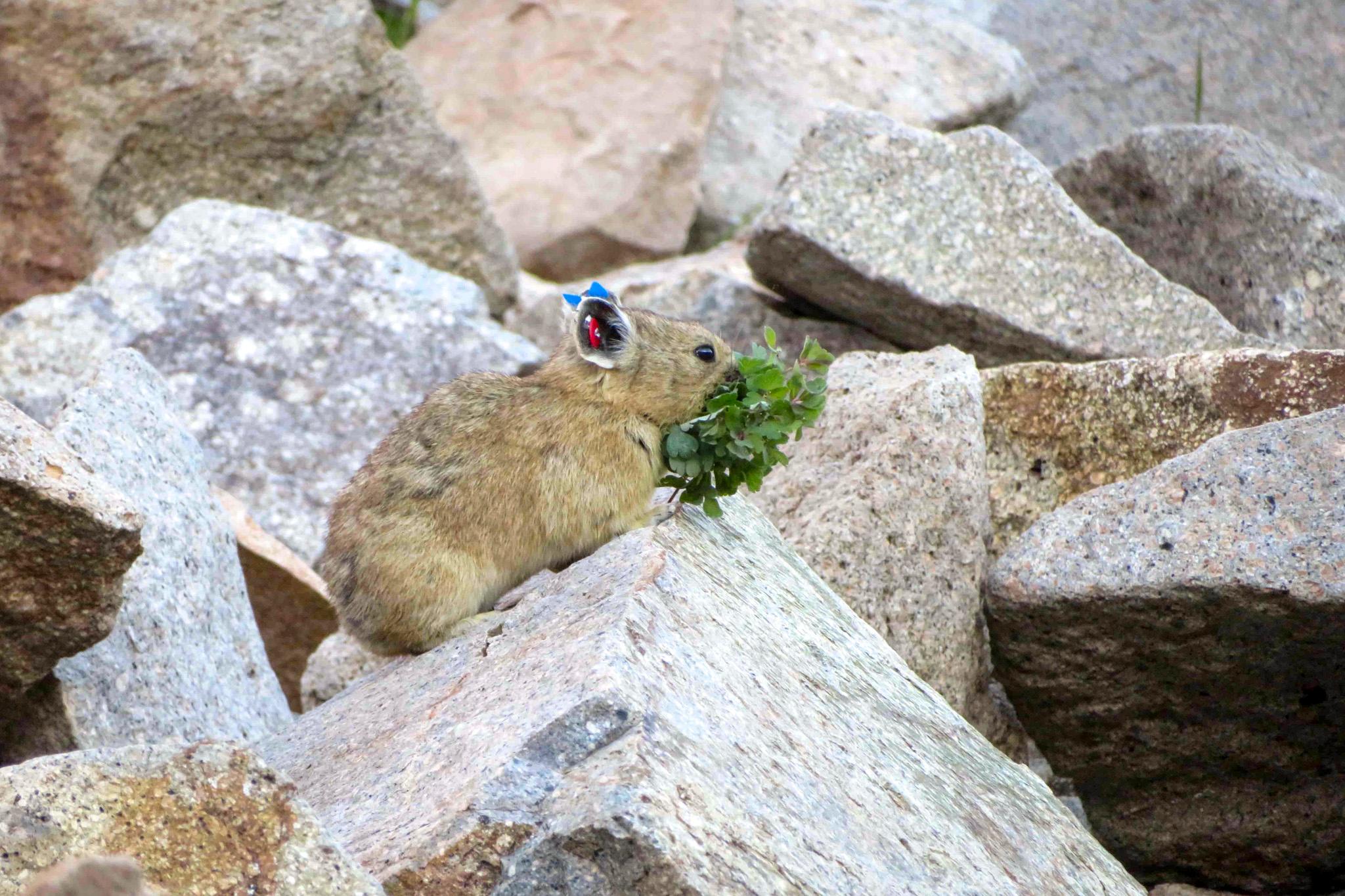
Pikas are small mammals with round ears that can be found in high-alpine boulder fields, sometimes carting a bouquet of vegetation across the landscape. They make for a compelling research topic with extensive efforts to document the populations, including an app for the public to help with the effort. Pikas are considered an indicator species for environmental change.
“You can tell a lot about how the environment's doing based off of how the species is doing,” Weatherill said.
Johanna Varner, an associate professor of biology at Colorado Mesa University, said the information suggests that hotter temperatures and worse winters are tougher on pikas.
“We see higher stress at the population level in the years where the August temperature is really hot. That's really important for pikas because that's the time when they are actually out collecting all of the food that they're going to eat during the winter,” Varner said. “So they have to be very active, but when it gets too hot out, they may not be able to be as active, so they'll restrict their activity, hang out where it's cool below the rocks, and then potentially not be able to gather enough food for the winter.”
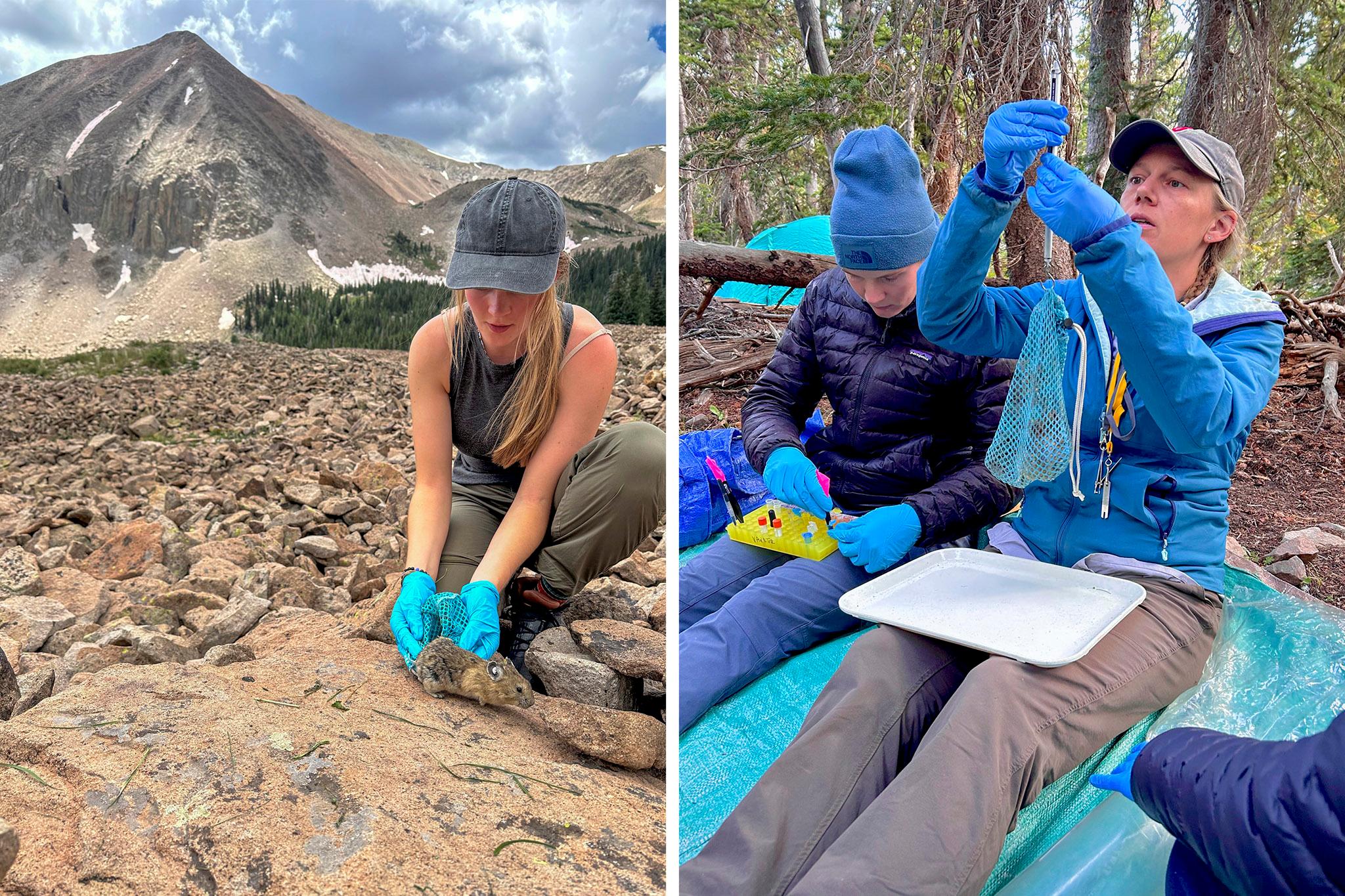
The CMU team gathered the data by capturing pikas and collecting scat samples that can be analyzed for a stress hormone. Over enough time, they could chart when the presence of that hormone was the highest and, therefore, when the population was under the most stress.
An environmental factor that fluctuated along with pika stress levels was grass cover. In the La Sal Mountains, the grassier the landscape, the more placid the pika. In addition to that being a data point, Varner said, it’s also a potential tool for future land managers.
“Grass cover is something that we might be able to actually manage a little bit better on a local level,” Varner said. “Obviously, it would be really good for pikas if we could just stop climate change on a global level … but it's kind of a big problem that's a little bit intractable for local management units to actually do something about.”
The information could lead to regional management decisions to make life easier on pika populations, like tweaking grazing periods for livestock.
One pika that showed up throughout the study was that female pika identified by her tag code, white-yellow-white-red. A six-year run for a pika, Varner said, demonstrates high-level survival proficiency.
“I thought that was actually really kind of profound because I think about what the world was like in 2018. It was before the pandemic, it was before I had tenure at the university. It was all these different things and I think about how my life was different between 2018 and 2023,” Varner said. “(She) was up there just collecting food every year and not getting eaten. I found that really kind of meaningful and really inspiring.”