A leader from the Black Panther Party, a musician who has performed with Beyonce and the infamous Black cowboy Henry Lewis are all connected to Aurora. Now a new exhibit highlights the connections.
“Proclaiming Colorado's Black History: Aurora,” is an exhibit at the Aurora History Museum. The exhibit opened this month and will remain at the museum until November. It builds off of “Proclaiming Colorado’s Black History: 1840s - Today,” a curated show that was previously in Boulder for two years.
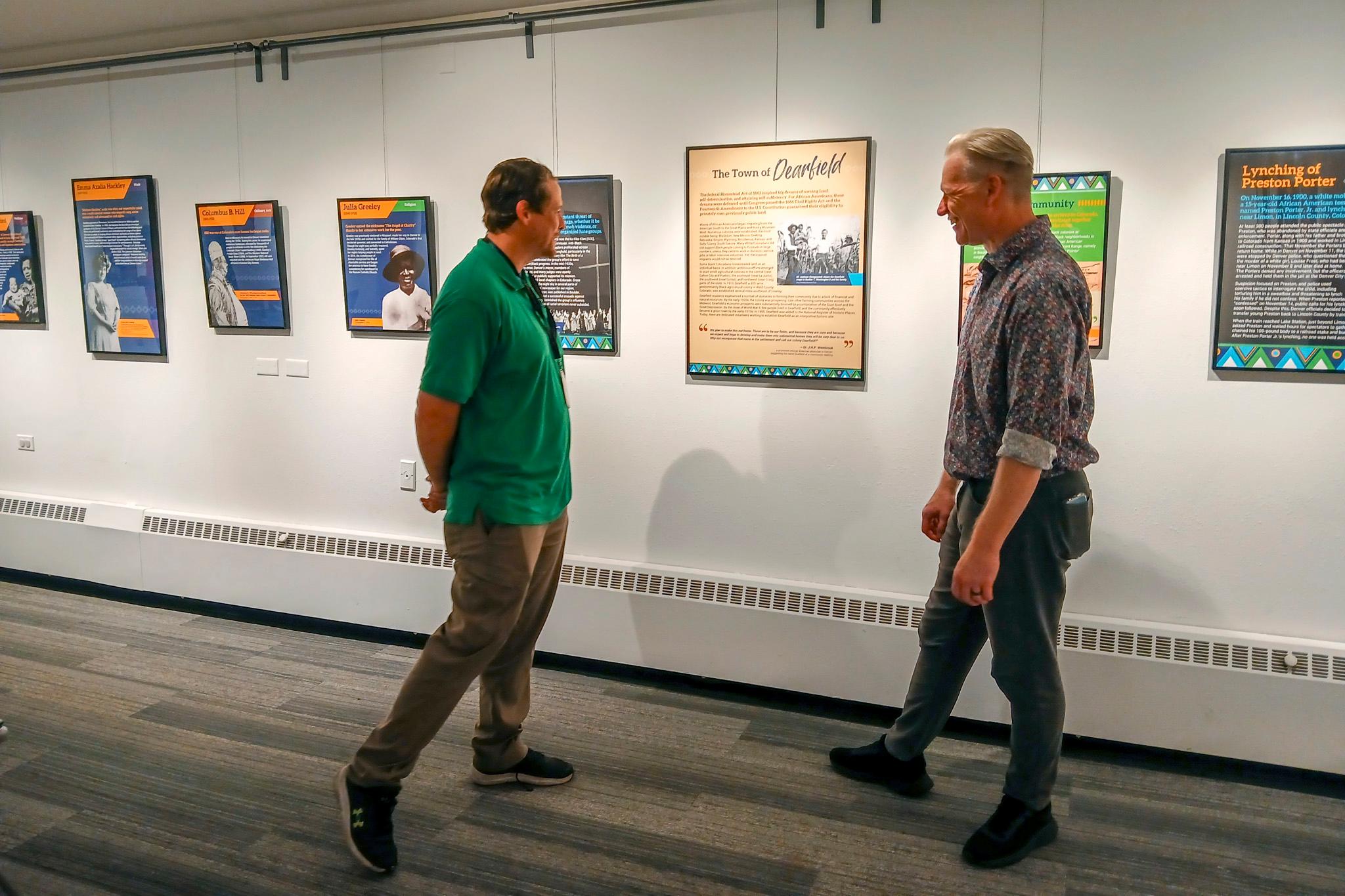
The display consists of 41 large, wall-mounted images of Black people who spent some time in Colorado and contributed to its history and culture. Each image is accompanied by text to put the photo into historical context. About half of the images were curated by the Aurora History Museum, and the other half are a part of the traveling exhibit that was displayed in Boulder.
“So we've basically borrowed their information on about half of these and about half of them were written, researched by folks here at the museum. And so basically anything that's Aurora-specific is something that we've done,” said the museum’s education curator, Keith Outcelt.
To make selections for the exhibit, Outcelt said that the museum looked at recommendations from over 100 people who responded to an online survey in which the museum asked the community to share information about notable Black people who spent some of their life in Aurora. That’s how they gained information about cowboy Henry Lewis. He contributed to Black cowboy culture in Colorado in a big way.
Lewis served in the military as a livestock manager during World War II, helped organize rodeos for servicemen in Calcutta, and moved to Aurora in 1959. He broke horses, crafted lassos, and taught local riders the roping skills he learned. He was also featured in the 1986 book Black Cowboys. Lewis died in 2009.
The exhibit includes two other panels about Black cowboys.
“Henry Lewis, Abe Morris and Charles Sampson (the subject of the other two Black cowboy related panels) are all very, very prominent in the Professional Rodeo Cowboys Association, the PRCA. And all three of them were major groundbreakers; Abe Morris and Charles Sampson are still involved in that, and they've done a lot of outreach within our community, getting kids and other people involved in the rodeo scene,” said Christoper Shackelford, the exhibits coordinator who did much of the research and writing of the panels.
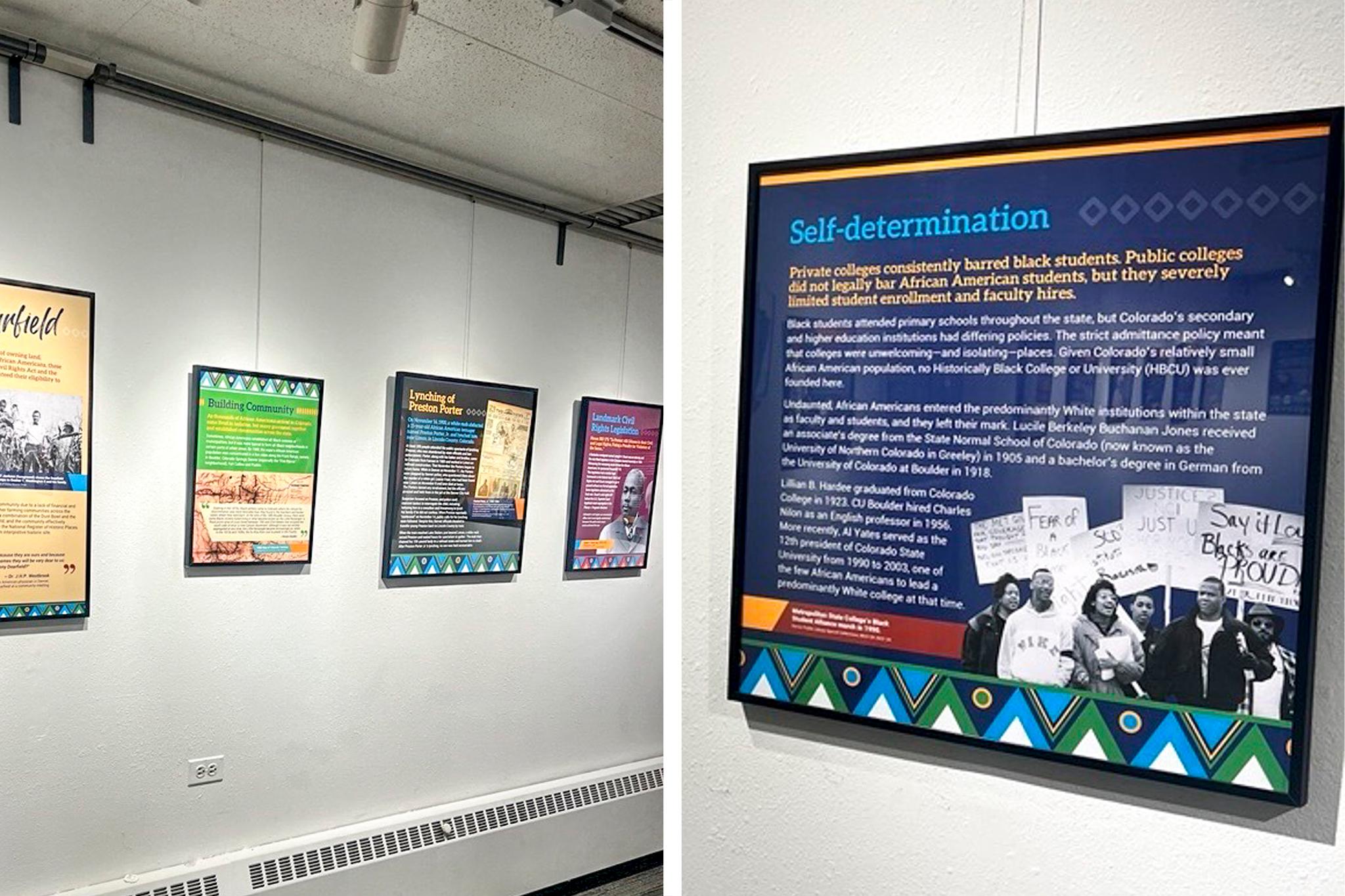
Shackelford said the Boulder exhibit was more about Black Coloradans, whereas this one focuses more specifically on Black Coloradans who spent time in Aurora.
“We established as the town of Fletcher in 1891. So I really pick it up at the start of the 20th century and describe how Aurora was primarily founded by white people – that's found in the censuses almost entirely, but the majority of them were immigrants, first generation Americans or second generation Americans from Europe seeking opportunity in the West,” Shackelford said.
“(With) Denver being a very expensive place to land, we had many affordable homes here in Aurora. So that's really who our original founders were. But by the early 20th century as our military bases, Fitzsimmons was founded and then Lowry and Buckley Field, people from all over the country were finding themselves here in Aurora and we really diversified,” Shackelford said.
He was eager to share a few other nuggets of Aurora’s history through its Black residents many people may not know.
“You may be familiar with Bobby Seale, co-founder of the Black Panthers,” said Shackelford during a tour of the display. “He lived here in Colorado from 1981 to 1984. He was a talk show radio host on KLZ, and he owned a home right here in Aurora.” In his photo, he is displayed multitasking: enjoying a smoke and using a spray bottle to squirt a liquid, possibly barbecue sauce, onto meat he’s grilling at the same time.
Although mainly known for his activism, a lesser known tidbit people who go to the exhibit will learn is that Seale also wrote a cookbook called Barbeque'n with Bobby: Righteous, Down-Home Barbeque Recipes. The cookbook showcases traditional and modern African American barbecue methods, techniques, and heritage dishes.
A few steps away is the panel featuring one of Beyoncé’s one-time band members. “Our Beyoncé connection is Tia Fuller, (who) was part of Beyoncé's all-female band. Earned a Grammy. She grew up here in Aurora and graduated from Gateway High School in 1994. She's still a publishing artist – her most recent album with her sister just came out.”
The museum will be hosting an opening reception on August 1. Next year, the team plans to expand the exhibit in a larger room and feature interactive objects and a spoken word booth as well. According to Shackelford, that exhibit will open next year.