
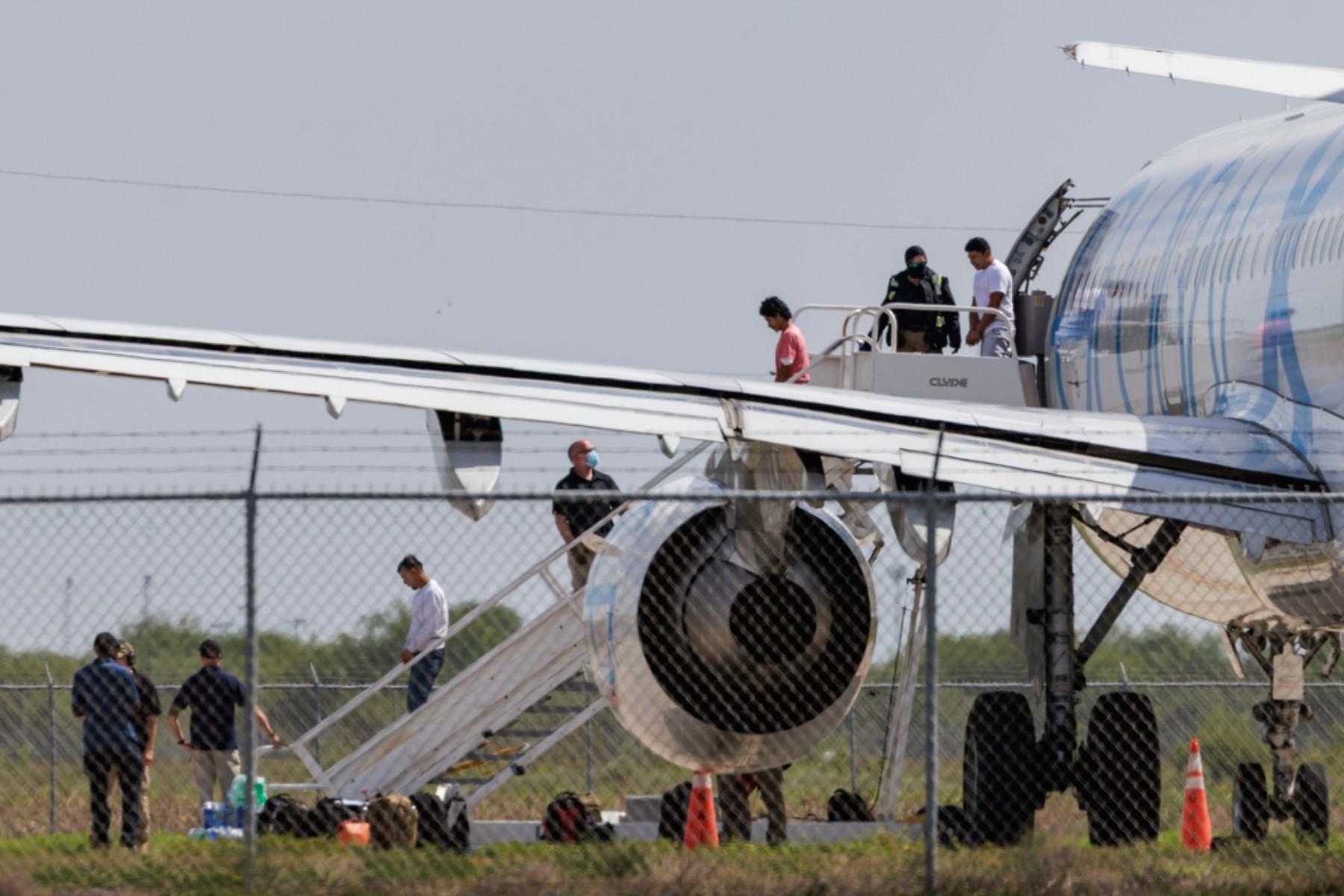
More than 115 immigration detention flights have left Denver this year for other U.S. cities, an extraordinary number that is making it hard for immigration lawyers to help their clients and perhaps accelerating the number of deportations out of the U.S.
“The purpose of detention is so they can show up to court. It’s illegal for it to be punitive because it’s civil confinement, so it’s particularly head-scratching that someone who has a court hearing in Aurora tomorrow is transferred away,” said immigration attorney Laura Lunn. “We show up to court and a GEO (detention center) official is telling us, ‘Oh, this person isn’t here, they were transferred,’ and the judge asks, ‘Well, are they going to be brought to court?’ And the answer sometimes is ‘no.’”
The surge in domestic detention flights is also seen in deportation flights to other countries.
A report by the Human Rights First organization analyzed 11 months of deportation and removal flights from various cities with detention facilities, like Aurora. The organization found that more than 1,700 removal flights reached 77 countries under the Trump administration.
That is a 79 percent increase in flights compared to the previous year during the Biden administration. Trump’s administration has also added 34 countries to the list of where people are heading.
New removal destinations this year include Eswatini (formerly known as Swaziland), Iran, Jordan, Mali, Sri Lanka and Morocco.
The organization used publicly available aviation data to monitor and document flights conducted by U.S. Immigration and Customs and Enforcement, including deportation flights and domestic transfers between U.S. detention centers and deportation staging facilities.
In Colorado, 74 domestic transfer flights left in 2024, and the 2025 numbers represent a 55 percent increase.
The report found that there was a record number of “third country” transfers, which means immigrants were transferred to countries they’re not from. Those transfers included non-Guatemalans to Guatemala and non-Hondurans to Honduras. There were also third-country nationals sent to Eswatini and Ghana, both African countries, the report said.
In Colorado, the 115 flights that departed from here were sent purely to other domestic destinations, though researchers found a number of those destinations, including in Arizona, Texas and Louisiana, were deportation staging areas to out-of-country locales like Guantanamo Bay, Cuba, and earlier in the year, to El Salvador.
El Salvador houses the infamous Terrorism Confinement Center, a prison known for human rights abuses and torture. The ACLU of Colorado told a federal judge in April that at least 11 Venezuelans detained in Aurora’s GEO detention facility were transferred there in the early parts of 2025.
More commonly, however, the immigrants detained in Colorado were just shuffled to another detention center in another state, far away from family and their lawyers — if they had counsel, said Sari Arvey with the D.C.-based Human Rights First organization.
Arvey said being moved at a moment’s notice, sometimes days or hours before a hearing, is chaotic and unfair.
“It’s a disoriented process; people often don’t know where these flights are going, they only find out upon arrival,” Arvey said. “Tracking these flights around the United States has given us some insight into the rapid movement of people from our communities around the country.”
The federal government’s own policies say that transfers within immigration detention should only happen in “exigent” circumstances and shouldn’t take place if that immigrant has an attorney on record, said Lunn, a detention attorney for the Rocky Mountain Immigrant Advocacy Network.
“None of that guidance is being followed right now,” she said.
Lunn has been representing people inside detention for 14 years, and she’s never seen such frequent confusion and movement within the system as in 2025. Lunn has been the lawyer sitting at the table with a no-show client because they were moved in the middle of the night without any notification.
Brian Green, a Denver-based immigration attorney who represents people in habeas corpus lawsuits, said it’s happening more now, but there are also more people being detained now.
“It’s probably a product of both,” Green said.
Green said once someone is detained, he’s often quickly filing emergency petitions to get the person either released or at least an order for them to stay in their home state.
“I’m filing emergency lawsuits as fast as possible, and I’m trying to get the habeas before they get moved,” he said.
He said he had a West Virginia client who was moving around, and when the habeas petition was granted by a judge, ICE had to stop shifting her around detention centers.
Lunn, too, has filed emergency motions, sometimes in 30 minutes, to get clients’ planned transfers halted. Her biggest fear is that they’ll be moved to a third country, a place they’re not from and have no family or counsel.
“At this point, I’m telling clients affirmatively this is the plan of what you should do if you get word you’re getting transferred, it’s so common,” Lunn said, noting that ICE turns off phones inside the Aurora detention center when a transfer is planned so they can’t reach her, even if it’s the middle of the night. “Promptly, with my heart beating, I file something quickly with the district court to try and make sure my client stays here in Colorado.”