By Chase Woodruff | Colorado Newsline
Colorado air quality regulators on Thursday adopted new rules aimed at limiting emissions of methane, a potent greenhouse gas, from the state’s landfills.
Members of the Air Quality Control Commission voted 6-0 to approve the new rules, concluding a yearlong rulemaking process that resulted in a compromise plan agreed to by environmental groups and public and private landfill operators.
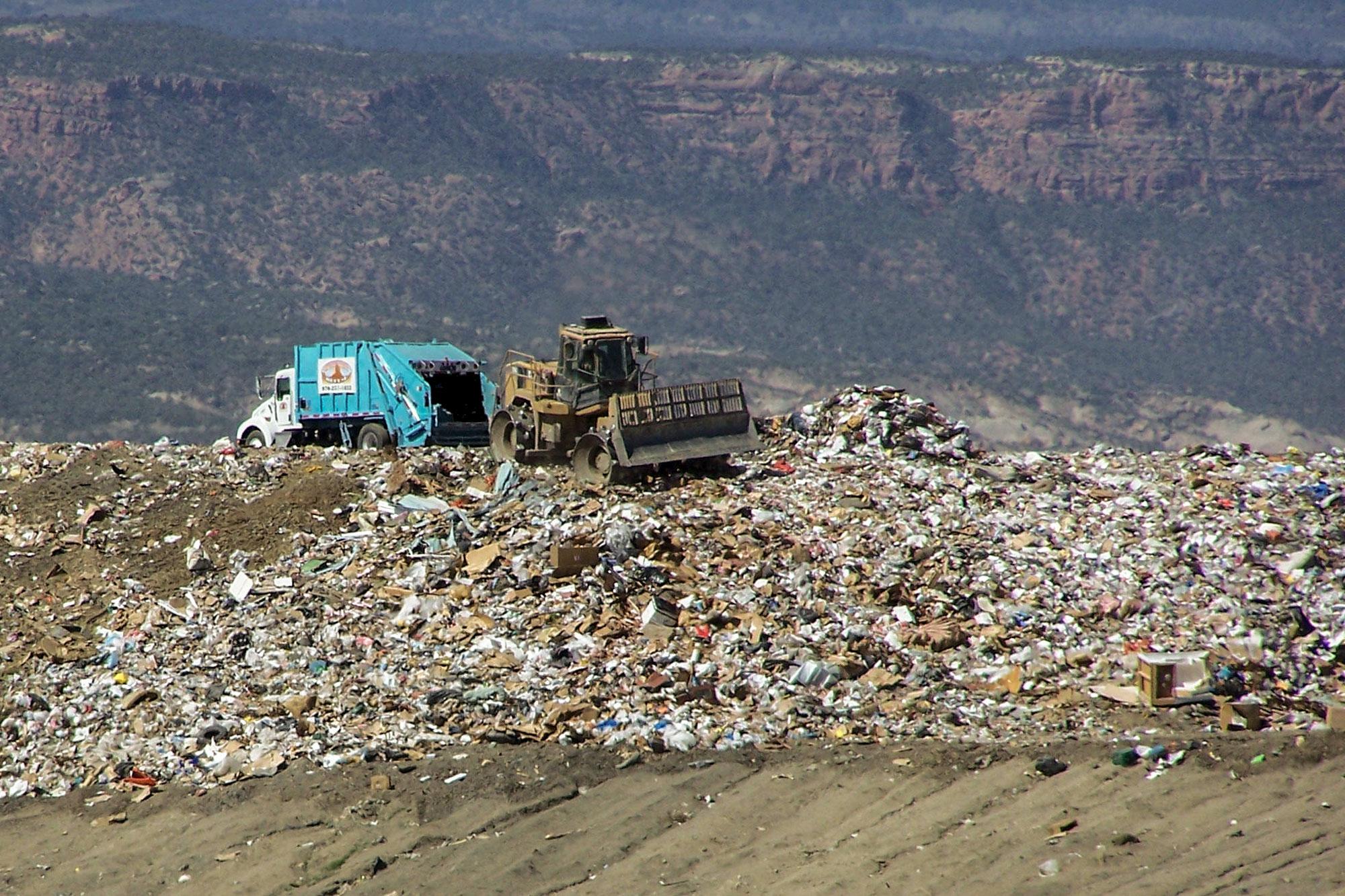
Food waste and other organic material dumped in landfills produces methane and other pollutants as it decomposes. Colorado’s 59 landfills emit a combined 1.3 million tons of carbon-dioxide-equivalent emissions every year, a little over 1% of the state’s overall greenhouse gas emissions.
“Today’s decision is a meaningful victory for the health of Colorado communities,” Nikita Habermehl, a pediatrician and advocate with Healthy Air & Water Colorado, said in a statement. “Methane is a powerful climate pollutant that also worsens the air quality issues driving asthma, respiratory illness, and other preventable health harms — especially for children and those living closest to landfills.”
The new rules approved Thursday will require landfill operators to take a variety of steps to limit their emissions, including increased monitoring for leaks and requirements on the amount and types of soil that can be used as landfill cover.
Under Environmental Protection Agency rules, 12 of Colorado’s largest landfills are required to maintain gas collection and control systems, which can capture the waste methane, or combust it in a flare system to convert it to carbon dioxide, a less potent greenhouse gas. The AQCC’s rule would extend those requirements to approximately 16 additional mid-sized landfills, though the state’s smallest operators would still be exempt. It also requires open flares to be phased out and replaced by more efficient enclosed alternatives by 2029.
“The rule approved by the commission is an important step forward on landfill emissions in Colorado,” said Alexandra Schluntz, an attorney with environmental group Earthjustice. “While this does not do everything we hoped to see, it will make a real difference for the health of surrounding communities.”
After the AQCC held a formal rulemaking hearing on the proposal in August, staff from the state’s Air Pollution Control Division last month submitted a series of revisions to the rule, weakening it at the request of waste industry groups and local governments that operate public landfills.
Prior to the vote, AQCC commissioner Jon Slutsky said the revised rule didn’t go far enough to meet the state’s greenhouse gas reduction goals, objecting to an increase in the emissions threshold that triggers monitoring requirements and corrective action, which he called the “heart of the regulation.” Slutsky moved to strike the revisions from the rule, but his fellow commissioners declined to discuss or second his motion.
“It’s always good to have a consensus,” said commissioner Martha Rudolph. “Not everybody likes what happens in a consensus, but I personally believe that the perfect should not be the enemy of the good.”