Chronic underfunding, low pay, inadequate benefits and escalating administrative demands on teachers are driving Colorado teachers away from the profession.
That’s according to the annual State of Education report from the Colorado Education Association, CEA, the largest teachers' union in the state. The report includes survey results from about 3,600 of the association’s 40,000 educators and school staff.
The top two reasons that drive educators to leave the profession are an unmanageable workload and attacks on the curriculum, educator autonomy and the profession itself.
CEA President Kevin Vick said the findings represent a persistent uphill battle for the profession.
"Although we have seen some measure of improvement in some areas, the overall picture, whether it comes to our big priorities…which would be adequate funding, respect for educators, and school safety…those still have quite a long way to go," Vick said.
The report identifies several major challenges facing today’s educators:
State of funding
Vick said it appears teacher retention numbers are improving from the crisis they were two years ago. (State retention figures lag by two years and are not yet available.)
Still, 82 percent of educators say they personally know someone who has left the profession in the past year. Vick noted that any recent salary gains for educators are being quickly eaten up by rising health care costs.
"Those costs right now are far outstripping people’s budgets," he said.
The report highlights that health insurance is rising at nearly three times the cost of living. One proposed solution is for districts to pool their bargaining power. Vick said the union is examining models in Oregon and Washington. Sixteen percent of a starting teacher’s salary goes to insurance premiums; for support staff, it’s 19 percent.
The pay gap remains a big driver of the exodus. Colorado educators earn just 62 cents for every dollar earned by similar professionals, the worst gap in the nation. The average starting salary is $42,421, while the minimum living wage in the state is $68,473, a 39 percent gap.
Many education support staff — like classroom aides, cafeteria workers, bus drivers — are taking second and third jobs just to survive.
State of the workload
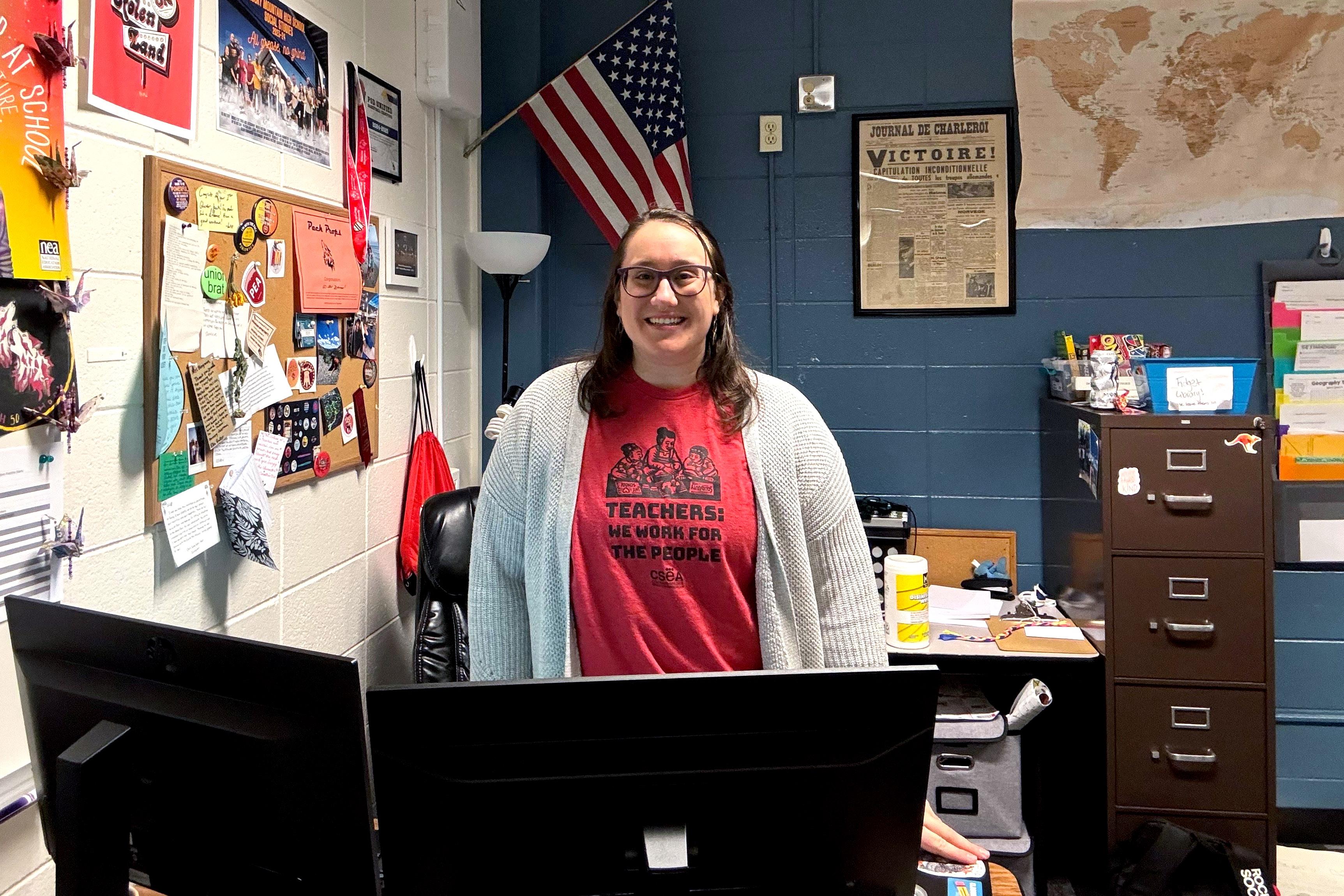
Beyond pay, the physical and mental toll is immense. Wendy Bergman, a social studies teacher at Rocky Mountain High School, describes the mental load as a constant state of high energy where "there will never... be a clear to-do list." She said the kids are the best part of the job, everything else contributes to burnout.
“There is no flexibility, and we have high workloads that can just seriously lead to burnout, physically.”
Teachers face other threats now with a declining birth rate. Bergman recently sat with a colleague who is being cut due to budget-driven enrollment trends.
"She’s an incredible teacher, but we don’t have the funding to keep her position," she said. "We’re losing a lot of early career educators."
State of respect
Educators also report a growing "precarious" feeling over what they are allowed to teach in the classroom. Bergman said that her ability to teach is often protected by only "one line in my contract." While she feels supported in her district, she said others feel pressure to self-censor.
She pointed to recent censorship trends, including Colorado Springs high schools receiving textbooks with entire chapters removed.
"To me, it just says that we’re afraid to give our students information," Bergman said. "I will never be afraid of my students asking more questions or learning more information, because that is how they develop their own opinions."
The report said the narrowing of perspectives marginalizes students. It also cited standardized testing as further constraining curriculum and draining joy from teaching.
Sixty percent of educators don’t trust the current accountability system to accurately measure student, school, and district performance, according to the survey. Findings from Colorado’s state-mandated educator survey show that when educators have influence on important decisions, they are more likely to stay in the profession.
State of safety
A shortage of mental health workers and the Trump administration’s cuts to mental health supports — currently tied up in courts — have left many schools without adequate counselors and social workers..
The report found that 50 percent of respondents have been physically injured by a student. While Bergman hasn't been injured herself, she is among the three-quarters who have witnessed attempts to cause physical harm to an adult.
She recalled a school lockdown after a social worker suffered a broken collarbone and a traumatic brain injury while trying to de-escalate a student.
"We just know that our kids’ needs aren’t being met,” Bergman said. “Their mental health needs aren’t being met."
She said the federal government cuts left her district starting the year with far fewer social workers.
2026 legislature and the “union difference”
Over the past couple of years, the union has seen wins and losses. Colorado Springs D11 lost its collective bargaining agreement, while Sheridan teachers are fighting to keep theirs.
But the report emphasized “the union difference.” Educators with collective bargaining agreements earn significantly higher salaries and report greater trust, respect and retention. Teachers and support staff in Durango and Jefferson County bargained together for the first time, securing major wins on wages and benefits.
A key legislative priority this session is to defend funding school funding in a tight state budget year. The union’s main goal is passage of a proposed bill to refer a measure to the November ballot to boost school funding without raising taxes by increasing the Taxpayer’s Bill of Rights cap tied to K-12 spending.
Despite what Vick called "headwinds," he said teachers are “incredibly resilient, skilled and knowledgeable."
"Our communities should feel lucky that there are as many dedicated professionals that are continuing in education."
Bergman said while many educators feel helpless after decades of underfunding, she remains hopeful.
"I believe we can choose to build the system where people want to stay in this job," she said. "It is a really awesome job. And it’s an incredibly hard one."