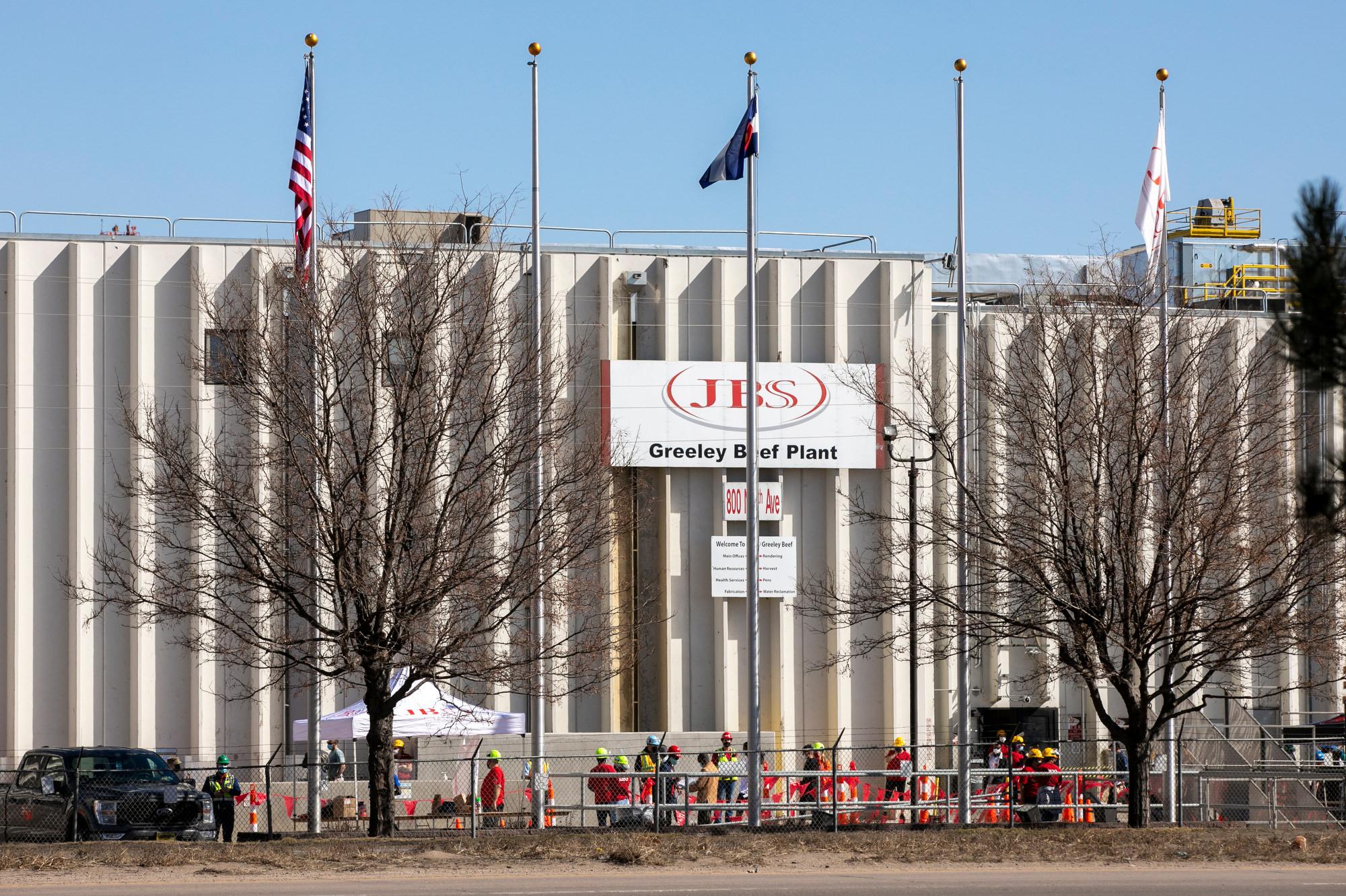
Workers at the JBS meat processing plant in Greeley voted to authorize a strike that could start “soon” if JBS doesn’t return to the negotiation table, according to union leaders who said a strike at the facility would be unprecedented.
The threatened labor action against one of the largest meat facilities in the U.S. is part of a regular cycle of the union fighting with JBS that reoccurs every few years.
“I think that they're a horrible employer,” said Kim Cordova, president of the United Food and Commercial Workers Local 7. “They don't treat workers as stakeholders in their company. This is a very vulnerable group of workers.”
Cordova claimed that JBS has violated labor law by intimidating workers and conducting “regressive bargaining,” taking away or reducing previous offers. The union has filed multiple unfair labor practices charges against JBS.
JBS did not respond to a request for comment.
Cordova said that a national agreement between the union and JBS was struck last year, but the local union in Colorado has a separate agreement, which has expired. Union workers are operating under an extension.
“They're trying to force the national agreement down our throats. They're trying to say ‘it was good for everybody else,” said Cordova, who added that the national agreement’s wage increases are too small for Colorado’s high cost of living. “It's not good enough for us.”
The union charges that workers’ hours have been scaled back and the pace of work has increased to dangerous levels.
The labor tensions in Greeley are likely influenced by the uniquely difficult economic conditions for meat packers, according to James MacDonald, research professor at the University of Maryland College of Agriculture and Natural Resources.
"For a meat packer, it's very tough. The reason being it's tied to cattle and beef prices. So cattle prices are at historic highs," MacDonald said. "The margins for packers between what they pay for cattle and what they get for beef have shrunk quite a bit."
Tyson Foods, for instance, announced last month that it is shutting down a plant in Texas as cattle costs and labor costs have risen. Other plants are scaling back hours for workers.
“JBS is also under some pressure,” MacDonald said.
The cost of food has become a major political talking point. Last year, President Donald Trump announced on social media that he directed the Justice Department to investigate meatpacking companies over the high cost of beef for consumers.
The forecasts predict that cattle prices aren’t expected to change much in the coming years, which means that costs for packers will remain high. MacDonald said there’s no evidence that ranchers are growing their herds yet to relieve supply shortages.
Cordova scoffed at the idea that economic pressures are forcing JBS to increase the pace of operations, scale back hours and sharpen negotiations over wages. She claimed that the company has never cared about the workers, even when the economics were good.
She said that about 57 different languages are spoken among workers at the Greeley plant, and they’re not ignorant to the vulnerable position they’re in as the Trump administration rolls back immigrant protections to achieve more deportations.
“Obviously, workers are really worried about what's happening, the political climate, the threats to their freedom here,” Cordova said.
Still, 99 percent of workers voted to authorize a potential strike. She said for many workers, it was the first time they voted for anything.
Cordova couldn’t recall a time when a strike actually happened at the JBS facility, and she acknowledged that workers need certainty about their future wages.
“We're not interested in dragging that out,” Cordova said. “And we will be giving JBS, if they want to come back to the table and they want to bargain, we're happy to do that. But if they do not, then the likelihood of the labor dispute, it will be imminent. It will happen.”