A federal judge in Boston blocked federal health officials last week from cutting the number of vaccines recommended for every child last week and said U.S. Health Secretary Robert F. Kennedy Jr. likely violated federal procedures in revamping a key vaccine advisory committee.
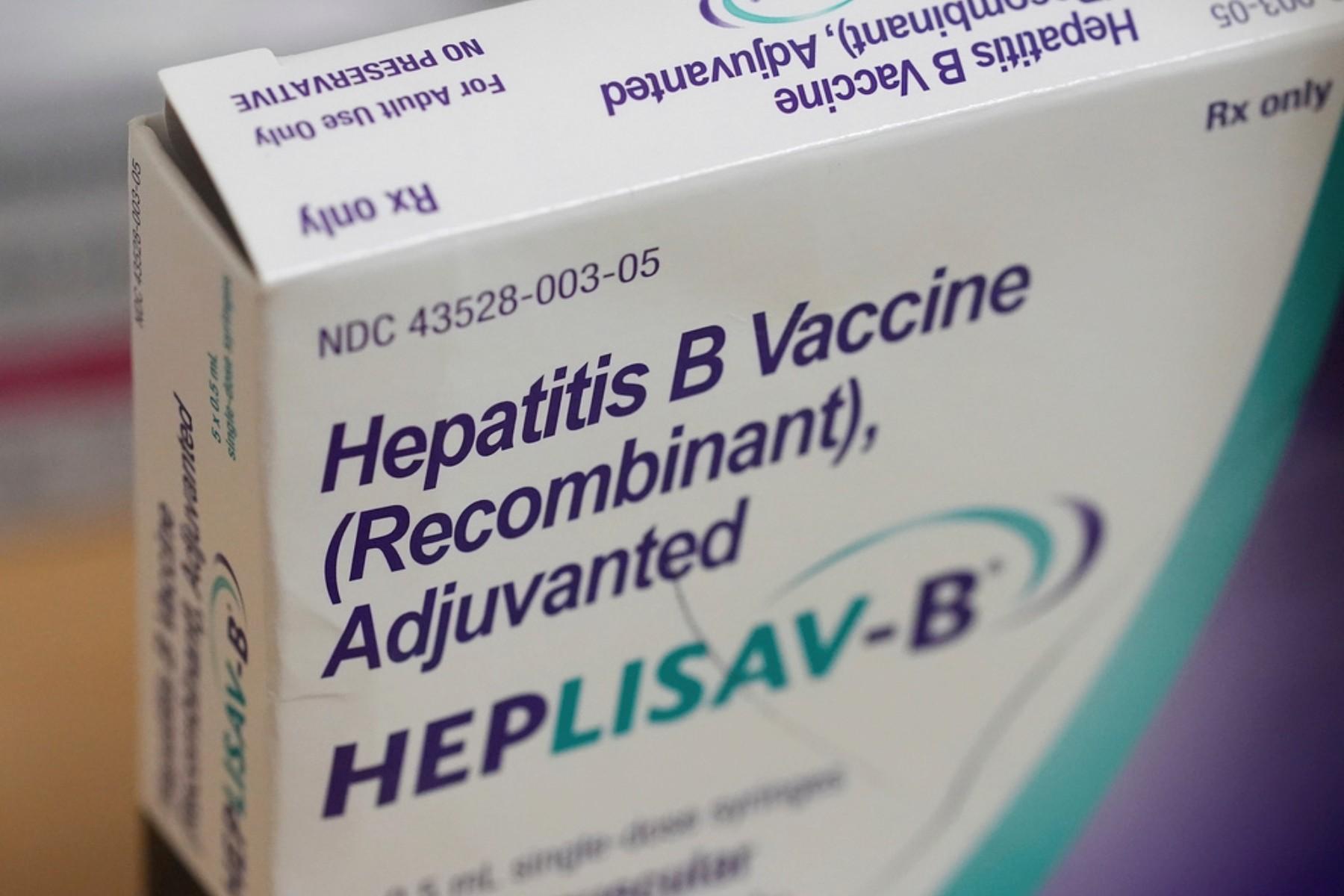
The decision on March 16 halts an order by Kennedy to end broad recommendations for all children to be vaccinated against flu, rotavirus, hepatitis A, hepatitis B, some forms of meningitis and RSV.
Because of a new law, Colorado’s board of health earned flexibility when making vaccine recommendations. It now doesn’t have to follow the vaccine recommendations of the federal Advisory Committee on Immunization Practices (ACIP), which was remade by Kennedy with people more closely aligned with him and overhauled a long-standing vaccine schedule for children.
The state’s health board can now seek guidance from some of the nation’s leading medical groups: the American Academy of Family Physicians, the American College of Obstetricians and Gynecologists, the American College of Physicians and the American Academy of Pediatrics.
The judge’s ruling also stopped a scheduled meeting of the Kennedy-appointed vaccine advisory committee, which was set to convene last week in Atlanta. Federal health officials indicated they planned to appeal.
CPR’s health reporter John Daley contacted Colorado pediatrician Dr. Sean O’Leary, chair of the Committee on Infectious Diseases with the American Academy of Pediatrics, to talk about the ruling and about vaccines in Colorado.
O’Leary also heads the recently formed Colorado Choose Vaccines, a coalition that aims to fill the gap left by the changes in federal guidance with policy proposals in Colorado, along with providing science-based information and communication.
This interview has been edited for length and clarity.
John Daley: So what was your reaction to the court ruling?
Dr. Sean O’Leary: It was good news for sure. We've had a lot of bad news coming about vaccines because of all the chaos from HHS. So this was a bright spot. I can't say I was surprised. My understanding is that the case is on very solid legal ground in terms of rules that were broken. I'm no lawyer, but that's my understanding.
Daley: What do you think the implications of the ruling are?
O'Leary: So the good news is this prevents HHS from implementing a lot of the changes they tried to make, which were really not informed by any kind of science or evidence, but really more out of an anti-vaccine ideology.
The bad news is the confusion is still already out there for a lot of families and even clinicians who've been just sort of watching the chaos from the federal government about vaccines unfold. So that is still something we're going to be dealing with, unfortunately,
Daley: And I think the Department of Health and Human Services indicated they plan to appeal.
O'Leary: Like I said, I'm not a lawyer, so I don't know exactly what's gonna happen from here. in terms of the timeline and the appeals process, etcetera. I did read the judge's ruling, and it was pretty strong. I'm not sure exactly on what grounds they'll appeal, because they were clearly in the wrong.
Daley: Just to be clear, this lawsuit had to do with the American Academy of Pediatrics and other major medical groups, but not the state of Colorado, which has some other litigation going on regarding vaccines. Correct?
O'Leary: Correct. This is a different lawsuit.
Daley: Colorado has been pushing back on the changes being made by this administration regarding vaccines. Would you say that this ruling kind of validates Colorado's position?
O'Leary: Yeah, I think that's exactly what I would say. Here in Colorado many of us got together to try to work out how to deal with all of the chaos around vaccines coming from the federal government. Part of that process was working towards changes in policy. I think that the vast majority, not only of legislators, but parents, and adult patients as well, recognizes that vaccines are valuable. They prevent disease. They prevent suffering. Colorado's efforts have really been with that in mind — that we are trying to maintain access for vaccines for Coloradans.
Daley: What kind of impacts are you seeing regarding what you were describing before, confusion in the public?
O'Leary: I talk with a lot of general pediatricians who are in primary care. I used to be a primary care pediatrician myself for many years. But in talking with my colleagues, really across the country, about what they're dealing with, there's a lot of confusion out there. Unfortunately what they're seeing is some families who weren't necessarily concerned about vaccines before. Now they're hearing the headlines saying, “Well, I hear there's controversy around vaccines, so I just wanna wait for now.” The real tragedy here is that these families are just trying to do what's right for their kids, and they're being led to not vaccinate the children, which is inevitably gonna lead to children's suffering.
Daley: We've been seeing a lot of measles spreading around the country. Colorado had 36 cases last year, way more than any recent year. We've had a very busy flu season, a lot of flu cases. Would you say that the confusion is having a direct impact on what we're seeing in terms of the spread of disease and then also about vaccination rates?
O'Leary: Absolutely. That's what this is all about. I think that seems to be the goal of HHS at the moment — to sow distrust in vaccines. And they are having a profound impact doing that. We're unfortunately seeing the results of it with measles. We're seeing a lot more pertussis than we had been seeing. That's also known as whooping cough. Then, of course, we've had a really bad flu year, and lower vaccination coverage for flu is certainly helping to fuel that. We are seeing in real-time the impacts that, unfortunately, our federal government is having on trust in vaccination.
Daley: Given what's happening, what is your best advice to policymakers, providers and parents?
O'Leary: First of all for parents, talk with your pediatrician or your family doctor if you have any questions about this. Most of the primary care doctors that I know are following this pretty closely, and we are all in alignment on what the evidence suggests is the right thing to do. The American Academy of Pediatrics, as you may know, came out with its own vaccination schedule different than what the federal government had been recommending. It is based in science and evidence and what's in the best interest of children. That schedule was endorsed by pretty much all the major organizations that are involved in pediatric vaccination, and then ultimately endorsed by over 200 other organizations after the schedule came out.
So the “house of medicine” is really in lockstep on this issue. We believe in science. We believe in protecting children and protecting families from vaccine-preventable diseases. And we are gonna continue to make those recommendations.
I think here in Colorado, we're doing a good job trying to respond to some of the federal chaos. I've seen some other states doing the same thing. The ultimate goal here, though, is to bring things back to a place where all the professional societies are working, in close collaboration with our federal government, in the best interest of the U.S. population — and not be at odds. That's the goal here.
Daley: And someday, perhaps, going back to the system that we had before. Is that the plan?
O'Leary: What I will say about ACIP, historically, it was looked at really as a model from around the world as how you make really good vaccine policy for a country. Now it is really just become theater for anti-vaccine misinformation. So the sooner that group gets back to a group that we can trust as Americans, the better.
Daley: But they would maintain that they stick to science as well. They say that they're restoring recommendations to what they see as more trustworthy science. What's your response to that?
O'Leary: As someone who's attended pretty much every one of these meetings for the last 10 years and seen how actual science is discussed and seeing what's going on now, that's complete nonsense. They can say that, but they are not discussing actual science.
Daley: The way that this traditionally has been reviewed is that you have groups like yours that are reviewing vaccines and a whole process where panels and various committees are reviewing vaccines and weighing in on the safety and the efficacy. That's not happening anymore. Is that your view?
O'Leary: It's not my view. That's the facts. Historically, the way that scientific presentations would happen is often it would be a CDC scientist, occasionally an outside expert, but usually somebody who spends their career on a given topic. And that person or group of individuals from that division would present the science behind it — whether it was vaccine safety or vaccine effectiveness, you name it. In one of the more recent ACIP meetings, they didn't have any CDC scientists present. Rather, they had known an anti-vaccine activists doing those “scientific presentations.” As I said, it is theater for anti-vaccine falsehoods. They're really not spending time discussing actual science.
Daley: Dr. O’Leary, anything else you wanted to add?
O'Leary: I'll state it again. I'm kind of speaking from the perspective of a pediatrician as well as someone in leadership at the American Academy of Pediatrics. We are gonna continue to offer really clear evidence-based recommendations. The other thing I'll mention is one of the things Secretary Kennedy did when he was giving reasoning for all of these changes to the vaccine schedule — that have been stayed by the judge — was to restore trust in the vaccine process.
And what we've seen over the last year or so has done just the opposite. Pediatricians in the American Academy of Pediatrics are far more trusted as a source of vaccine information than our federal government. We take that trust very seriously. What we do all day, every day is take care of kids. I would encourage families with questions to talk with your pediatrician or your family doctor.
| This story is part of a collection tracking the impacts of President Donald Trump’s second administration on the lives of everyday Coloradans. Since taking office, Trump has overhauled nearly every aspect of the federal government; journalists from CPR News, KRCC and Denverite are staying on top of what that means for you. Read more here. |