
This story is part of The Trip, a CPR News series on Colorado’s new psychedelic movement.
As Colorado opens up to the therapeutic use of psychedelics, healing centers where people can undergo psilocybin-assisted therapy are cropping up around the state as are companies that grow and process psychedelic mushrooms. Psylutions, a start-up based in the Vail Valley, was among the first to grow and produce the drug for Colorado’s licensed healing centers.
Psylutions founder and CEO Rhonda DeSantis sees the business as a calling. She said she was introduced to the healing power of psychedelics in the midst of a lengthy custody battle with her ex-husband.
“After having to retell the same story to … the courts multiple times, I had some pretty raw trauma triggers exposed,” recounted DeSantis. “And I had a very dear friend say, ‘Come take a small dose with me.’ And I did take that small dose and it took an instant, and I could take a breath for the first time in over a year.”
DeSantis said she repeated that same small dose three more times over the course of the year.
“By the end of that, my ex-husband showed up at an event for my child and I walked past him and said, ‘Hey, how are you doing?’ And walked right on by. Then I got about 10 feet from him and went, ‘Oh, I don't care.’ And it was such a relief and sigh of like, oh, this works.”
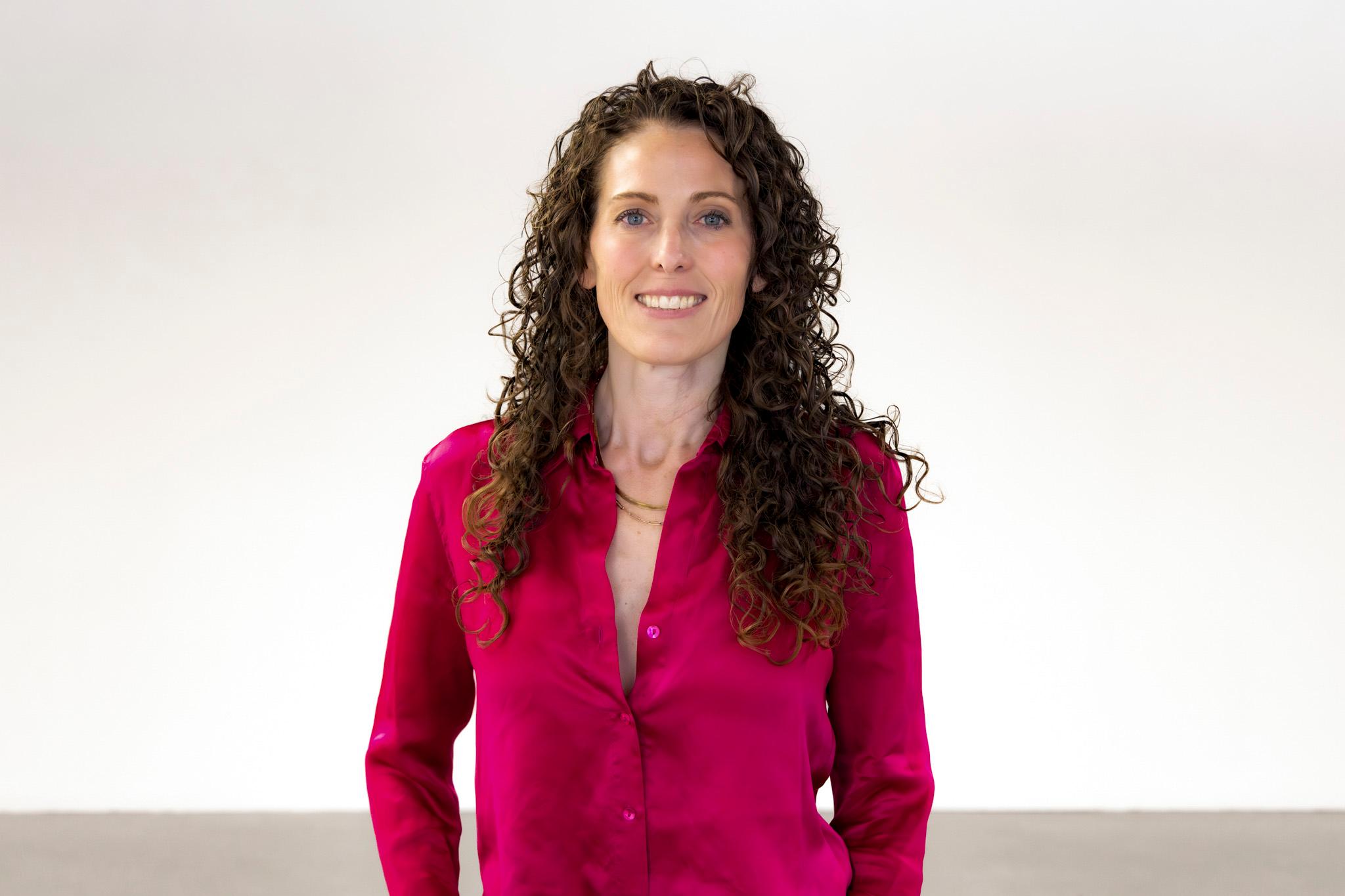
DeSantis said the experience changed the course of her life.
“It was really that moment that I went, I think this psilocybin really does something and I need to bring it to the world as much as I can,” she said.
DeSantis became a licensed psychedelic facilitator – that is, a therapist who works with people during guided psychedelic trips. She started researching how to grow and manufacture psychedelic mushrooms. Her research coincided with Colorado’s new law allowing people to take the drug at licensed healing centers in the state. And, about a year ago, DeSantis started building out the company.
Psylutions is tucked away in a nondescript office building. It operates in a highly sterile environment with strict rules to avoid contamination. Visitors are required to wear full-body suits and masks before entering the cultivation and manufacturing rooms

The company’s name is a play on the word psilocybin, which triggers the psychedelic component of magic mushrooms.
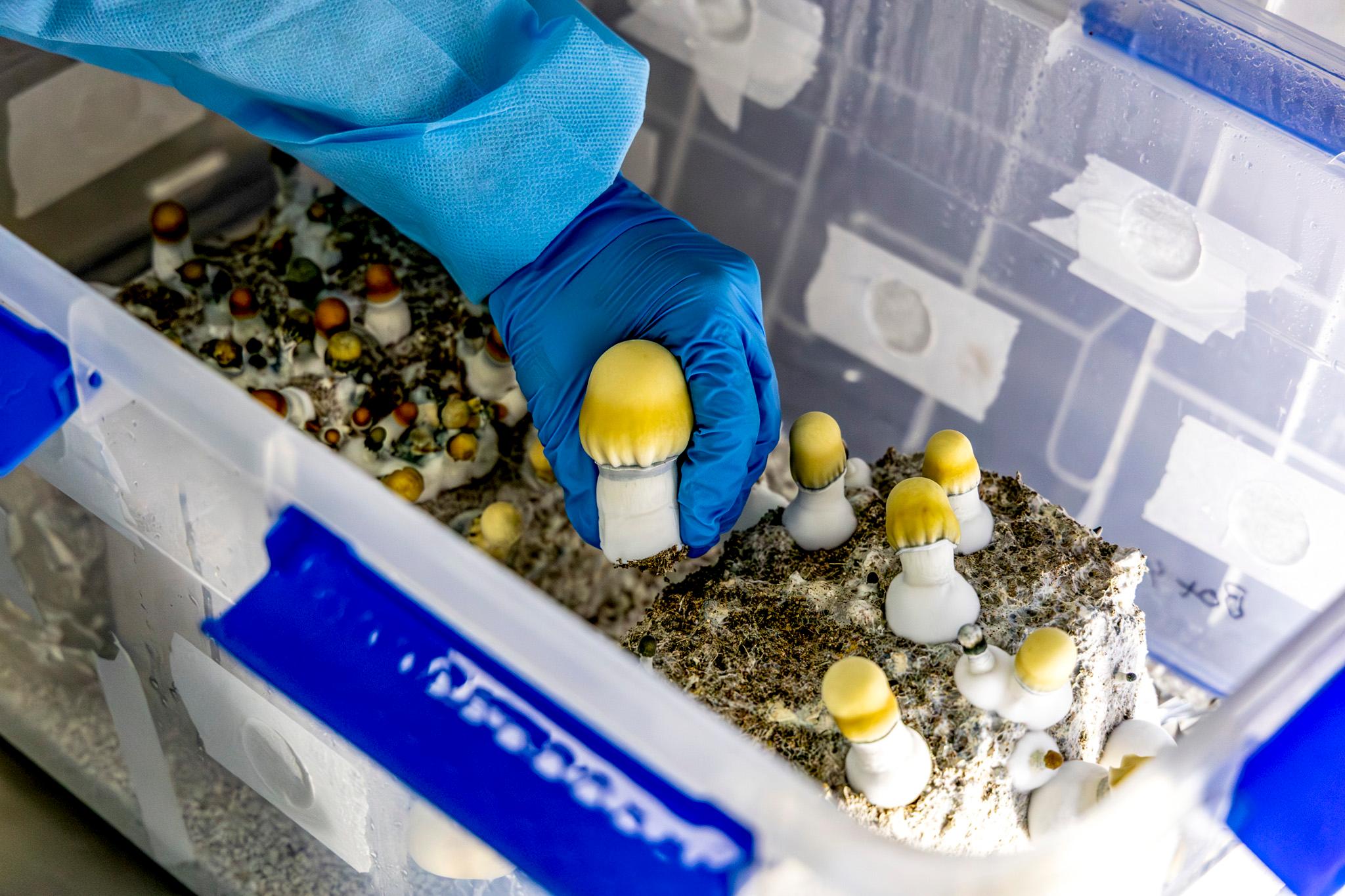
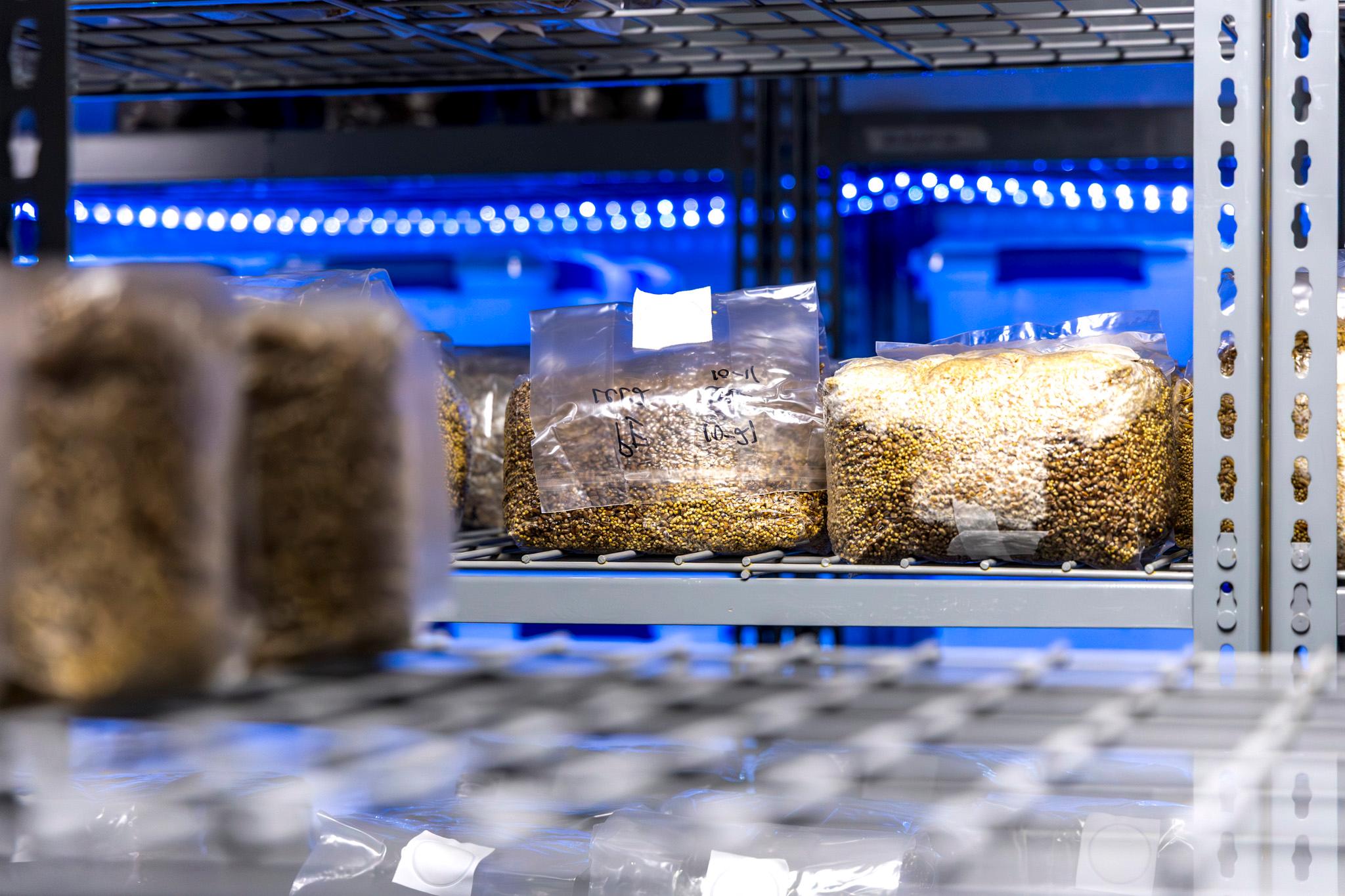
The cultivation room where the mushrooms are grown is organized by stages of mushroom growth, beginning with mycelium, which is the root-like part of the mushroom. It grows in neatly-labeled glass jars filled with a golden colored liquid, which makes the room bear some resemblance to the laboratory of a mad scientist, albeit a sterile and highly-organized one.
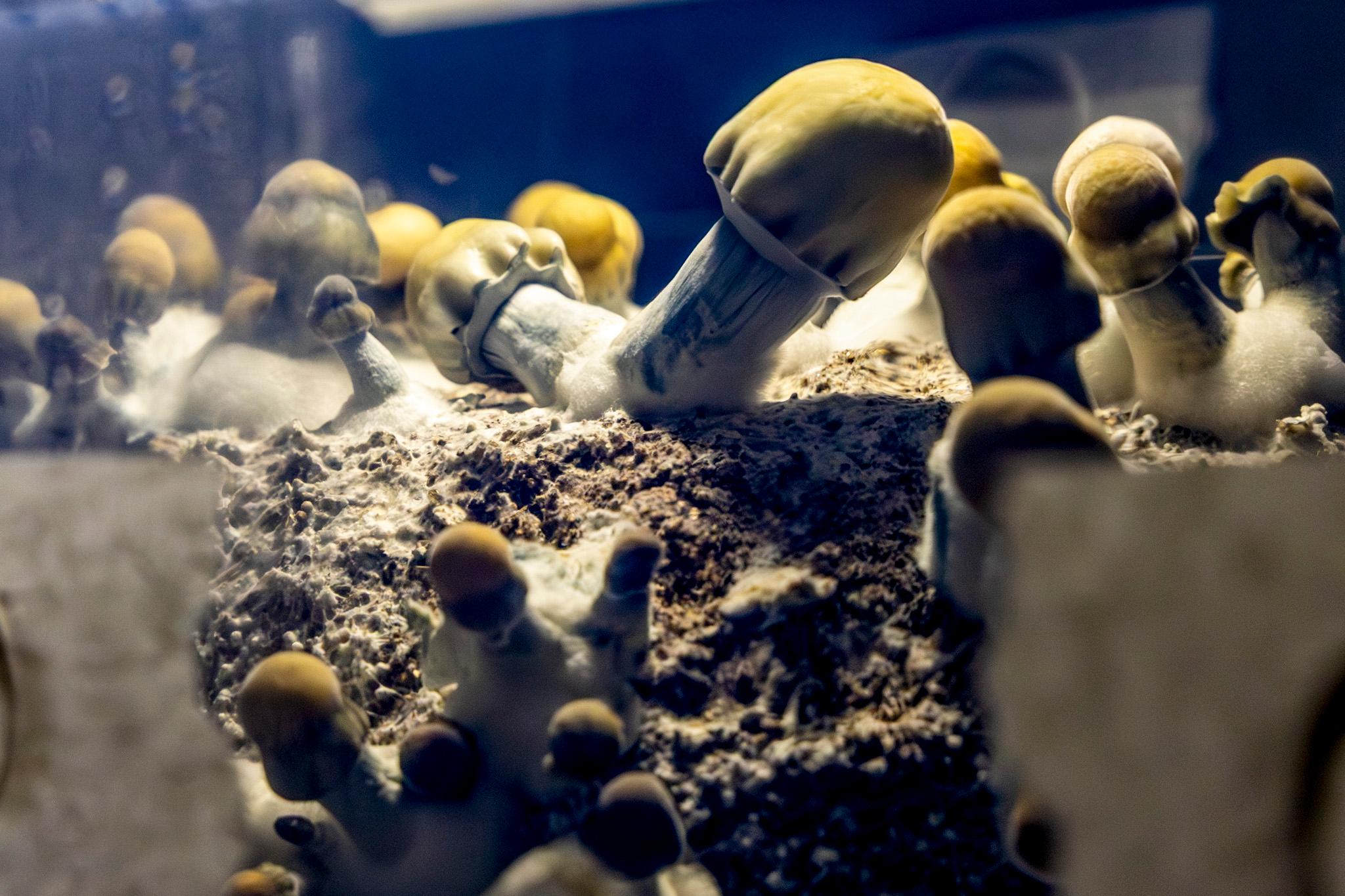
Inside the glass jars are what look vaguely like cotton balls floating around, which is the start of the mycelium growing. After that stage, they’re transferred into containers of grain where they grow further before being mixed into a compost, often formed in blocks. The mushrooms sprout from the blocks and begin to look like any mushroom one might see in the wild, although these are all hallucinogenic ones.
The 17 mushroom varieties Psylutions grows have descriptive names, like “bluey ghost,” which has a blue ghost-like skirt and “penis envy,” which has a distinctly phallic shape.
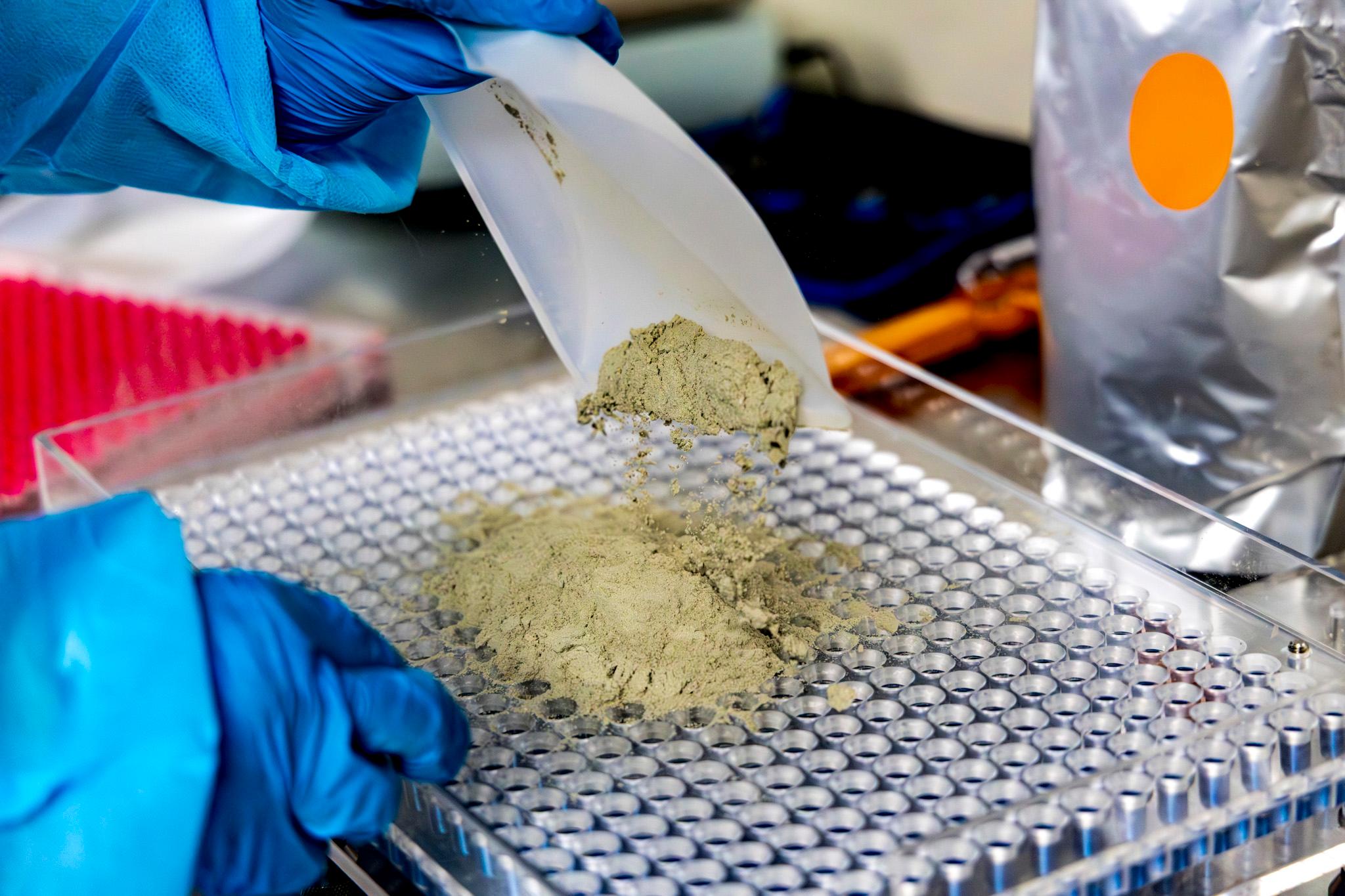
After they’re harvested, they are dried and ground to a fine powder, then homogenized and tested. DeSantis says the process is critical since each mushroom, even those of the same strain, can have different amounts of psilocybin.
“We've seen one mushroom pin grow right next to another mushroom where one has 30 milligrams in it and the other one has four,” said DeSantis. “So when people dose in whole body mushrooms, you get an estimate of what your dose could be, but there is no precision dosing.”
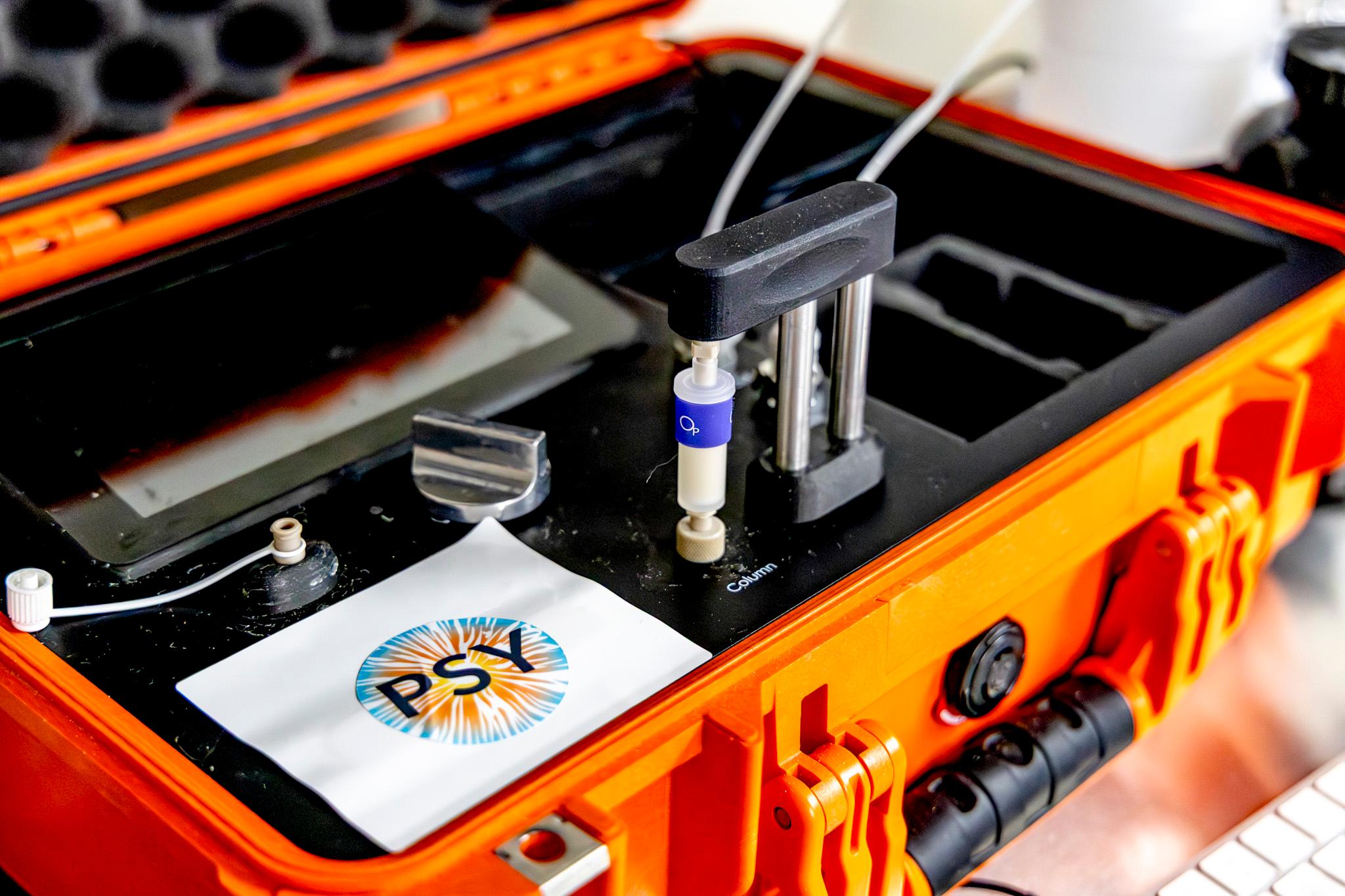
Colorado’s legal framework requires extensive state testing to ensure dosing is accurate. The company also does its own testing. Once the tests are complete, doses of the powder are inserted into capsules or mixed into gummies, tea and company-made chocolate truffles.
Psylutions products can only be sold to Colorado’s licensed healing centers. DeSantis said some strains are tailored to specific populations, like the one called “Purple Envy.”
“It's ideal for complex PTSD trauma patients, sexual assault survivors, and domestic violence victims, as well as anyone who's had longstanding trauma,” said DeSantis. “But it also works for people who have anxiety and depression.”
Some clinical studies have shown psilocybin-assisted therapy may also help ease the fear of death in terminally ill patients so Psylutions has developed a strain targeted to people with chronic or terminal illnesses.
“They're dealing with not only grief of loss of the life that they had, they're often experiencing great pain,” she said. “There's a lot of anxiety about the future, and there's a lot of depression that comes with it.”
Desantis acknowledges some people might be apprehensive about taking a dose of psilocybin.
“Maybe they had some experience back in the day and a ‘bad trip’ potentially,” she said. “But in the legal setting, it's actually quite safe and controlled.”
DeSantis said her hope is that all companies in the psychedelic space meet the high bar that any drug manufacturer is required to meet.
“We really want to make sure that we're moving psilocybin into the medical realm and not just something that has grown in someone's basement next to their dirty tennis shoes or in someone's garage in a tent,” she said.
While the company aims to keep the cost of the drug down, DeSantis said it’s a challenge due to the time and money required to grow, manufacture and test the product. The cost of a course of therapy at a healing center, which involves hours of time with a trained therapist, can cost between a few thousands dollars up to $10,000 dollars, DeSantis said. But, she said, there are discounts available for certain patient populations that might not be able to afford expensive therapy.