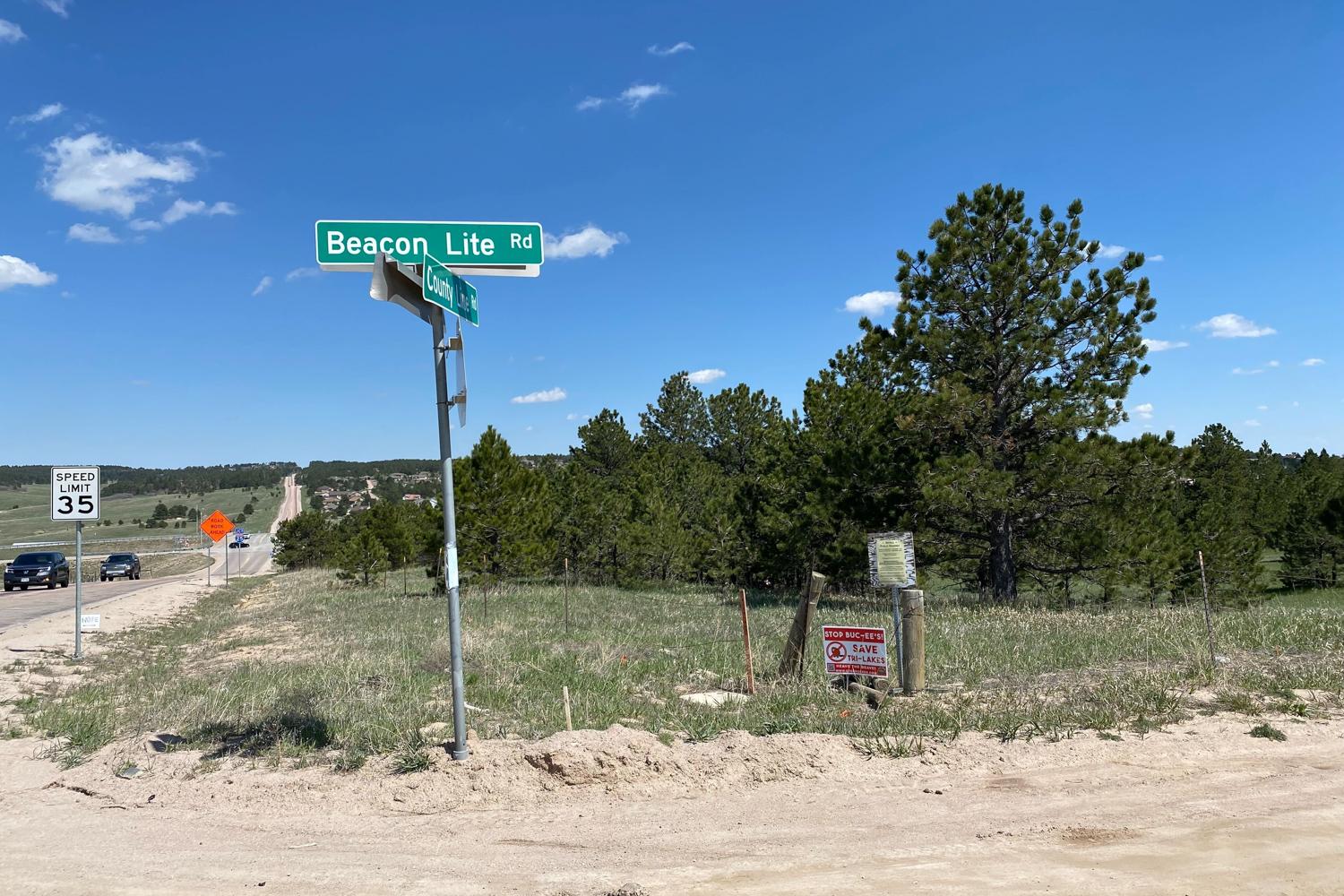
More than 11 million gallons of water a year could be pumped out of the ground from two future wells at the proposed site for a new Buc-ee’s Travel Center adjacent to Interstate 25 near Monument Hill. One of the wells could be drilled as deep as 2,250 feet into the Arapahoe aquifer layer of the geological formation, the Denver Basin.
The location is the same place most recently under consideration by the town of Palmer Lake before Buc-ee's withdrew its application for annexation in February.
Many area residents are opposed to the proposed mega travel plaza. Their concerns include ongoing groundwater depletion and the effects of large-capacity wells on their groundwater supply.
Colorado Division of Water Resources Deputy State Engineer Sarah Brucker said the agency issues permits based on state law and rules, including those regarding the Denver Basin and statewide non-tributary groundwater.
State officials make calculations based on the size of a particular parcel of land and the state’s determination of the amount of water in the aquifers below that site. That number is divided by 100 to come up with an annual figure to determine how much water would be allowable for a new well. That’s because Denver Basin aquifers are considered nonrenewable resources, and state law is aimed at having the water in them last for at least 100 years. County law requires an even greater benchmark for new developments, at 300 years, and suggests that the Denver Basin currently supplies that standard reliably.
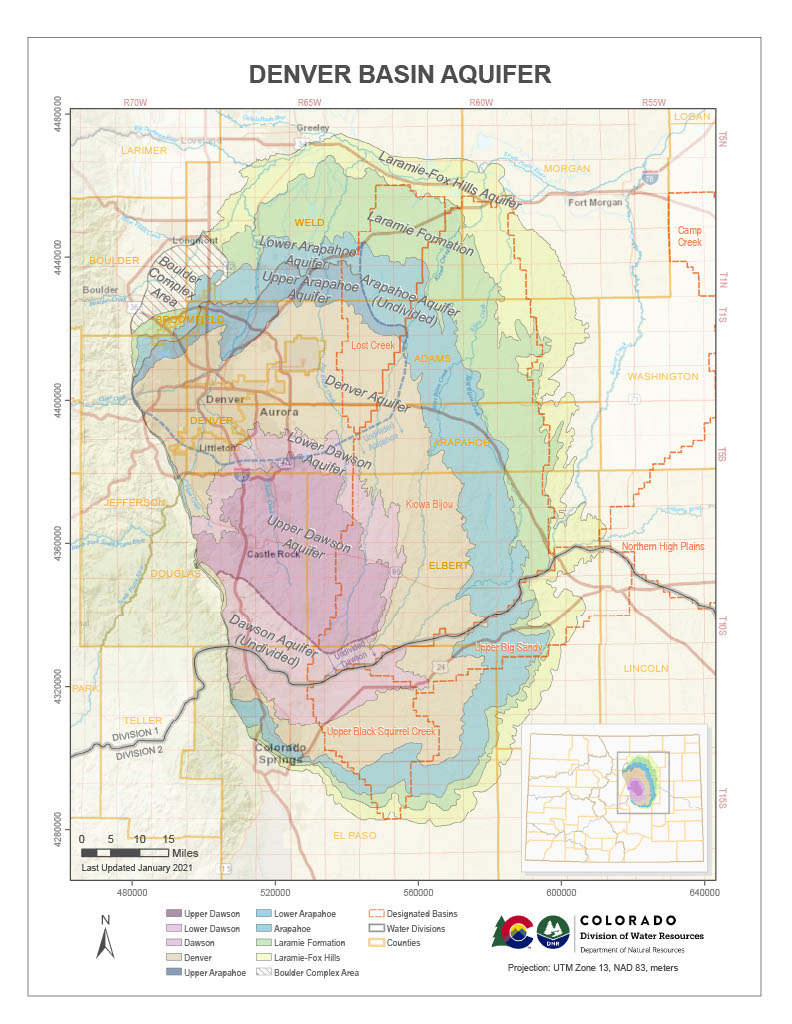
But others say that these calculations are based on information that needs to be updated based on climate change, population growth and other variables.
“If there's new data that comes up, the rules can be amended to incorporate that data,” Brucker said. “But we cannot impose additional restrictions on the evaluation of a well permit or the issuance of a well permit beyond what is in statute.”
Legislation would be required to change the statute governing the Denver Basin and other relevant laws.
But, if someone thinks a permit was incorrectly issued based on current rules and laws, Brucker said, “they can request a hearing to either modify, adjust the pumping rate, adjust the volume, or revoke the well permit, either if they think that it was issued improperly or if they think it will cause injury to their well.”
An independent state hearing officer would determine if an action should be taken. Brucker said the agency has been contacted by at least one person who plans to request a hearing. She said that once the paperwork is filed, the process could take anywhere from a few months to as much as a year. She encourages anyone who wants to file a request for a hearing to work with an attorney.
The new well permits were issued on March 19, 2026, to the current owner of the property, Monument Ridge West, LLC (Chris D. Cummins).
One of the permits is for the Denver Aquifer, calling for a depth of between 1230 and 1795 feet and pumping limited to 10.9 acre feet per year. That's more than 3.5 million gallons annually.
The second permit is for the Arapahoe Aquifer at a depth of 1825 to 2250 feet and is limited to 21.9 acre feet per year or more than 7.1 million gallons annually.
Each well would be limited to pumping at 150 gallons per minute, and must be more than 600 feet from any existing wells.
- Aquifers: The groundwater in Colorado’s wells and how it gets there
- Many people on the Front Range depend on water from the Denver Basin. But the underground supply isn't infinite
- Want to drill a well for your home? Some rules in Colorado might surprise you
- Buc-ee's withdraws application from Palmer Lake