More reporting on the Evergreen shooting can be found here.
The Jefferson County Sheriff’s Office said its decision to release hundreds of pages of unusually detailed records tied to the Evergreen High School shooting came down to two things: public transparency and the hope that understanding how the tragedy unfolded could help prevent another one.
On April 23, the agency released more than 600 pages of investigative reports, witness statements and supplemental evidence records related to the Sept. 10 shooting at Evergreen High School — an out-of-the-ordinary disclosure in a school violence case.
The documents provide one of the fullest public looks yet at what happened that day, including law enforcement response details, interviews with people who knew the suspect and previously unreleased context surrounding the investigation that followed.
For Jefferson County, where the Columbine massacre permanently reshaped active shooter response and public scrutiny, the release also reflects a continuing tension between transparency, trauma and accountability between law enforcement and the community.
In the months and years following the tragedy at Columbine, parents scrutinized the way documents were released and lawsuits were subsequently filed.

A spokesperson for the Jefferson County Sheriff’s Office said many lessons were learned during that incident, which resulted in both an expedited law enforcement response to the Evergreen shooting and the manner in which the documents tied to it have been released.
Because the suspect is dead and there is no trial pending, the agency said officials made a deliberate decision to disclose more than they might in a typical criminal case. The sheriff’s office has, however, heavily redacted the released records to protect the identity of the surviving juvenile victim and other legally protected documents.
The agency told CPR News that its guiding principle leading up to the release was straightforward: if officials could not clearly justify withholding information, they believed it should be released to the public. The move is a stark difference from the school shooting that took place in Jefferson County in 1999, when evidence about Columbine was released in bits and pieces or, in some cases, withheld. It often confused survivors and community members, leaving more questions than answers and occasionally led to lawsuits.
CPR News requested interviews with the sheriff’s office about the newly released records, but they declined further comment, saying the agency had decided to forgo additional interviews on the record.
What we knew — and what’s new
Authorities had previously confirmed that a male student opened fire at Evergreen High School on Sept. 10, 2025, injuring 18-year-old Matthew Silverstone and another teenager before dying from a self-inflicted gunshot wound. Officials had also described a large emergency response and a complicated reunification process for students and families.
The newly released records add substantial detail.
They include more precise timelines of how the shooting unfolded, how deputies and officers from dozens of agencies moved through the campus, and how nearby schools and buildings were secured while authorities worked to determine whether the threat had ended.
The files also contain interviews with the suspect’s family members and others who knew him, along with descriptions of items found in his home and on his person. Those accounts provide new insight into his behavior, reported mental health concerns, social isolation and interests in extremist rhetoric.
In a Sept. 17 interview, the suspect’s sister described him as quiet, creative and increasingly withdrawn as he entered high school.
“Regarding his mental health, [sister] noted that [suspect] doesn't want to talk about it, but that she has seen him as withdrawn at certain periods of times. She has worried about him,” an interview summary reads. “[Sister] talked to him about addressing his mental health concerns but [suspect] did not feel like he needed it.”
The interview went on to describe several conversations about fringe ideas discussed by the suspect and his sister, including his thoughts on and use of terms like “femoid.”
“[Sister] didn't like him using that word because it might be coming from incels. She said he told her and she looked it up, and that 'femoid' referred to female humanoids, and it was a dehumanizing term to use for women,” the interview description reads. “She didn't feel like [it] was entirely dismissing her but at the same time, he didn't seem to think it was that serious or hurtful.”
Several witness interviews, including the sisters’, indicate the suspect participated in the school’s Gender and Sexuality Alliance as an ally. She also told investigators he had previously been in a relationship with another boy. Other interviews show some GSA members believed they were specifically targeted during the shooting. Some witnesses reported hearing anti-LGBTQ+ slurs before gunfire began.
As investigators worked to better understand a motive and possible warning signs, they documented a separate and troubling interest in past school shootings, weapons, Nazi World War II memorabilia and disturbing online material found on the shooter’s social media accounts.
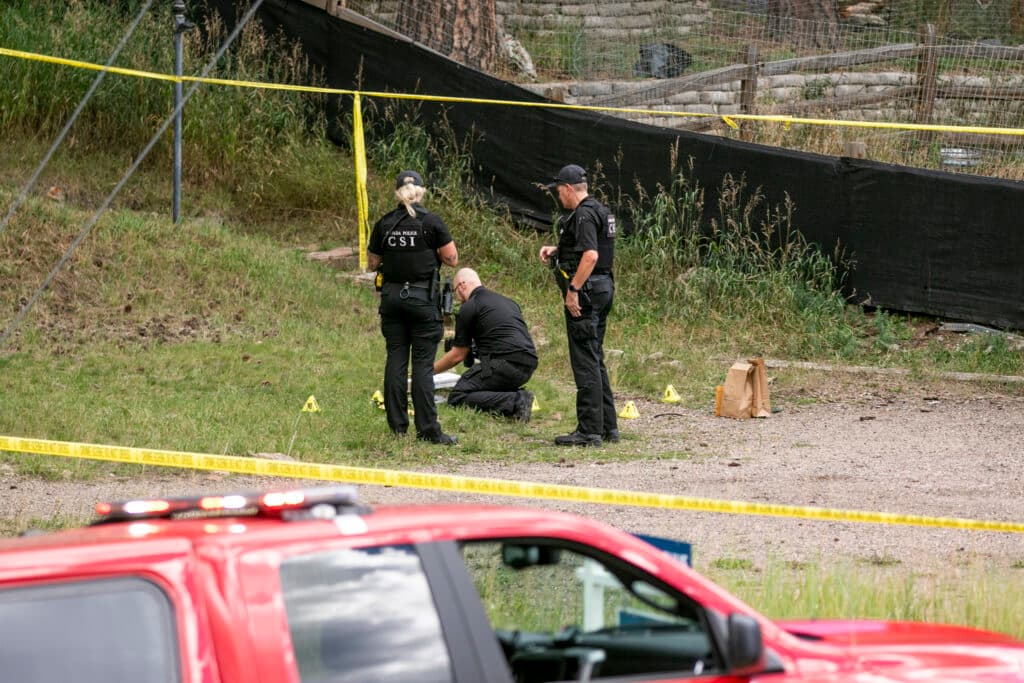
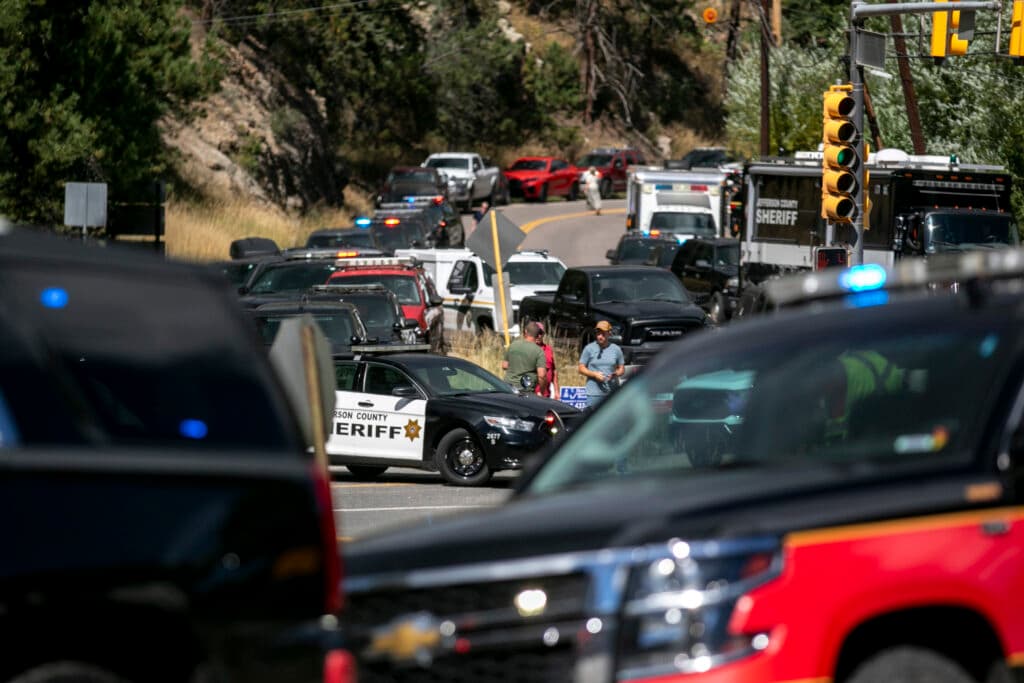
Additional records in the release detail the chaotic reunification of frightened students with families, the scale of the law enforcement response and the extensive follow-up investigation in the hours and days afterward. About 30 agencies responded the day of the shooting, including SWAT officers assigned to a weekly training exercise, police from outside jurisdictions, K9 units, bomb squad crews and drone operators.
The files also detail the interaction with the suspect, a police officer and a supporting armed security guard, who both ordered the teen to drop the weapon after he shot Silverstone twice at close proximity. The suspect was initially heard shouting that he would drop the weapon before quickly shooting himself.
Accounts from investigators at hospitals as they met with the families of both Silverstone and the suspect are also included in the release.
The documents also show that the suspect’s family members and many of the students he attended school with did not see the warning signs that became more obvious in the aftermath and during the investigation.
Some parents say records don’t equate to full transparency
Evergreen PTSA President, Cindy Mazeika, said the release has not resolved what she sees as the community’s most important unanswered question: how the teenage shooter got access to the gun used in the crime.
Mazeika said she remains frustrated that the broader investigation was closed without what she considers a full accounting of whether Colorado’s safe storage laws were violated at the suspect’s home.
“We have laws in the state of Colorado that require the proper storage and protection of guns or any sort of weapons away from minors. Desmond was a minor. They were supposed to securely store that; obviously, it didn't happen. But [the sheriff’s office] didn't go after that, and because of that, there were people that were hurt and the whole community traumatized,” she said.
Mazeika said she believes releasing documents after closing the case in February without pursuing a further investigation into how the weapon was stored felt less like accountability and more like officials “washing their hands of the situation.”
In January, the suspect’s parents’ attorney notified investigators that a family member was the owner of the firearm used in the crime. The letter claimed the suspect did not have access to the handgun, as it was a family heirloom that was rarely seen or used and was stored out of sight in a locked gun safe. DNA evidence on the weapon also revealed no match to the suspect’s parents, which resulted in the closing of the investigation.
Still, Mazeika said she does trust law enforcement to protect the community and that the school itself feels safer now.
“They have put in a lot of security measures that I think are really good and thoughtful. I think it is a safe place now,” she said. “There is still the trauma of the kids and teachers that you just have to work through. That's the part that breaks my heart.”
She credited administrators, parents, the student senate and staff with implementing thoughtful trauma-informed support and physical changes to classrooms and lounges at the school as they continue to cope with the incident.
Mazeika said while the PTSA does not intend to pursue additional legal action in the case, she hopes that individual families may consider it. “I don't know if they have the energy or the resources to do that. We're all exhausted from this and wanting to move on, but that's up to those families that were directly impacted,” she said.
The effort behind the records release
The records release in this case was a significant undertaking and an apparent effort toward unabridged public access to the investigation.
Jefferson County Sheriff’s Office director of public affairs, Mark Techmeyer, estimates that nearly all of the agency’s roughly 200 employees had some role in the overall response or compilation of the released records — from deputies on scene to detectives, evidence technicians and records personnel.
The release also came at a hefty price. The sheriff’s office and Mazeika confirmed the first records request associated with the file was fulfilled at an estimated cost of roughly $2,000 in staff time and production.
Once records have been paid for, redacted and produced, Colorado's open records practices generally allow future requesters to receive the same materials at a lower administrative cost.
Media organizations that requested the files in the immediate aftermath, including CPR News, were included in the initial release for free. Future requesters are expected to pay a standard $3 fee.
Body camera footage has also been requested and is expected to be released at a later date. It is unclear at this time who requested the release of the video and for what reason. Mazeika worries about what the publishing of those videos might mean for survivors, but recognizes that they are public record.
“I know that there's a lot of people in the community who are upset to have those videos out there. I don't want to watch that,” she said. “I know when that happens, that'll just be another open wound in the community.”
A shared goal of prevention
The files released last week include deeply personal information about the suspect’s behavior, family perspectives and social isolation — the kind of material agencies typically release sparingly after acts of violence.

Officials at the sheriff’s office said they were aware of the sensitivity, but that releasing the information may offer perspective and potentially help families, educators or community members recognize concerns earlier in the future.
Mazeika said the larger challenge now is learning how to move forward. That includes helping incoming freshmen feel safe, deciding how the school community wants to mark future anniversaries of the tragedy and recognizing that trauma reaches far beyond those physically present that day.
“We're thankful that our victims survived even though they were absolutely impacted … that's really, really important, but yet there's still a level of trauma that our community has to go through,” she said. “We just want to learn how to prevent this in the future. How do you see the signs? How do you educate people? Hopefully someday there'll be a playbook to prevent it.”
- Parents of Evergreen High School shooter will not be charged
- Second Evergreen school shooting victim is 14-year-old boy, family says in first public statement
- JeffCo Sheriff’s Office provides timeline of shooting, addresses rumors. District prepares reopening plans
- Evergreen High School shooter dead from self-inflicted gunshot wound, one student remains in critical condition