Colorado State University is opening a new $230 million veterinary hospital and education complex.
The Veterinary Hospital and Education Complex is the “largest and most comprehensive in the Intermountain West,” the school said in a press release.
The 213,000-square-foot facility (roughly the size of 3-and-a-half football fields) will provide veterinary education, clinical training, animal care and research that gives insights into the health of both animals and humans.
“It really opens up a lot of possibilities and allows us to realize our vision for the new curriculum and how we're going to be training veterinarians of the future,” said Melinda Frye, associate dean for veterinary academic and student affairs.
She described the new curriculum plans, which are taught to students pursuing a Doctor of Veterinary Medicine (D.V.M) as a first-of-its-kind educational model. It prioritizes “team-based learning, hands-on clinical training, and student well-being,” according to the release.
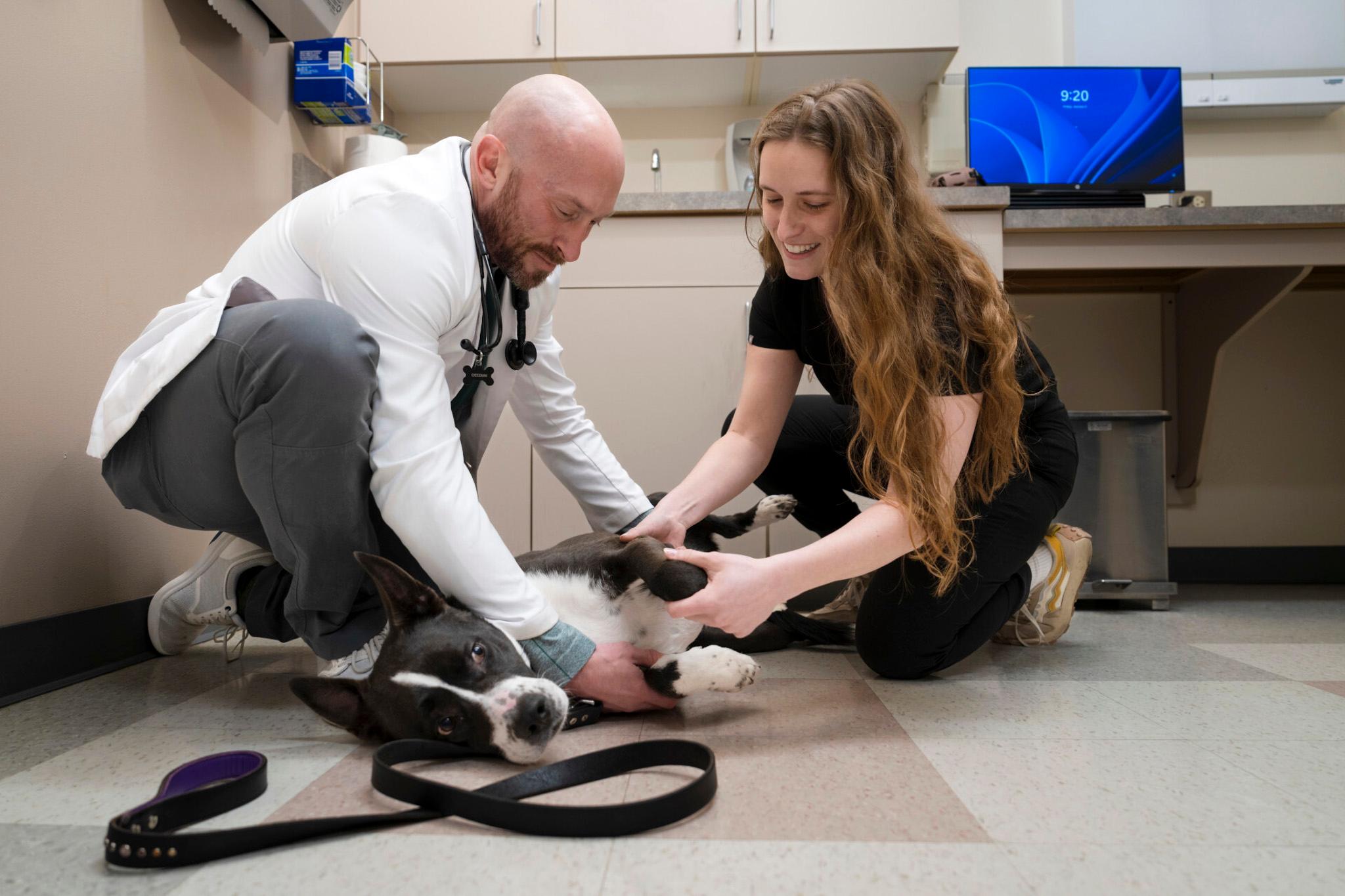
The curriculum follows an approach more akin to that used in human medicine education. Students will now start working with patients in their first, rather than third, year of vet school.
“This new veterinary hospital and education complex enables us to bring those first and second year students over onto the clinical campus,” Frye said, “which is really exciting for them to be that much closer to where the action is.”
The new facility allows the school to expand both vet student enrollment — by 20%, with the addition of 30 students annually — and its ability to care for large and small animals.
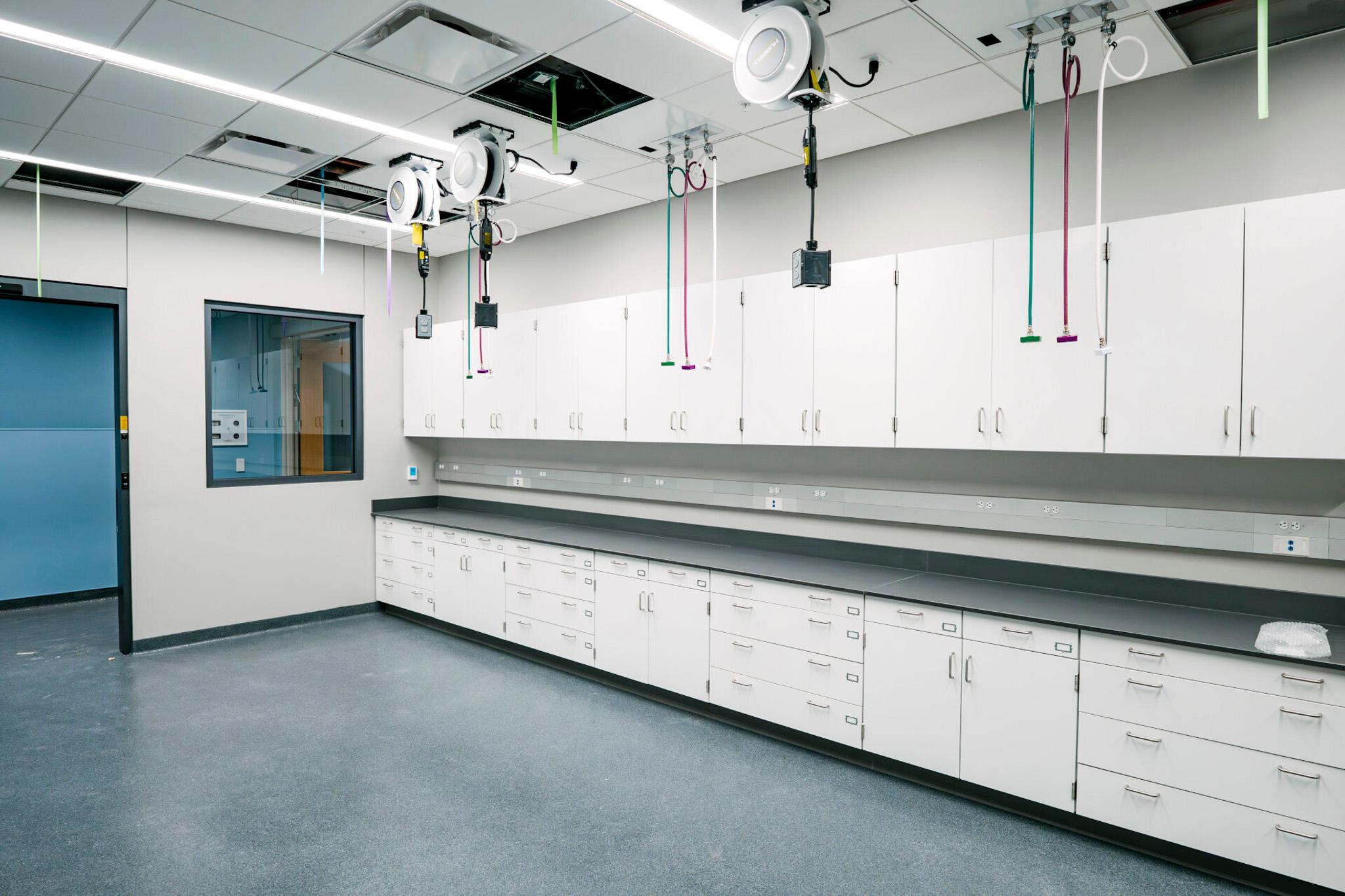
Currently CSU treats 42,000 animal patients a year and performs half a million diagnostic tests. The new hospital has 24 new exam rooms, allowing for expanded care. The university, state of Colorado and private funds paid for the complex.
CSU’s Veterinary Health System has 700 employees, working in more than 25 veterinary specialties including oncology, ophthalmology and orthopedics.
CPR’s health reporter John Daley spoke with with Melina Frye, associate dean for veterinary academic and student affairs
This was lightly edited for clarity and brevity.
Daley: Give me the big picture. You've got this brand new facility. What are you getting from the new facility that you didn't have with your existing complex?
Frye: Certainly it expands the services that we're able to provide to pet owners in our area and indeed in the region. So, our primary care service, which is analogous to a practice that you would visit in your neighborhood or your city, has been expanded by several clinicians as well as space-wise. We'll be able to work with a lot more folks and a lot more patients through that service. We also are moving our urgent care and critical care services into that space as well as emergency care. So greater space, greater functionality, just even better patient experience and client experience as well.
Daley: This facility will also enhance the learning experience for your students?
Frye: It does a few things really. No. 1, it's quite a bit bigger than our old facilities and historically, students in years one and two have been on the main campus, and students in years three and four have been on this clinically focused campus.
This new veterinary hospital and education complex enables us to bring those first and second year students over onto the clinical campus, which is really exciting for them to be that much closer to where the action is. And then it also, just by virtue of that and by the very intentional well-being space that's been created in this building by the architects, it really lends itself to community peer to peer support, students interfacing with faculty more casually and more regularly. So it's very exciting in that regard as well.
But certainly just the sheer number of students in the building will be tremendous. And then it allows us to also admit 30 additional students per class, which will bring us up to about 180 individuals in each class, which really goes a long way in terms of helping with the shortage of veterinarians in all realms, including rural practices, less conventional realms like public health, infectious disease, as well as what we think about most typically, which is veterinarians in private practice.
Daley: You also treat large animals and you'll have improved facilities for those animals too, right?
Frye: When we talk about primary care, certainly the primary care space is in the VHEC [Veterinary Hospital and Education Complex] but then we also have a brand new livestock hospital and a not very old equine hospital. That's beautiful as well. About 70% of our graduates go into private practice and about 60 plus percent go into small animal exclusive. The remainder have some component of either mixed or large animal exclusive emphasis. And we admit about 25% of our incoming students either come from a rural area or have expressed interest in rural practice of some sort. I think that's a very important point, is that this program really is designed to teach students how to be problem solvers and how to engage in sound clinical reasoning, whether that be in an exam room with a cat or whether it be out in a feedlot talking to a producer. It really teaches our students how to approach a lot of different roles within the profession.
Daley: How will this benefit research, which is another big focus at CSU?
Frye: Our clinical trials program is very strong, and that will only be strengthened by increased caseload. And certainly anytime that we bring in larger case numbers, we create a greater database for research. And so we're really looking forward to promoting that aspect of the hospital. So we have the service component, the research component, and the educational component.
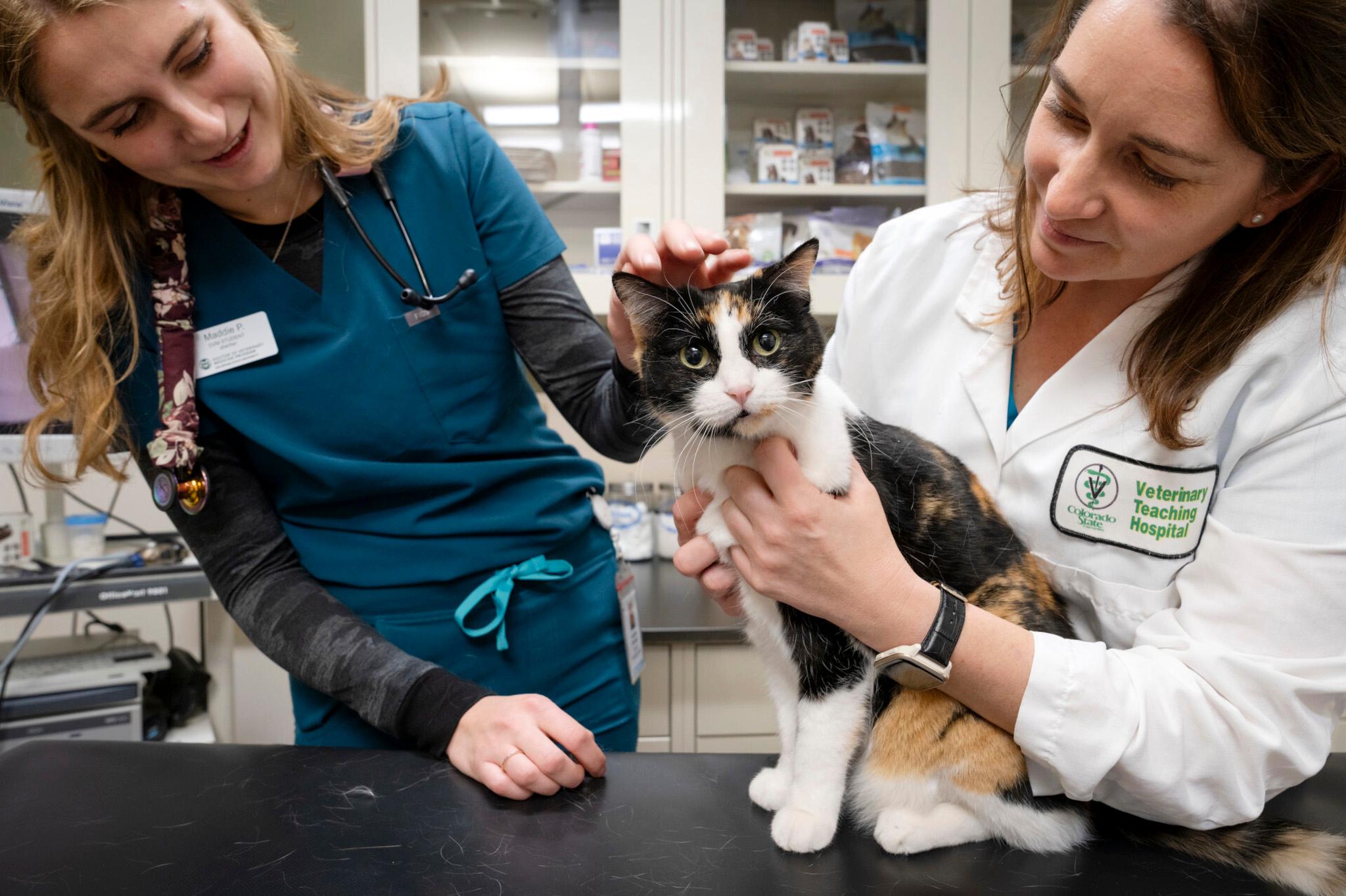
Daley: This will be one of the largest facilities of its kind in our region. I mean, nationally, maybe one of the premier facilities like this?
Frye: Well, we'd like to think so. The architects have certainly worked on educational facilities at other campuses, but we really do believe this is unique in that there's been, well, No. 1, the certification that really pays attention to things like air quality, temperature, natural light, healthy food sources that is very unique amongst educational programs such as this. And so we're very excited about what that can do for the well-being of not only our students, but our faculty and staff and clients as well.
But yes, to have a large facility like this that houses all four years has plenty of laboratory space, plenty of simulation space to accommodate the learning needs of the students, and then also has large classroom space that is unique in that we have small group tables within that large classroom.
So in other words, an educator could present a topic as one would conventionally standing up in front of the room and talking to students. But then importantly, there's that opportunity for more engagement and application of that information so that educator might say, “Hey, here's some information on the heart, and now I'd like you to take this information and here's a cardiac case that I'd like you to work through using what you've just learned.” And so really that point-in-time application I think also is, not that it's unique to CSU, but to have these two state-of-the-art large group classrooms with that kind of capability is quite unique.
Daley: The programs there are for both undergraduates and graduate students, is that right?
Frye: No, really the intent of the building is to serve the doctor of veterinary medicine students. So, the four-year DVM students. We also have a master's in clinical sciences program, the VPA program, Veterinary Professional Associate, that is analogous to say a physician's assistant in human medicine. And that's a new program that's starting up, and it's likely those students will also learn and work in this space.
Daley: Tell me the total cost, also where does the funding come from that's paying for this facility?
Frye: The total cost is, and I'm looking at my numbers here, $230 million, and that was contributed by the university, the state of Colorado, as well as private funding.
It's 213,000 square feet. There are 24 new exam rooms. We see about 42,000 cases annually, and that's including both large and small animals. And then we also have a diagnostic lab that performs about 500,000 diagnostic tests annually. And there are about 700 employees in the veterinary health system across both the VHEC, the new facility, as well as the existing facility that houses more of the specialty services such as cardiology, dermatology, oncology. We like to think it's a pretty big and important part of the university. It's the only professional program, in my view, in the strict sense of the word, similar to a medical school program.
Daley: The community must be really excited about getting this facility opened.
Frye: It really opens up a lot of possibilities and allows us to realize our vision for the new curriculum and how we're going to be training veterinarians of the future. We've had our current curriculum for several decades now, and although we've made a lot of changes, we've been limited by just the structure of the current curriculum. And so we've really moved that away in preparation for the new program and established a new foundation and a new structure that allows us to really realize our vision for the future of veterinary education that's more in line with best practices in health education today. So from my perspective, being the person that oversees the education program, it's very exciting. And then certainly the research and service to the community components are very exciting as well.
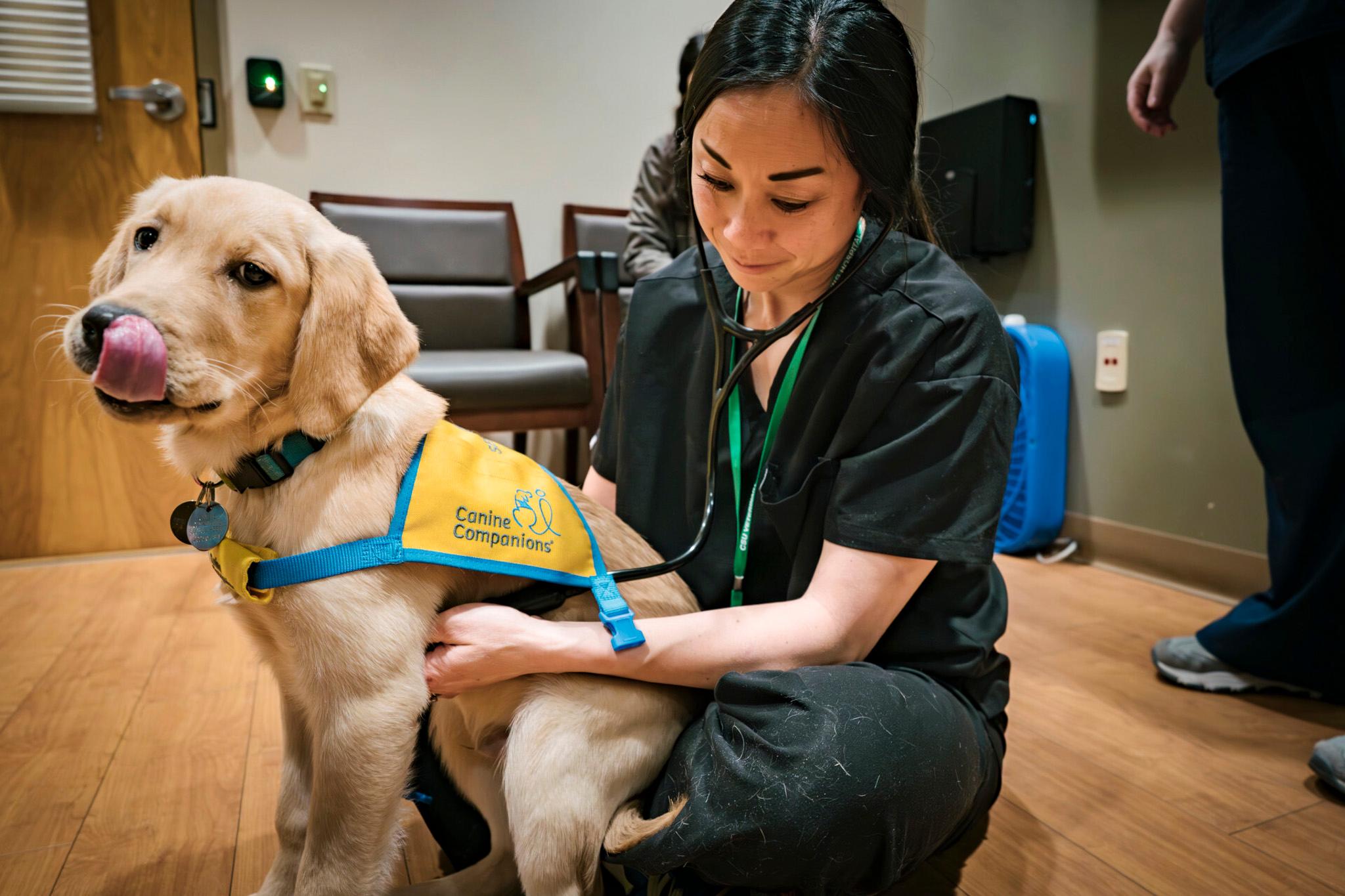
Daley: How has the curriculum changed?
Frye: We're being a lot more strategic about how and when we deliver content. So delivering content, for example, in the current curriculum, which is an outstanding curriculum, I do want to emphasize students might learn normal anatomy and physiology in year one, and then they'll start to apply that in years three and four. So there's quite a bit of a gap between the information they need to pull out from year one to apply later. And of course, there's repetition in revisiting, but it is a struggle. And so the current curriculum is structured such that we take a body system, and I'll use the heart as an example, where we will cover the anatomy of the heart, so the structure of the heart, the physiology or function of the heart disease and clinical syndromes, and how to treat those all in one block.
And so students are able to really take in all that information with more context and more opportunity to apply the foundational sciences to the clinical sciences and what we actually see in the animal. So that part of it is big, and the classes will run the first two years. But along with those classes, we have streams that allow students to practice skills related to the block.
We have what we call applied clinical medicine, which is an opportunity to take that information from that block and apply that to clinical case scenarios, both in large and small animals as well as exotics and other species. So there will be a lot more application, as I said earlier, that group discussion, problem solving, clinical reasoning, a lot of opportunity for integration of information from multiple blocks or multiple body systems. So once we leave the heart, we're going to keep revisiting it so that it's fresh when students move into the clinics. And then just earlier clinical exposure, they'll leave classes behind and start with laboratories and experiential learning full-time at the start of year three. And in the current curriculum that's only halftime in year three, so we're finishing courses after year two.
Daley: Do you expect that with this complex opening up, this will be a draw for, would-be students to your program?
Frye: I think it's all about getting who we are out there. And we have a very distinct culture here at CSU. The well-being component to the new building I think will be a big draw, and just that sense of community. But I think it's just putting it out there who we are and letting individuals make an informed decision.
Daley: Can you give me a list of the various kinds of animals or types of animals that you can treat?
Frye: I think that's the really special thing about veterinarians, is we have this cross-species training, this comparative training, and yes, absolutely, students learn about what one would consider more conventional companion animals, cats, dogs, small rodents, reptiles, birds, and then certainly small ruminants, goats, sheep moving into cattle. We have quite a robust equine program here. And then, yes, the service does have a relationship with the Cheyenne Mountain Zoo down in Colorado Springs. So they regularly go down and support them down there. And then occasionally we'll have the occasional movie star bear or something that they'll roll through our doors for treatment.
Daley: I'm always glad to hear that the movie star bears are getting good treatment. Thanks again, Melinda, I appreciate your time.
Frye: We're very excited.