Colorado is still waiting to receive about $50 million in federal funds to prepare for future disasters, a delay that could have serious ramifications for communities during an intense wildfire season.
The money, from two Federal Emergency Management Agency (FEMA) programs, is for “hazard mitigation assistance.” Those funds help states, tribes and communities recover after disasters, and proactively prepare for future disasters by building stronger infrastructure or doing important maintenance work.
Thirteen Colorado mitigation projects are still waiting for funds authorized by FEMA in the wake of recent disasters, according to agency data and Colorado’s Division of Homeland Security and Emergency Management (DHSEM).
Some of the projects have spent millions on construction and are waiting for FEMA to reimburse them. Other projects are in limbo — they were either in early planning stages or haven’t even started yet.
That includes work to clear flammable vegetation near powerlines in Rio Blanco County, in an area that was later torched by the massive Lee wildfire last year.
Delays in FEMA funds have become commonplace for Colorado under President Trump. But this delay — more than a year for some projects — has officials worried the state could face greater fire risk during a dangerous season.
“These projects haven't been done, and we haven't done as much as we could to mitigate the wildfire risk going into the season because of that,” said DHSEM director Kevin Klein.
FEMA did not directly answer questions about the delays. In a statement, a spokesperson blamed “reckless Democrats” for a record-breaking federal government shutdown earlier this year that shuttered some FEMA services for months. For some projects, however, the funding delay started well before the shutdown, according to state officials.
FEMA is still poring over requests for mitigation funding, according to the spokesperson.
“We remain committed to empowering and working with State and local governments to invest in their own resilience before disaster strikes, making response less urgent and recovery less prolonged,” the spokesperson said.
FEMA’s future is cloudy
It’s been a turbulent time for the agency.
FEMA has lost thousands of employees, been without a permanent leader since the start of the Trump administration and faced criticism for its halting response to several disasters.
The Department of Homeland Security, which oversees FEMA, has faced a litany of lawsuits from states including Colorado.
Those suits have described Kafka-esque journeys to comply with shifting grant requirements, in order to access money for emergency preparedness, counter-terrorism and hazard mitigation.
FEMA’s hazard mitigation programs were certainly not perfect — outside experts and congressional researchers have acknowledged they can be slow and bureaucratic.
But preparing for disasters before they strike is cost-effective — studies have found that every dollar spent on mitigation saves $6 or more down the line in recovery efforts.
Last month, the Trump administration released recommendations to remake FEMA, which include scrapping and overhauling the agency’s main mitigation program. It’s unclear if that recommendation will move forward.
A separate, bipartisan FEMA reform bill would direct more funds towards mitigation. But that bill has languished in Congress.
Last month, President Trump nominated Cameron Hamilton, who was fired as acting FEMA head in 2025, to once again lead the agency. During his Senate confirmation hearing, Hamilton acknowledged that staffing cuts would challenge the agency’s ability to respond to disasters.
It’s unclear when, or if, he may be confirmed.
Colorado counties waiting on millions in reimbursement
The roughly $50 million that Colorado is waiting for comes from two programs that FEMA authorizes after disasters.
Around $10 million is for projects that have broken ground and been authorized through FEMA’s Hazard Mitigation Grant Program (HMGP), according to Mark W. Thompson, Colorado’s state hazard mitigation officer.
HMGP requires the president to first make a “major disaster declaration,” which certifies that a local disaster is severe enough to require federal help. That declaration then unlocks a host of federal recovery and mitigation dollars.
In recent years, Colorado has received major disaster declarations after the Marshall Fire and the COVID-19 pandemic.
In the wake of the Marshall Fire, Boulder County received a grant to rehabilitate an aging dam so it doesn’t suffer a catastrophic breach and flood surrounding neighborhoods.
The county has finished construction, and should have received more than $2.3 million from FEMA to pay for its construction costs, according to Thompson. But it’s still waiting on the federal government to cover the tab.
A Boulder County spokesperson said they were hopeful to get reimbursed.
“Ticking time bomb”
Another $35 million is for hazard mitigation projects that have either not received any federal funding, or not moved past initial planning phases.
In 2022, the White River Electric Association, a small power cooperative, applied for HMGP funding to clear overgrown vegetation under its high-voltage transmission lines in rural Rio Blanco County.
The HMGP funds, authorized in the wake of the 2021 Marshall Fire, would help the utility pay for work to reduce its wildfire risk. But because the co-op’s lines are on federal public lands, the group had to complete a litany of time-consuming environmental studies first.
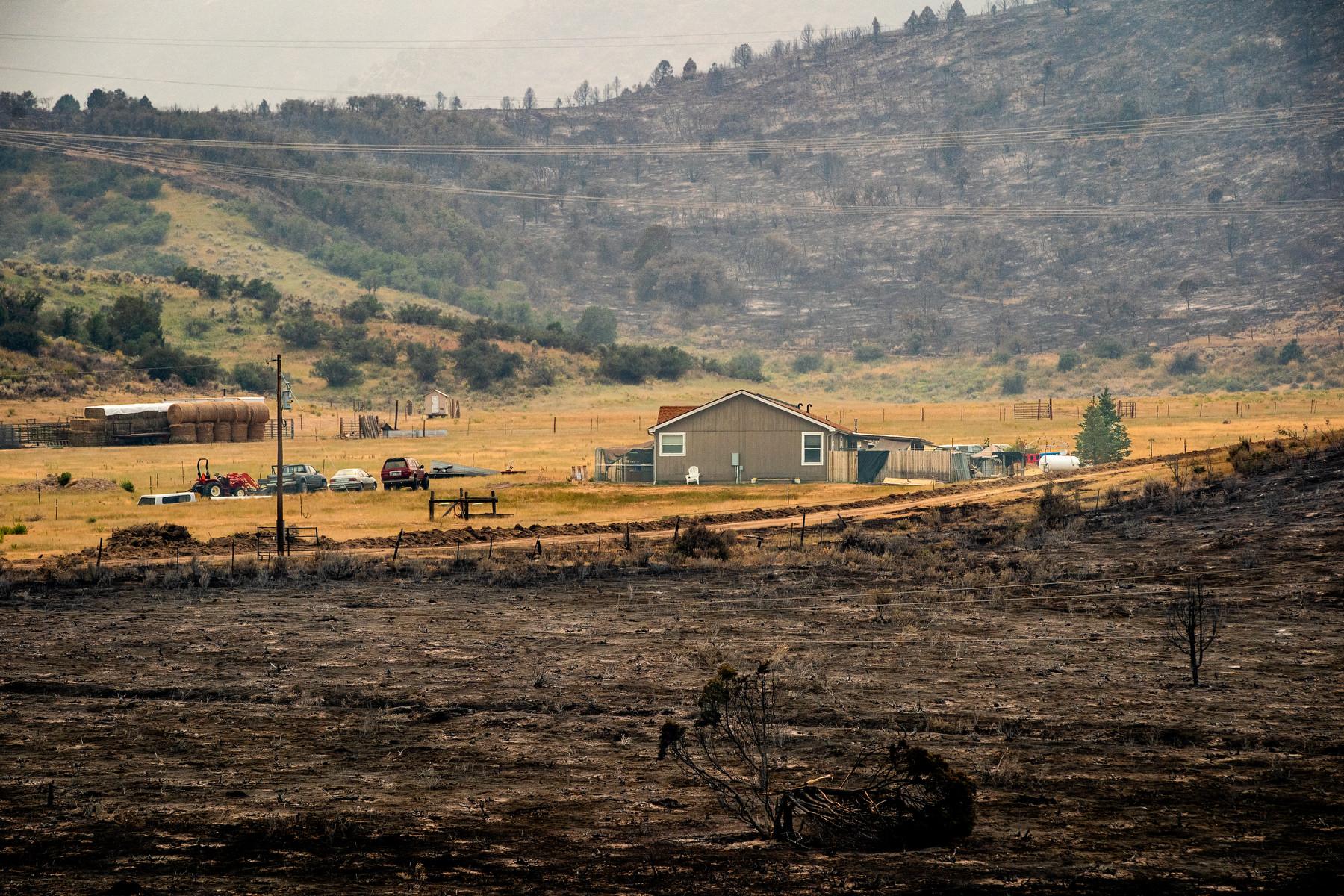
Last August, the Lee Fire tore through the county. Massive flames scorched White River’s transmission equipment dangling hundreds of feet above ground, causing more than $23 million in damages, according to Chris Reidinger, the utility’s engineering manager. Some of the damage may have been avoided.
“We think that our damage to our infrastructure was [slightly] worse because we did not get that…vegetation mitigated,” Reidinger said.
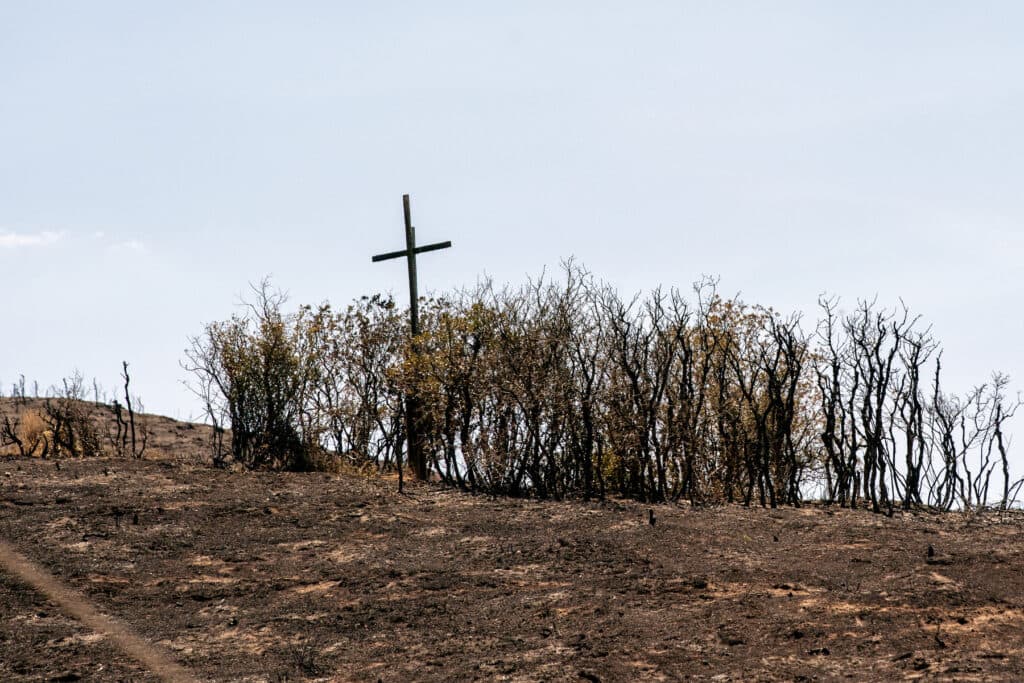
The co-op was able to rebuild their equipment after the fire, and hopes to one day get federal help to protect their lines. But they found the HMGP program slow and filled with red tape, according to Kari Matrisciano, White River’s member relations manager.
Even though it’s been years since they applied for the funding, they haven’t yet received a dime, according to Reidinger and FEMA data. Meanwhile, their fire risk is omnipresent...and growing.
“It sometimes feels like you're a ticking time bomb if one good lightning strike gets a hold of you first,” Matrisciano said.
Disaster declaration denials
Colorado is also waiting on roughly $4.6 million from another program known as HMGP Post-Fire, according to state officials.
That program requires a FEMA official to declare that a major wildfire occurred. That declaration then unlocks a predetermined set of money for mitigation work that local governments and private non-profits can apply for.
Last August, FEMA declared the Lee, Elk and Oak fires as major wildfires, according to a FEMA database. But then, despite a signed agreement with state officials, FEMA never authorized the post-fire program for Colorado.
That meant that millions in federal dollars that are normally available for mitigation work were not available, according to Thompson.
The Lee and Elk fires caused at least $27 million in damages, according to initial FEMA estimates, with most of the damage to White River’s equipment.
Last September, Governor Jared Polis formally asked President Trump in a letter to issue a “major disaster declaration,” which would unlock FEMA recovery and mitigation dollars.
But Trump declined to issue the designation, shutting down a host of federal aid to homeowners, businesses and towns.
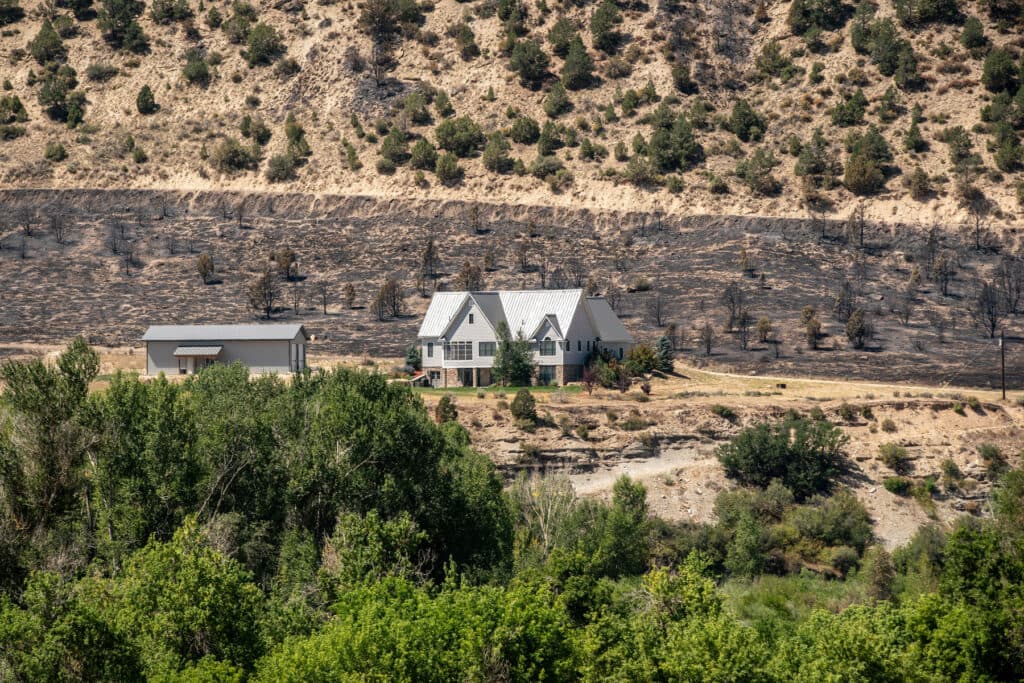
White River Electric essentially got hit from both sides — unable to get federal money to mitigate before the fire, and then not receiving federal recovery dollars after the fact. The utility had to get an emergency line of credit, and said that some of the rebuilding costs would be gradually passed on to their customers.
“When it was denied, it was a bit of a blow to us and to our members because then that means somebody else has to pick up that tab,” said Matrisciano.
“A roller coaster” for other mitigation programs
A third FEMA mitigation program, Building Resilient Infrastructure and Communities (BRIC), was cancelled last April by the Trump administration.
The program — signed into law by Trump in 2018 — was designed to help rural communities pay for expensive infrastructure upgrades.
The cancellation was tough news for Greeley. In 2023, the city had celebrated receiving a $13.8 million BRIC grant to build a new pipeline to protect its treated water supply.
That problem became painfully apparent after Colorado’s 2020 megafires, when the city had to repeatedly shut down its treatment facilities because of wildfire debris filtering into the mountain lakes and rivers that supply its water.
“It was repetitive, unpredictable disruptions to our ability to treat and deliver safe, reliable water,” said Sean Chambers, director of the city’s water utilities. A new pipeline would allow the city to move treated water around, so it has enough supply if one facility goes dark.
With their BRIC grant cancelled, Greeley began looking for other ways to build their pipeline. Chambers said they worked with Congressman Gabe Evans’ staff to find another FEMA program for funds.
With the congressman’s help, Greeley secured more than $8.6 million in FEMA funds, included in a Department of Homeland Security funding bill, which was signed by President Trump in April.
“It’s been a roller coaster,” Chambers said.
In the meantime, a federal judge ordered FEMA to restore the BRIC program earlier this year, after a lawsuit from Colorado and a coalition of other blue states.
BRIC money is now trickling back into Colorado, according to Thompson, the state hazard mitigation officer. But Greeley has already moved on to its new funding, according to Chambers.
The new funds are less than what the city would have gotten from BRIC, requiring the city to sell municipal bonds, which will take years to pay back. It may still take months to get the new FEMA dollars into Greeley’s coffers.
And had the Trump administration not shelved the BRIC program, the city’s pipeline would have been done months ago, just in time for a potentially scorching wildfire season.
“[The pipeline] would have been done at the start of this year, which would put us in a much more resilient position,” Chambers said.