Justice Melissa Hart will step down from the Colorado Supreme Court, the state’s Judicial Branch announced last week.
The announcement comes after a nearly two-month leave of absence.
In her resignation letter to Chief Justice Monica Márquez, Hart said her time on leave allowed her to address health concerns related to two concussions she experienced in 2025. Hart will remain on leave until her retirement on Jan. 5.
“Although I have really loved my time on the court deeply, I also will welcome the opportunity to have more freedom to speak my mind,” she said. “I'm still working out what that's going to mean exactly, but that matters to me. I am a person with opinions, and I'm excited about expressing those opinions.”
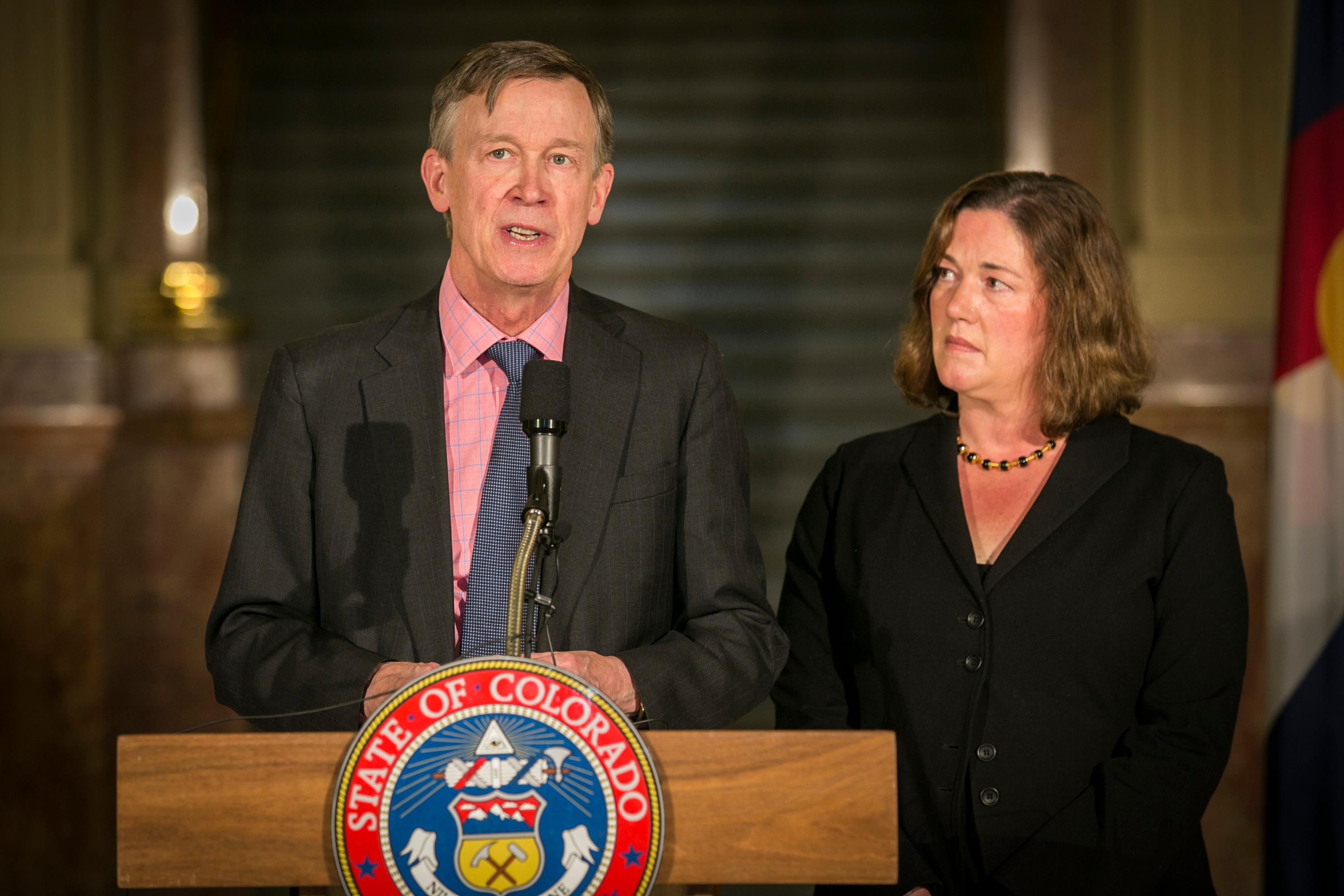
Hart was appointed to the Colorado Supreme Court in 2017 by then-Gov. John Hickenlooper.
“I remain deeply committed to the work that is central to Colorado's Judicial Branch — preserving the rule of law and serving the public,” Hart wrote in her resignation letter. “I am especially concerned about access to civil justice for low and middle-income Coloradans and making the family law system work for unrepresented litigants. Colorado, like every other state in the country, is struggling to serve the public in these areas.”
She said she’s particularly interested in working with the Colorado Access to Justice Commission and the various committees within the Judicial Branch that deal with family issues.
Hart spoke highly about the court’s reforms to make the legal system work better, highlighting things like the court’s simplified forms with “plain language” and the state’s self-represented litigant coordinators.
Statewide impacts
Before joining the court, she was a professor at the University of Colorado Law School, where she directed the Byron R. White Center for the Study of American Constitutional Law. While on the court, Hart was an adjunct professor at the University of Colorado Law School and the University of Denver Sturm College of Law.
She said she is not currently teaching, but would like to get back to it.
“It's hard for me to imagine that my life won't involve teaching in the future, but I don't know exactly what that will look like going forward,” she said.
Hart supported the state’s first licensed legal paraprofessional program. In a 2023 decision, the Colorado Supreme Court ruled that licensed legal paraprofessionals could represent clients in certain cases.
She was also part of the court’s majority decision that found Donald Trump was constitutionally disqualified from appearing on Colorado’s ballot due to his role in the Jan. 6 insurrection.
But to her, that was not a stand-out opinion.
“The Trump insurrection opinion is one that people focus on, and it made national news, and that's why people focus on it,” she said. “ It didn't make established law because the U.S. Supreme Court didn't agree with the Colorado Supreme Court about it. So when I think about opinions that have made a difference, that's not one of the ones I'm going to think about going forward.”
She highlighted opinions that changed state statutes, like Nieto v. Clark's Market, where the Colorado Supreme Court provided an answer on a contested employment law statute, or the case determining whether Planned Parenthood would be liable for a shooting on its property, where a dissent by her and two other justices resulted in the Legislature adjusting statute language.
A citizen-led commission will select three finalists to fill her vacancy, and Gov. Jared Polis will make the final appointment. A new justice is expected to be appointed on Feb. 4 or sooner, according to Melanie Ulrich, director of administrative services for the Judicial Branch.