Colorado is entering tornado season with more uncertainty than usual after a dry winter and spring. According to National Weather Service (NWS) forecasters in Boulder, the coming weeks will determine whether residents see a quiet year or a more active season.
“We've had a dearth of moisture in the past three to four months, but coming out of winter into spring, if we have enough ground moisture — and enough moisture in general in the atmosphere — we can get those delayed chances of showers and thunderstorms, which could lead to a production of tornadoes,” said NWS warning coordination meteorologist Greg Heavener.
Tornado season in Colorado typically begins in early to mid-May, with the phenomenon peaking in June and tapering off in early July. While tornadoes are most common on the eastern plains, forecasters say no part of the state is immune — including metro Denver and Front Range communities.
“Tornadoes can occur at any place at any time. We’ve even seen them at elevations above 10,000 feet before,” Heavener said.
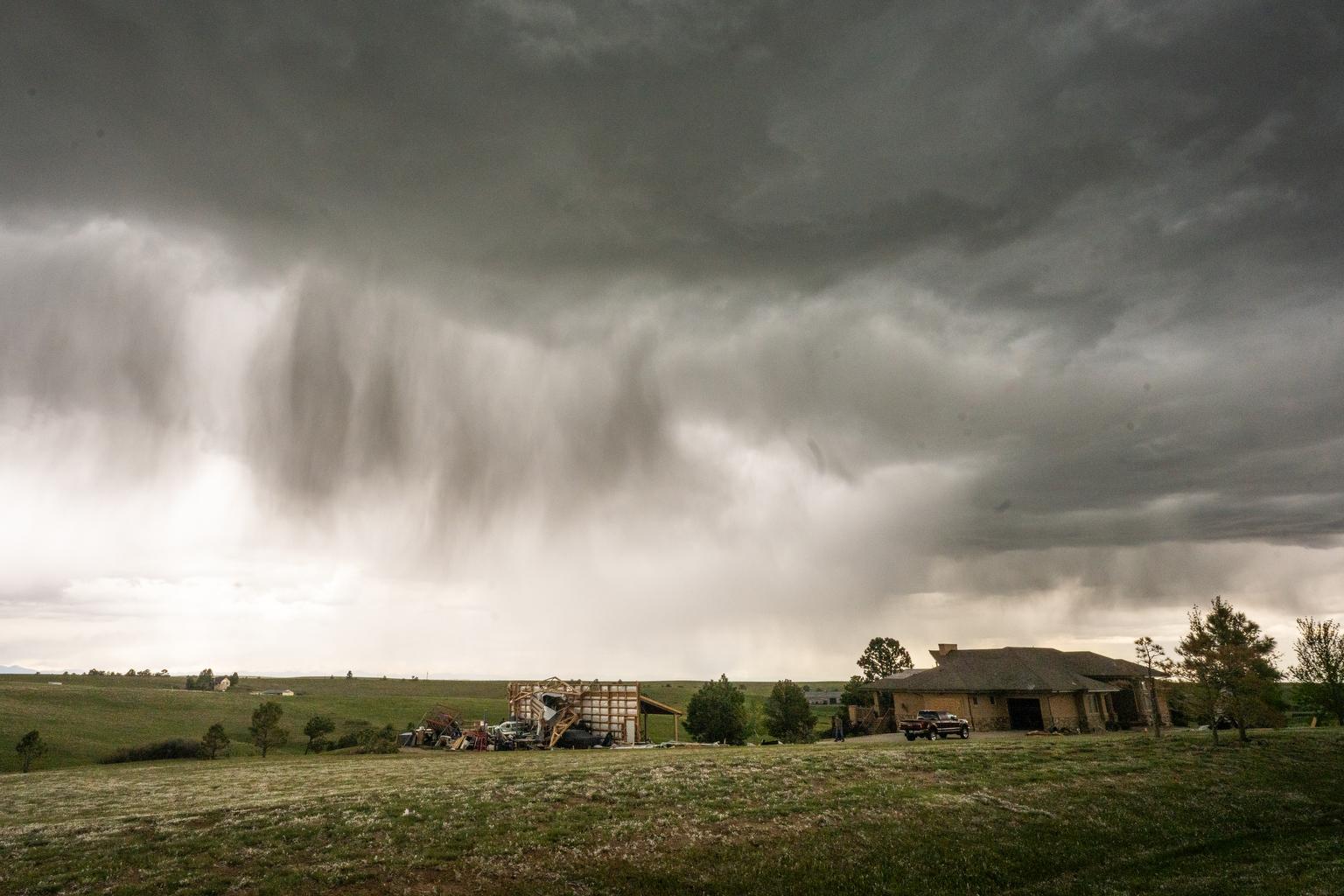
The most recent time a tornado hit a highly populated area in Colorado was just last year, when at least 19 homes were damaged by a storm in the towns of Bennet and Elizabeth. In June of 2023, one also touched down just south of C-470 in Highlands Ranch. It was accompanied by hail the size of tennis balls and damaged homes, businesses and infrastructure.
Still, the state’s biggest tornado hotspot remains Weld County. According to NOAA data, it has logged 300 tornado reports since 1950 — more than any other county in the United States.
Forecasters say that’s partially because of its size.
“There's a lot of real estate out there, and we do get a lot of thunderstorms that develop either coming off the front range or off the Cheyenne Ridge to the north of Weld County,” Heavener explained. “When they begin to come off that moving from northwest to southeast, they take on a bit of a circulation, a little bit of a spin, and that spin could inherently produce a tornado.”
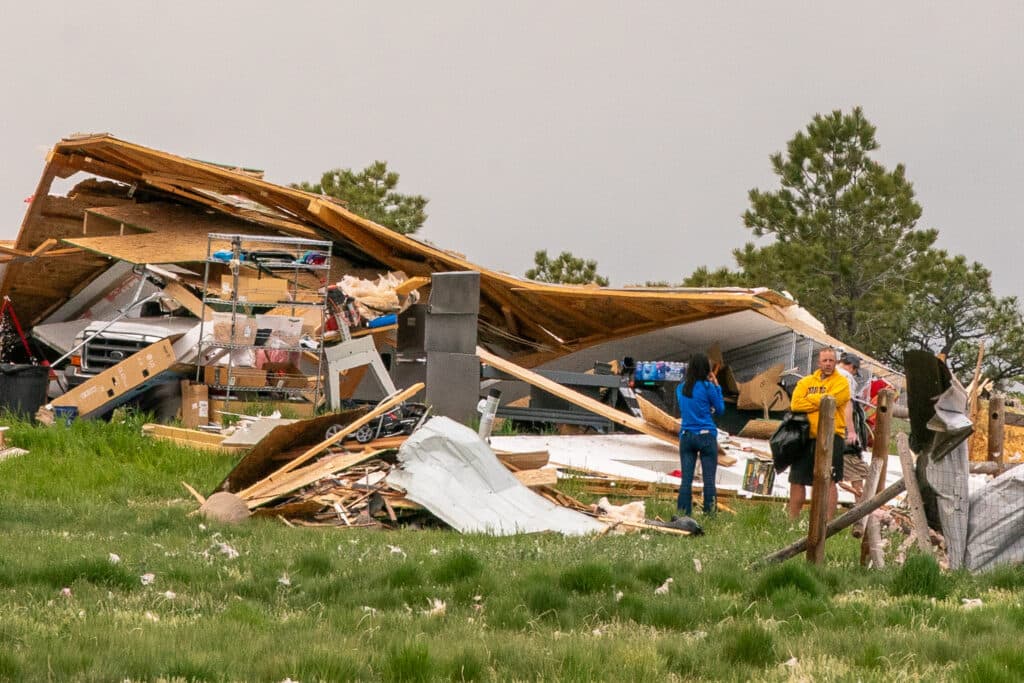
Adams County also ranks among the top 10 U.S. counties for tornado reports, with 192 since 1950. Colorado averages 45 to 50 tornadoes a year across all counties, though many are brief and weak, some only lasting 30-40 seconds.
That average was shattered in 2023, when Colorado saw roughly 120 tornadoes. Forecasters say a snowy winter followed by a wet spring and summer likely fueled that spike.
How do you know when a tornado is coming?
Not every tornado gives forecasters much warning. Some develop without the signs that meteorologists typically rely on.
“There are tornadoes that occur across the plains of Colorado that don't have the distinct radar signature that we can see to then produce a proper warning on them,” Heavener said. These are most often referred to as landspout tornadoes.
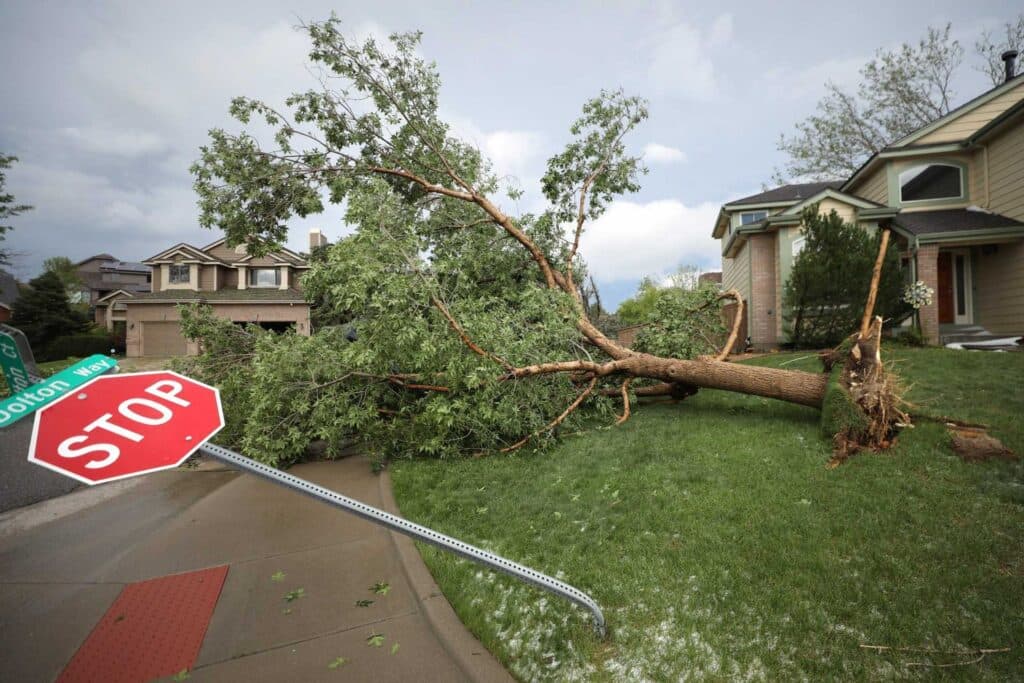
The most destructive tornadoes usually come from supercells — rotating thunderstorms that are easier to track on radar. In the case of the Highlands Ranch storm, forecasters were able to give people about an 8-10 minute warning before it touched down.
Nationally, forecasters aim to give people 10 to 12 minutes of lead time before a tornado hits.
Watch vs. warning
| Tornado Watch | Tornado Warning |
|---|---|
| A tornado watch means conditions are favorable for tornadoes to form. | A tornado warning means a tornado has been spotted or indicated by radar, and people in the storm’s path should take shelter immediately. |
How to prepare
Know now where you would shelter before storms develop and practice your exit plan with your family and pets.
“Make sure that you're signed up for your local emergency alerts and have a way to receive updates, whether it's from local news or weather radio,” said regional communications manager for the American Red Cross of Colorado and Wyoming, Brian Szabelski.
The safest options for shelter are basements, storm cellars or small interior rooms on the lowest floor of a sturdy building. Mobile homes, trailers and vehicles are not safe during tornadoes.
“When you're out traveling, you can try to outrun a tornado, but if you cannot for whatever reason, you want to try to pull over to the side of the road and hunker down inside your vehicle,” said Heavener. “Another absolute last resort would be to try to find a low-lying area you could possibly escape to and lay as flat possible.”
You can learn emergency skills, like first aid or CPR, through the American Red Cross in preparation for tornado season. Visit the Red Cross's website to register for a class.